
Short Answer
21 Facts About Gharials (crocodilians)
- Distinctive Snout Shape
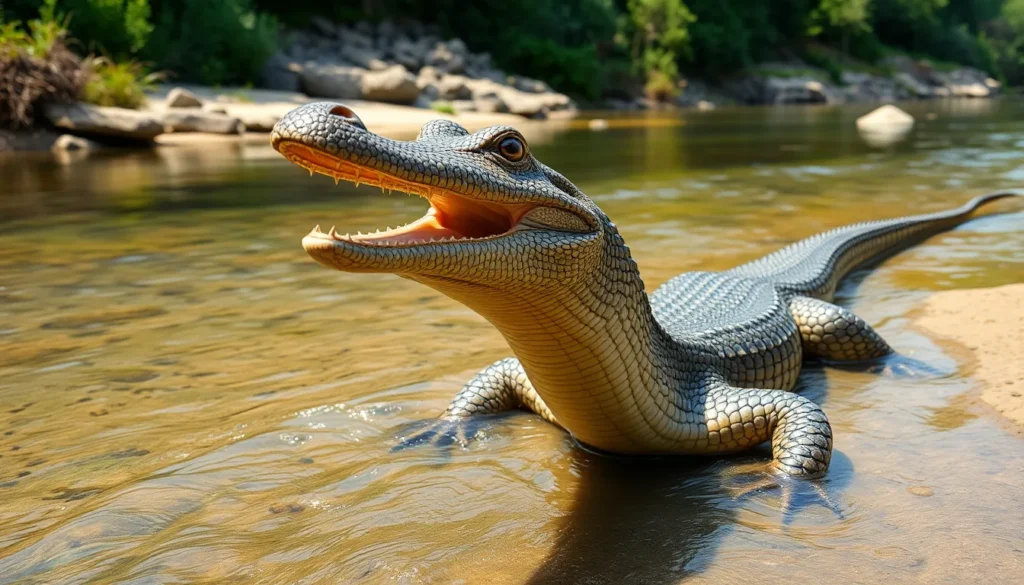
Gharials have an exceptionally long and narrow snout, which is unlike any other crocodilian species. This specialized snout helps reduce water resistance when catching fish. - Scientific Name
The gharial’s scientific name is Gavialis gangeticus. It is the only surviving member of the genus Gavialis. - Sexual Dimorphism
Mature male gharials develop a bulbous growth on the tip of their snout called a “ghara,” which is used for vocalization and display during mating. - Diet
Primarily piscivorous, gharials mainly feed on fish, using their sharp, interlocking teeth to catch slippery prey. - Size
Gharials can grow up to 6 meters (20 feet) in length, making them one of the longest crocodilians. - Habitat Preference
They prefer fast-flowing rivers with deep pools and sandy banks, which are ideal for nesting and hunting. - Geographical Range
Historically widespread across the Indian subcontinent, their current range is limited mostly to parts of India and Nepal. - Conservation Status
The International Union for Conservation of Nature (IUCN) classifies the gharial as Critically Endangered due to habitat loss and depletion of fish resources. - Reproductive Behavior
Females lay 20 to 50 eggs in nests dug on sandy riverbanks, which they guard until hatching. - Behavioral Traits
Gharials are generally shy and avoid humans, unlike some other crocodilians which can be more aggressive. - Social Structure
They are semi-social, often seen basking in groups but usually hunting alone. - Adaptations for Aquatic Life
The gharial’s body is streamlined, and its tail is powerful, aiding in swift swimming in river currents. - Vocalizations
The ghara on males amplifies hissing and buzzing sounds used in mating rituals and territorial displays. - Teeth Arrangement
Gharials have more teeth than most crocodilians, with around 110 sharp, needle-like teeth suited for gripping fish. - Evolutionary Distinctiveness
Gharials represent an ancient lineage of crocodilians with fossil records dating back over 15 million years. - Ecological Role
As apex predators in their aquatic ecosystems, they help maintain healthy fish populations and biodiversity. - Threats
Main threats include habitat fragmentation, pollution, fishing nets, and sand mining affecting river habitats. - Conservation Efforts
Several breeding and habitat protection programs have been initiated in India and Nepal to restore gharial populations. - Unique Locomotion
Unlike other crocodilians, gharials rarely walk on land and are more adapted to life in water. - Cultural Significance
In some Indian cultures, gharials are considered symbols of river health and are part of folklore and local traditions. - Longevity
In the wild, gharials can live up to 40-50 years, though exact lifespans may vary.
Habitat and Behavior
Gharials inhabit deep, fast-flowing rivers with clear water and sandy banks, primarily in the northern parts of the Indian subcontinent. They are highly aquatic and rely on water for most of their life activities, including hunting, mating, and thermoregulation. Their long, narrow snout and sharp teeth are specialized for catching fish, which constitutes the majority of their diet. Gharials are generally shy and avoid human contact, often basking in groups on riverbanks but hunting alone. They exhibit seasonal breeding behaviors, with females laying eggs in nests on sandy banks and guarding them until hatching. Their movements on land are limited, and they prefer to stay submerged or semi-submerged in water.
Why This Animal Matters
Gharials play a crucial ecological role as apex predators in river ecosystems. By preying on fish, they help maintain balanced fish populations, which supports overall aquatic biodiversity. Their presence indicates a healthy river environment, as they require clean, undisturbed habitats to thrive. From a conservation perspective, gharials are important flagship species for river conservation efforts in South Asia. Protecting gharials contributes to safeguarding riverine ecosystems that support numerous other species and human communities. Culturally, gharials hold significance in some local traditions and are sometimes featured in folklore, symbolizing the vitality of river habitats.
Common Misconceptions
Misconception: Gharials are dangerous to humans.
Correction: Gharials are generally shy and avoid human contact. There are very few recorded attacks on people, making them less dangerous than other crocodilian species.
Misconception: Gharials are a type of crocodile.
Correction: While gharials belong to the order Crocodylia, they are a distinct family (Gavialidae) separate from true crocodiles (Crocodylidae) and alligators (Alligatoridae).
Misconception: The gharial’s long snout is a disadvantage.
Correction: The gharial’s long, narrow snout is an evolutionary adaptation that enables them to catch fish efficiently, their primary prey.
FAQ
What is the main diet of gharials?
Gharials primarily feed on fish, using their long, narrow snouts and sharp teeth to catch them efficiently in river habitats.
Why are gharials considered endangered?
Gharials are classified as Critically Endangered due to habitat loss, pollution, fishing activities, and sand mining that degrade their river environments.
How do gharials differ from other crocodilians?
Gharials have a unique long, narrow snout adapted for catching fish, possess a distinctive nasal bulb called the ghara on males, and are primarily aquatic with limited land mobility, distinguishing them from other crocodilians.


Leave a Reply