
Short Answer
21 Facts About Acorn Barnacle Feeding (Cirri)
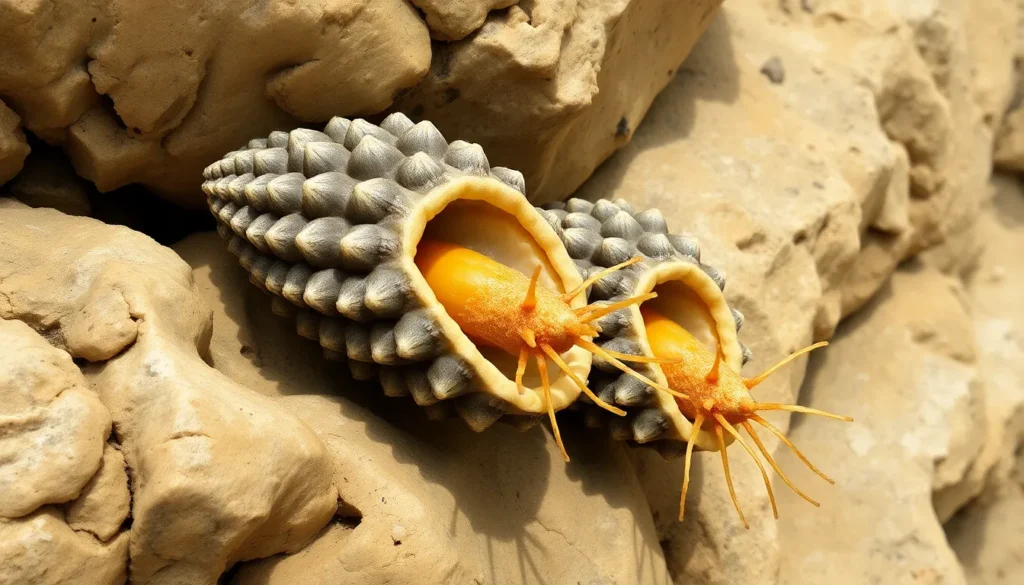
- Feeding Structure: Acorn barnacles possess specialized feeding appendages called cirri, which they use to capture food from the water.
- Filter Feeding: Acorn barnacles are filter feeders, meaning they rely on water flow to bring food particles within reach of their cirri.
- Movement of Cirri: The cirri can be extended and retracted rapidly, allowing barnacles to optimize feeding based on water conditions.
- Adaptation to Environment: The feeding behavior of acorn barnacles can vary based on their habitat, such as rocky shores or tidal zones.
- Feeding During Tides: Acorn barnacles primarily feed during high tide when water covers them, enhancing their access to food.
- Cirri Structure: The structure of the cirri is composed of numerous hair-like setae that increase the surface area for capturing food.
- Feeding Rate: Acorn barnacles can filter large volumes of water, with some species capable of filtering up to 1,000 liters in a day.
- Symbiotic Relationships: Acorn barnacles often have symbiotic relationships with other marine organisms that assist in feeding.
- Seasonal Variability: The availability of food for acorn barnacles can vary seasonally, influencing their feeding behavior and growth rates.
- Impact of Water Quality: Water quality can affect feeding success, with pollution potentially reducing the availability of plankton.
- Feeding and Reproduction: Adequate nutrition from feeding is essential for successful reproduction in acorn barnacles.
- Predation: While barnacles are primarily filter feeders, they can also be preyed upon by various marine animals.
- Bioindicators: Because they are sensitive to environmental changes, acorn barnacles can serve as bioindicators for marine ecosystem health.
- Feeding Efficiency: The efficiency of acorn barnacle feeding is influenced by water flow and particle size.
- Feeding Mechanism: Acorn barnacles have a unique mechanism for feeding that involves the coordination of cirri movements.
- Behavioral Adaptations: Barnacles exhibit behavior changes in response to environmental stimuli, optimizing their feeding behavior.
- Community Role: Acorn barnacles contribute to the marine food web, serving as prey for higher trophic levels.
- Larval Feeding: The larvae of acorn barnacles also engage in filter feeding, although their feeding structures differ from adults.
- Research Importance: Understanding acorn barnacle feeding mechanisms can provide insights into marine ecology and evolutionary biology.
Cirri are modified legs that extend from the barnacle’s shell to filter plankton and detritus from the surrounding water. This adaptation allows them to feed efficiently while remaining attached to substrates.
Their feeding strategy involves extending their cirri into the water column and using them to trap small organisms such as plankton, algae, and organic debris.
This ability to control cirri movement helps acorn barnacles adapt to varying water flow and particle availability, enhancing their feeding efficiency.
In high-energy environments, they may develop shorter cirri to withstand strong currents while still capturing food effectively.
During low tide, they may remain closed to prevent desiccation, limiting their feeding opportunities.
This intricate structure allows for greater efficiency in filtering small food particles from the water.
This high feeding rate is crucial for their growth and reproduction, as they rely on abundant food sources.
For example, some fish may stir up sediment and plankton, making it easier for barnacles to capture food.
During peak plankton blooms, barnacles may experience a significant increase in food availability.
Acorn barnacles are sensitive to changes in their environment, which can impact their health and feeding efficiency.
Healthy barnacles are more likely to produce viable larvae, contributing to population sustainability.
Starfish and certain fish species are known to feed on barnacles, influencing their population dynamics.
Monitoring their populations can provide insights into the overall health of marine habitats.
Optimal feeding conditions occur when water flow is sufficient to bring food particles close while not being too strong, which could dislodge them.
They can alternate the movement of individual cirri to maximize food capture.
For instance, if food becomes scarce, they may extend their cirri longer to capture more particles.
They play a vital role in nutrient cycling within their ecosystems.
Larval development is crucial for the continuation of barnacle populations.
Research on their feeding behaviors contributes to broader ecological studies and conservation efforts.
Habitat and Behavior
Acorn barnacles are typically found in intertidal zones, attaching themselves to hard substrates such as rocks, piers, and ship hulls. They thrive in environments with consistent water flow, which aids their feeding strategy. During low tide, they close their shells to prevent water loss and exposure to air. Their ability to filter feed allows them to exploit the nutrient-rich waters of coastal regions.
Why This Animal Matters
Acorn barnacles play a significant role in marine ecosystems as filter feeders, contributing to water clarity and nutrient cycling. They provide food for various marine species, thus supporting biodiversity. Additionally, their sensitivity to environmental changes makes them valuable indicators of ecosystem health, helping scientists monitor marine environments.
Common Misconceptions
Misconception: Acorn barnacles are plants because they are often found attached to rocks.
Correction: Acorn barnacles are marine animals, specifically crustaceans, and are not plants despite their stationary lifestyle.
Misconception: Cirri are used for movement in barnacles.
Correction: Cirri are primarily feeding appendages, not for locomotion; barnacles are sessile and do not move once attached.
FAQ
What is the primary diet of acorn barnacles?
Acorn barnacles primarily feed on plankton and organic material filtered from seawater.
How do acorn barnacles attach to surfaces?
They secrete a strong adhesive substance that allows them to firmly attach to rocks, ships, and other hard surfaces.
Can acorn barnacles move once attached?
No, acorn barnacles are sessile and do not move once they have attached themselves to a surface.





Leave a Reply