
Short Answer
21 Facts About Tortoises
- Tortoises are reptiles: They belong to the order Testudines, which includes all turtles and tortoises.
- Distinctive shells: Their shells are made of bone and covered with scutes composed of keratin, providing protection and structural support.
- Long lifespan: Many species of tortoises can live for over 50 years, with some individuals reaching more than 100 years.
- Slow movement: Tortoises are known for their slow and deliberate gait, which conserves energy.
- Herbivorous diet: Most tortoises primarily eat grasses, leaves, and fruits, although dietary preferences vary by species.
- Varied sizes: Tortoises range from small species measuring just a few inches to giant tortoises weighing several hundred pounds.
- Terrestrial lifestyle: Unlike many turtles, tortoises are adapted to live primarily on land rather than in water.
- Unique respiratory system: Tortoises use muscles attached to their lungs and ribs to breathe, as they cannot expand their rib cages due to their shells.
- Temperature-dependent sex determination: The sex of many tortoise hatchlings is determined by the incubation temperature of the eggs.
- Slow reproduction rate: Tortoises typically have long gestation periods and produce relatively few offspring at a time.
- Some species are critically endangered: Habitat loss, poaching, and the pet trade have threatened many tortoise species worldwide.
- Giant tortoises: Species like the Galápagos giant tortoise are among the largest tortoises and are famous for their size and longevity.
- Shell growth: A tortoise’s shell grows with it throughout its life, with growth rings sometimes used to estimate age.
- Adaptations for desert living: Some tortoises, such as desert tortoises, can survive long periods without water by storing it in their bodies.
- Good navigators: Tortoises have been observed using environmental cues like the sun and magnetic fields to navigate.
- Social behavior: While generally solitary, some tortoises engage in social interactions, especially during mating seasons.
- Slow metabolism: Their slow metabolism allows tortoises to survive on limited food resources and endure harsh conditions.
- Burrowing habits: Many tortoises dig burrows to escape extreme temperatures and predators.
- Shell damage can be fatal: Since the shell is integral to their structure and protection, serious injuries can be life-threatening.
- Conservation efforts: Various international programs aim to protect tortoise species through habitat preservation and breeding initiatives.
- Symbolism and cultural significance: Tortoises have been symbols of longevity, stability, and wisdom in many cultures around the world.
Habitat and Behavior
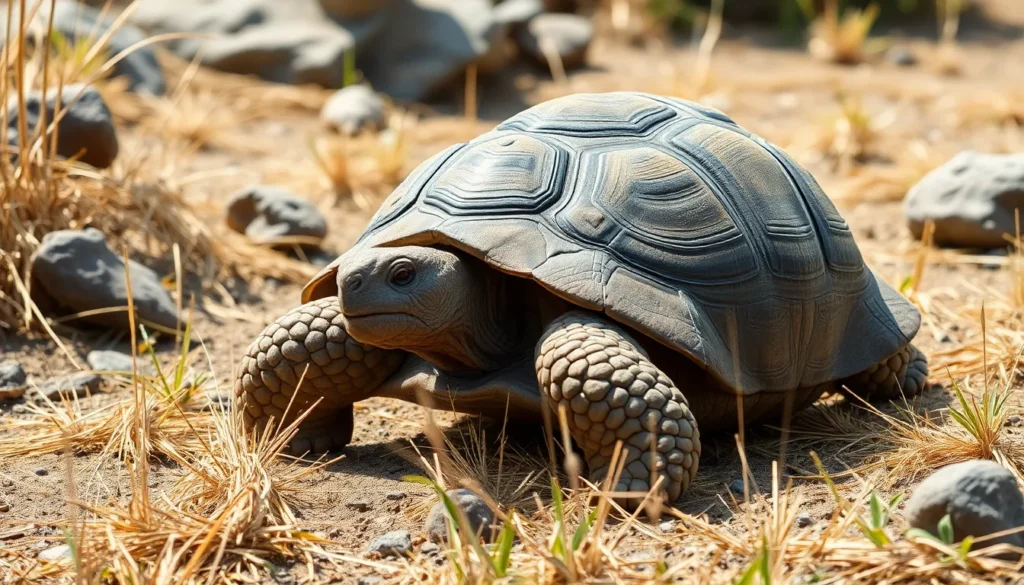
Tortoises inhabit a wide range of environments including deserts, grasslands, forests, and scrublands predominantly in warm climates across the world. They are terrestrial reptiles, adapted to a life on land rather than in aquatic environments. Their behavior is characterized by slow movement and a reliance on their protective shells. Tortoises are primarily herbivores, feeding on a variety of plants, and they often dig burrows or seek shelter under rocks or vegetation to avoid extreme heat and predators. Many species exhibit temperature-dependent sex determination, and their reproductive cycles tend to be slow with limited offspring. Their slow metabolism helps them survive in environments where food and water may be scarce for extended periods.
Why This Animal Matters
Tortoises play an important ecological role as grazers, helping to maintain healthy plant communities and contributing to seed dispersal. Their burrowing behavior can influence soil aeration and nutrient recycling. Beyond their ecological impact, tortoises hold cultural significance in many societies, symbolizing longevity, wisdom, and stability. Conservation of tortoises is critical as many species face threats from habitat destruction, illegal pet trade, and environmental changes. Protecting tortoise populations helps preserve biodiversity and the balance of ecosystems where they are native.
Common Misconceptions
Misconception: Tortoises can live without water for their entire lives.
Correction: While some tortoises can survive long periods without water by conserving it efficiently, they do require water for drinking and hydration.

Misconception: Tortoises can fully retract into their shells for protection.
Correction: Although tortoises can withdraw their head and limbs partially, they cannot completely enclose themselves within their shells.
Misconception: All tortoises are slow and inactive.
Correction: While tortoises move slowly compared to many animals, they can be quite active, particularly when foraging or during mating seasons.
Misconception: Tortoises and turtles are the same.
Correction: Tortoises are a subgroup of turtles adapted to terrestrial life, whereas the term “turtle” generally refers to species that live in or near water.
Misconception: A tortoise’s shell is an external armor separate from its skeleton.
Correction: The tortoise’s shell is an integral part of its skeleton, composed of fused ribs and vertebrae covered by scutes.
FAQ
How long do tortoises typically live?
Tortoises often live between 50 to over 100 years, with some species, such as the Galápagos giant tortoise, known to exceed 150 years in captivity.
What do tortoises eat?
Most tortoises are herbivores, feeding on grasses, leaves, flowers, and fruits, though diet varies among species depending on their habitat.
Are tortoises endangered?
Many tortoise species face threats from habitat loss, poaching, and the illegal pet trade, leading several to be classified as vulnerable, endangered, or critically endangered.



Leave a Reply