
Short Answer
21 Facts About Christmas Tree Worms
- Scientific Classification: Christmas tree worms belong to the genus Spirobranchus within the family Serpulidae, a group of tube-building polychaete worms.
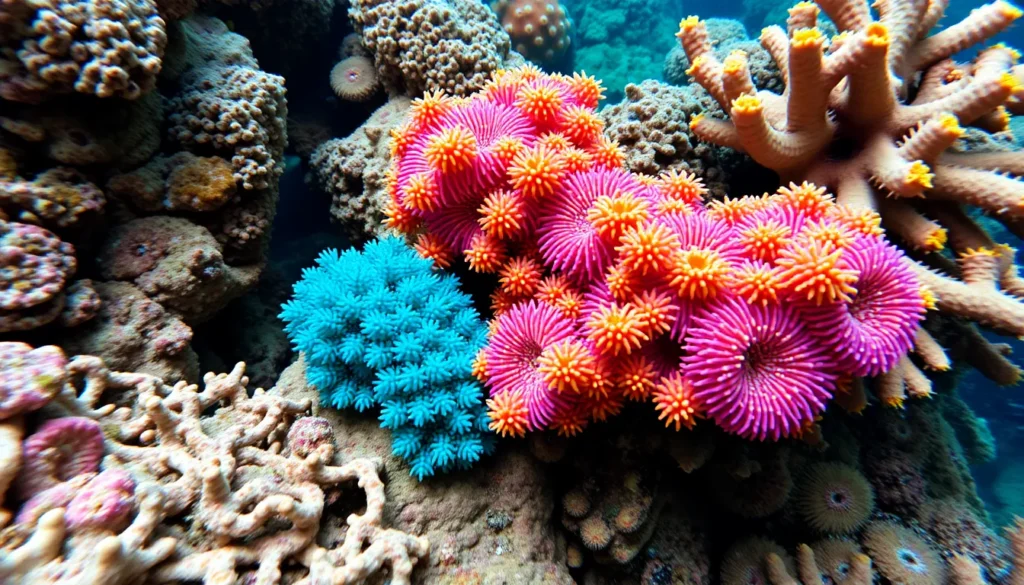
- Distinctive Appearance: They are named for their brightly colored, spiral-shaped radioles that resemble miniature Christmas trees.
- Radioles Function: The crown-like structures are used for both respiration and feeding by filtering plankton from the water.
- Tube Dwellers: These worms build and live inside calcareous tubes embedded in live coral heads.
- Color Variability: Their radioles occur in diverse colors including blue, orange, yellow, white, and purple, often with striped patterns.
- Size: Individual Christmas tree worms typically grow to about 2.5 centimeters (1 inch) in diameter.
- Global Distribution: They are found in tropical coral reefs worldwide, particularly in the Indo-Pacific and Caribbean regions.
- Feeding Mechanism: They use their radioles to capture plankton and detritus from water currents.
- Rapid Retraction: When threatened, they can quickly retract their radioles into their protective tubes within milliseconds.
- Reproduction: They reproduce sexually by releasing eggs and sperm into the water column, where fertilization occurs externally.
- Larval Stage: After fertilization, larvae are planktonic before settling and metamorphosing into tube-building adults.
- Symbiotic Relationship: Although not true symbionts, their tubes embedded in coral can potentially influence coral health and reef structure.
- Impact on Coral: While their tubes may cause minor damage to coral skeletons, they generally coexist without major harm to the coral host.
- Predators: Their main predators include fish and invertebrates capable of extracting them from their tubes.
- Longevity: Individual worms can live several years, maintaining their tubes throughout their lifespan.
- Ecological Role: As filter feeders, they help maintain water quality by removing plankton and organic particles.
- Behavioral Adaptations: Their rapid withdrawal and tube-building offer protection from predation and environmental stress.
- Scientific Interest: They are studied for their unique morphology and role in reef ecosystems.
- Identification: Their vivid, tree-like crowns make them easily recognizable to divers and marine biologists.
- Non-Migratory: Christmas tree worms remain fixed in their tube throughout life and do not move to new locations.
- Coral Reef Indicator: Their presence can indicate healthy reef conditions due to their dependence on live coral for habitat.
Habitat and Behavior
Christmas tree worms inhabit shallow, tropical coral reefs where they embed their calcareous tubes within live coral heads, particularly favoring massive coral species. These marine polychaetes are sessile, remaining fixed in one tube for life. Their crown-like radioles function as both respiratory organs and specialized filter-feeding appendages that capture plankton and organic particles from passing water currents. When sensing potential danger, the worms rapidly retract their delicate radioles into their protective tubes, a defense mechanism that helps prevent predation. Reproduction occurs externally with planktonic larvae dispersing before settling onto suitable coral substrate to begin tube formation.
Why This Animal Matters
Christmas tree worms contribute to coral reef ecosystems by filtering plankton and particulates from the water, helping maintain water clarity and quality. Their tubes can influence the microhabitat complexity of coral reefs, providing shelter for other small organisms. Moreover, their reliance on healthy coral for habitat makes them useful bioindicators for reef health and environmental changes. As visually striking reef inhabitants, they also attract interest from marine ecologists and divers, promoting awareness of reef biodiversity. Although they may cause minor coral damage by tube formation, their overall impact is generally neutral or beneficial within reef ecosystems.
Common Misconceptions
Misconception: Christmas tree worms are a type of coral.
Correction: While they live embedded in coral, Christmas tree worms are marine worms, not corals. They build calcareous tubes on coral but belong to the polychaete worm family.

Misconception: Their colorful crowns are their bodies.
Correction: The brightly colored radioles are specialized appendages used for feeding and respiration, not the worm’s entire body, which remains hidden inside the tube.
Misconception: Christmas tree worms move between corals.
Correction: These worms are sessile; once they settle and build their tubes, they remain fixed in place for life.
FAQ
What do Christmas tree worms eat?
Christmas tree worms feed by filtering plankton and organic particles from the water using their feather-like radioles.
How do Christmas tree worms protect themselves from predators?
They rapidly retract their delicate crowns into their hard calcareous tubes when disturbed, minimizing exposure to predators.
Can Christmas tree worms move from one coral to another?
No, Christmas tree worms are sessile and remain fixed inside their tubes on the same coral for life.

Leave a Reply