
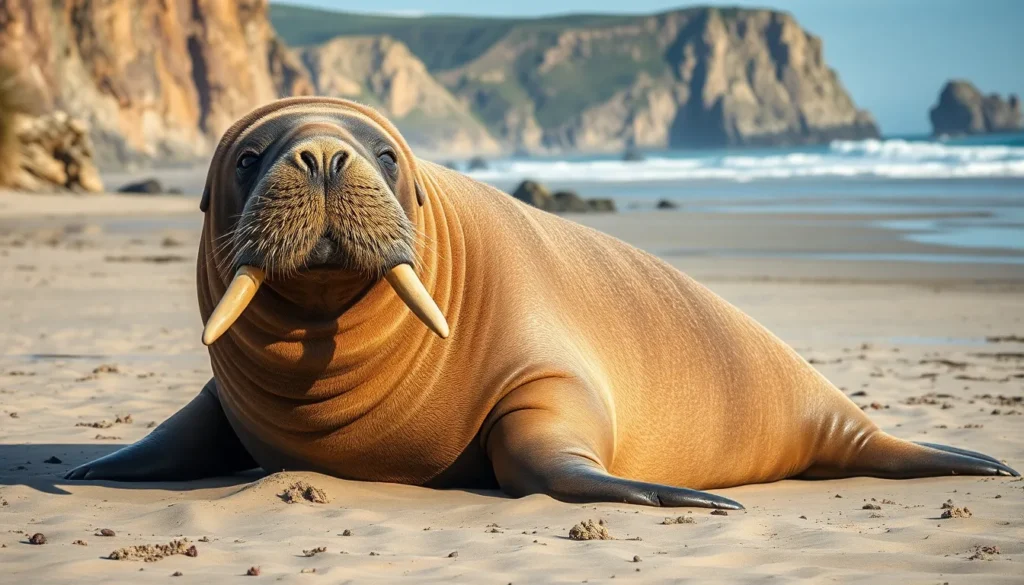
Short Answer
21 Facts About Northern Elephant Seals
- Largest Seal Species on the Pacific Coast: Northern elephant seals are the largest seals found along the Pacific coast of North America, with males reaching lengths of up to 16 feet and weights of up to 4,500 kilograms.
- Sexual Dimorphism: Males are significantly larger than females, which typically measure about 10 feet and weigh around 900 kilograms.
- Distinctive Proboscis: Adult males have a large, inflatable proboscis resembling an elephant’s trunk, used to produce loud vocalizations during the breeding season.
- Deep Diving Capabilities: These seals can dive to depths exceeding 1,500 meters (4,900 feet), remaining underwater for up to 40 minutes to forage for food.
- Long-Distance Migrators: Northern elephant seals undertake extensive migrations, traveling thousands of kilometers across the Pacific Ocean between feeding and breeding sites.
- Breeding Colonies: They breed in large colonies on sandy beaches and offshore islands, primarily along the California coast and Baja California.
- Polygynous Mating System: Dominant males establish and defend territories, mating with multiple females during the breeding season.
- Pupping Season: Pups are born after an 11-month gestation period and are nursed for about a month before weaning.
- Molting Process: Northern elephant seals undergo an annual molt, during which they shed their outer layer of skin and fur while resting on land.
- Diet: Their diet mainly consists of fish and squid, which they catch during their deep dives.
- Adaptations for Diving: They have specialized blood oxygen storage and a slowing heart rate to conserve oxygen underwater.
- Historical Near-Extinction: The species was hunted extensively in the 19th century for their blubber, nearly driving them to extinction before protections were enacted.
- Population Recovery: Northern elephant seal populations have rebounded significantly since hunting bans, now numbering over 150,000 individuals.
- Social Behavior: Outside the breeding season, these seals tend to be solitary or form small groups when resting on beaches.
- Vocal Communication: Males use vocalizations to establish dominance and communicate during the breeding season.
- Thermoregulation: Their thick blubber layer provides insulation in cold ocean waters and energy reserves during fasting periods on land.
- Predators: Primary predators include great white sharks and orcas, especially targeting young or weaker individuals.
- Scientific Importance: Their deep diving physiology has been studied to understand hypoxia tolerance and marine mammal adaptations.
- Legal Protection: Northern elephant seals are protected under the Marine Mammal Protection Act in the United States.
- Population Distribution: Their range extends from Baja California in Mexico to central California, with major colonies on the Channel Islands.
- Role as Indicators: They serve as indicators of ocean health due to their position in the marine food web and sensitivity to environmental changes.
Habitat and Behavior
Northern elephant seals inhabit the eastern North Pacific Ocean, primarily along the coasts of California and Baja California. They spend most of their lives at sea, coming ashore only to breed, molt, and rest. Their breeding colonies are typically located on sandy beaches and remote offshore islands, where males compete for territories and harems of females during the winter breeding season. They are deep, long-duration divers that forage on fish and squid in cold, nutrient-rich waters. Their ability to store oxygen and reduce heart rate enables them to dive to great depths, often exceeding 1,500 meters. Outside the breeding season, they lead solitary lives at sea, migrating thousands of kilometers to feeding grounds.
Why This Animal Matters
Northern elephant seals play a crucial ecological role as apex predators in marine ecosystems, helping regulate populations of fish and squid. Their foraging habits reflect ocean health and prey availability, making them valuable indicators for scientific monitoring of marine environments. The species’ recovery from near-extinction exemplifies successful conservation efforts and highlights the importance of legal protection for marine mammals. Additionally, their unique physiological adaptations offer insight into mammalian diving capabilities and hypoxia tolerance, contributing to biomedical research. Culturally, northern elephant seals attract ecotourism and inspire interest in marine conservation along the Pacific coast.
Common Misconceptions
Misconception: Northern elephant seals are aggressive toward humans.
Correction: While males can be aggressive toward other seals during breeding, they generally avoid humans and pose little threat unless provoked.

Misconception: All elephant seals have large proboscises.
Correction: Only adult males develop the distinctive large nose; females and young males have smaller, less pronounced noses.
Misconception: Elephant seals primarily live on land.
Correction: These seals spend the majority of their lives at sea, coming ashore mainly for breeding, molting, and resting.
FAQ
How deep can northern elephant seals dive?
Northern elephant seals can dive to depths exceeding 1,500 meters (4,900 feet), making them one of the deepest-diving marine mammals.
Where do northern elephant seals breed?
They breed in large colonies on sandy beaches and offshore islands along the California coast and Baja California.
Why do male northern elephant seals have large proboscises?
The large proboscis in adult males is used to produce loud vocalizations that help establish dominance and attract females during the breeding season.





Leave a Reply