
Short Answer
21 Facts About Horseshoe Crab Trilobite Larvae
- Ancient Lineage: Horseshoe crabs are often referred to as “living fossils” as they have existed for over 450 million years, with trilobite larvae being an important stage in their life cycle.
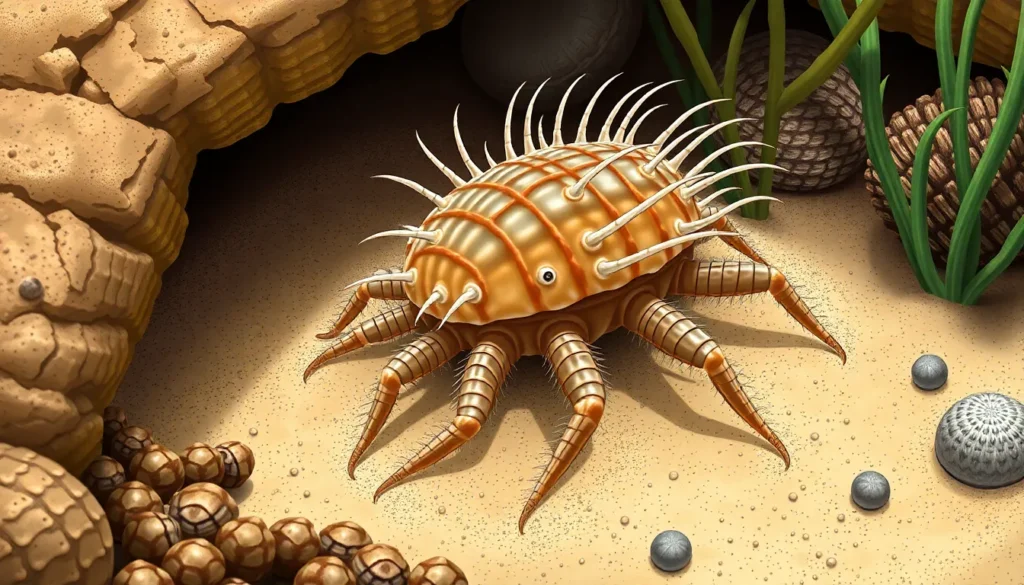
- Larval Morphology: The larvae of horseshoe crabs resemble small trilobites, a group of extinct marine arthropods, which contributes to their historical significance.
- Habitat: Horseshoe crab larvae are typically found in shallow coastal waters, where they thrive in sandy or muddy substrates.
- Feeding Behavior: These larvae are detritivores, feeding on organic matter and microscopic organisms found in the sediment.
- Development Stages: Horseshoe crab larvae undergo multiple molts before reaching maturity, transitioning through several distinct stages.
- Reproductive Timing: The breeding season for horseshoe crabs often coincides with the full moon, which influences larval release.
- Environmental Indicators: The presence and health of horseshoe crab populations serve as indicators of coastal ecosystem health.
- Predation: Larvae are vulnerable to predation by various marine species, including fish and birds, highlighting their role in the food web.
- Bioluminescence: Some studies suggest that horseshoe crab larvae may exhibit bioluminescence, aiding in predator avoidance.
- Ecological Importance: Horseshoe crab larvae play a crucial role in nutrient cycling within their habitats, contributing to the overall health of marine ecosystems.
- Medical Relevance: Horseshoe crab blood contains a substance that is vital for the pharmaceutical industry, particularly for testing bacterial contamination in vaccines.
- Cultural Significance: In some cultures, horseshoe crabs are considered a delicacy, especially in coastal regions.
- Conservation Status: Overharvesting and habitat destruction have raised concerns about the conservation status of horseshoe crabs globally.
- Longevity: Horseshoe crabs can live for decades, with some individuals reported to reach 20 years of age.
- Unique Anatomy: Horseshoe crab larvae possess a hard exoskeleton, which provides protection as they grow and develop.
- Coloration: The coloration of horseshoe crab larvae can vary, often aiding in camouflage against predators.
- Habitat Preferences: They prefer environments with abundant food sources, often found in estuaries and intertidal zones.
- Behavioral Adaptations: Larvae exhibit behaviors that enhance their survival, including burying themselves in sediment to avoid predators.
- Evolutionary Studies: The study of horseshoe crab larvae offers insights into evolutionary biology and the history of marine life.
- Climate Change Impact: Changes in sea temperature and acidity due to climate change may affect larval development and survival rates.
- Research Applications: Horseshoe crab larvae are used in various scientific studies, including investigations into marine biology and ecology.
Habitat and Behavior
Horseshoe crab trilobite larvae inhabit shallow coastal waters, often found in sandy or muddy environments. They thrive in estuarine areas where organic matter is abundant, allowing them to feed on detritus and microorganisms. Their behavior includes burrowing into the substrate to avoid predators and to find food, enhancing their chances of survival in a complex ecosystem.
Why This Animal Matters
Horseshoe crab trilobite larvae play a vital ecological role as they contribute to nutrient cycling in marine ecosystems. They serve as prey for various marine species, thus maintaining the food web. Additionally, their presence is significant in scientific research, particularly in understanding evolutionary biology. The conservation of horseshoe crabs is crucial, as their populations are indicators of environmental health and stability.
Common Misconceptions
Misconception: Horseshoe crabs are crabs and are closely related to true crabs.
Correction: Horseshoe crabs are not true crabs; they are more closely related to arachnids, such as spiders and scorpions.
Misconception: All horseshoe crab larvae are the same size.
Correction: Horseshoe crab larvae vary in size depending on their developmental stage, with younger larvae being significantly smaller than older ones.
FAQ
What are horseshoe crab trilobite larvae?
Horseshoe crab trilobite larvae are the early developmental stages of horseshoe crabs, resembling ancient trilobites.
Why are horseshoe crabs important?
They are ecologically significant as they contribute to marine nutrient cycles and serve as food for various species.
How do horseshoe crab larvae survive in their environment?
They employ behaviors such as burrowing into the substrate to evade predators and find food.


Leave a Reply