
Short Answer
21 Facts About the Dung Beetle
- Exceptional Strength: Dung beetles can pull objects over 1,000 times their own body weight, making them the strongest animals relative to size on Earth.
- Variety of Species: There are over 7,000 species of dung beetles worldwide, found across many continents except Antarctica.
- Ecological Role: Dung beetles recycle animal waste, helping to reduce parasites, fertilize soil, and improve nutrient cycling.
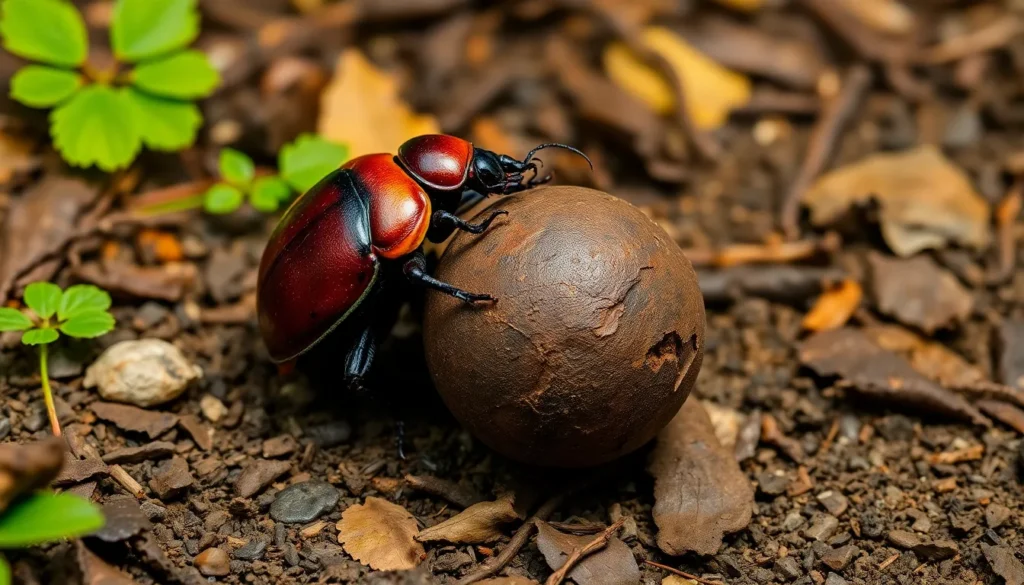
- Rolling Behavior: Some dung beetles roll dung into balls, which they use as food or breeding chambers.
- Burrowing Species: Other dung beetles bury dung directly beneath the source rather than rolling it away.
- Navigation Skills: Certain dung beetles use the Milky Way galaxy to navigate at night, a rare example of celestial navigation in insects.
- Reproductive Strategy: Female dung beetles lay eggs inside dung balls to provide their larvae with a nutrient-rich environment.
- Strength Mechanism: Their strong muscles and exoskeleton structure enable them to carry heavy loads relative to their size.
- Role in Agriculture: By breaking down dung, dung beetles help reduce the spread of pests and diseases in grazing areas.
- Diurnal and Nocturnal Activity: Depending on the species, dung beetles can be active during the day or night.
- Life Cycle: The complete metamorphosis includes egg, larva, pupa, and adult stages.
- Size Range: Most dung beetles range from 0.1 to 1.5 inches in length.
- Adaptations: Strong forelegs adapted for digging and rolling dung balls.
- Predators: Birds, mammals, and other insects prey on dung beetles, but their hard exoskeleton provides protection.
- Conservation Status: While many species are abundant, habitat loss threatens some local populations.
- Cultural Significance: In ancient Egypt, dung beetles (scarabs) symbolized rebirth and protection.
- Flight Ability: Many dung beetles can fly to locate fresh dung sources.
- Competition: Dung beetles compete with other scavengers and conspecifics for dung resources.
- Environmental Indicators: Their presence and abundance can indicate ecosystem health.
- Unique Behavior: Some species engage in territorial battles using their horns or mandibles.
- Scientific Study: Research on dung beetle biomechanics provides insights into strength and locomotion in small animals.
Habitat and Behavior
Dung beetles inhabit a wide range of environments, including forests, grasslands, deserts, and agricultural lands. They are found on every continent except Antarctica. Their behavior is closely linked to the availability of animal feces, which they use as a food source and breeding material. Depending on the species, dung beetles may roll dung into balls and transport it away to bury underground, or they may burrow beneath the dung pile itself. They are mostly solitary insects but may congregate in areas with abundant dung. Their activity patterns vary, with some species active during the day and others at night. Dung beetles have strong legs adapted for digging and rolling, and many can fly to locate dung over large areas. Their life cycle involves complete metamorphosis, with larvae developing inside dung balls or underground chambers.
Why This Animal Matters
Dung beetles play a critical ecological role by recycling animal waste, which helps reduce the spread of parasites and diseases that can affect wildlife and livestock. Their activity aerates the soil and enhances nutrient cycling, contributing to healthier ecosystems and improved plant growth. In agricultural settings, dung beetles help maintain pasture quality by breaking down manure more rapidly. Additionally, dung beetles serve as environmental indicators, reflecting the health of their habitats. Culturally, dung beetles have been significant, particularly in ancient civilizations such as Egypt, where they were revered as symbols of rebirth. Conservation of dung beetle populations is important to maintain these ecological and cultural benefits, especially as habitat loss and pesticide use threaten some species.
Common Misconceptions
Misconception: Dung beetles eat dung.
Correction: While dung beetles use dung as a food source for their larvae and themselves, many species primarily consume the microorganisms and nutrients within the dung rather than the feces itself.
Misconception: All dung beetles roll dung balls.
Correction: Not all dung beetles roll dung balls; some species bury dung directly beneath the source or tunnel to store it.
Misconception: Dung beetles only live in deserts.
Correction: Dung beetles inhabit a variety of ecosystems worldwide, including forests, grasslands, and agricultural areas, not just deserts.
FAQ
Why are dung beetles considered the strongest animals relative to their size?
Dung beetles can pull and carry loads over 1,000 times their own body weight due to their strong muscles and exoskeleton, making them exceptionally strong compared to their size.
How do dung beetles benefit the environment?
They recycle animal waste, reduce parasite loads, improve soil fertility, and aid in nutrient cycling, which supports healthy ecosystems and agriculture.
Do all dung beetles roll dung balls?
No, while many dung beetles roll dung balls to transport and bury them, some species bury the dung directly beneath the source without rolling it.

Leave a Reply