
Short Answer
21 Facts About Yapoks (Water Opossums)
- Unique Semi-Aquatic Marsupials
Yapoks are the only marsupials adapted to a semi-aquatic lifestyle, living in freshwater habitats across Central and South America. - Scientific Classification
The yapok’s scientific name is Chironectes minimus, belonging to the family Didelphidae, which includes other opossums. - Distinctive Webbed Feet
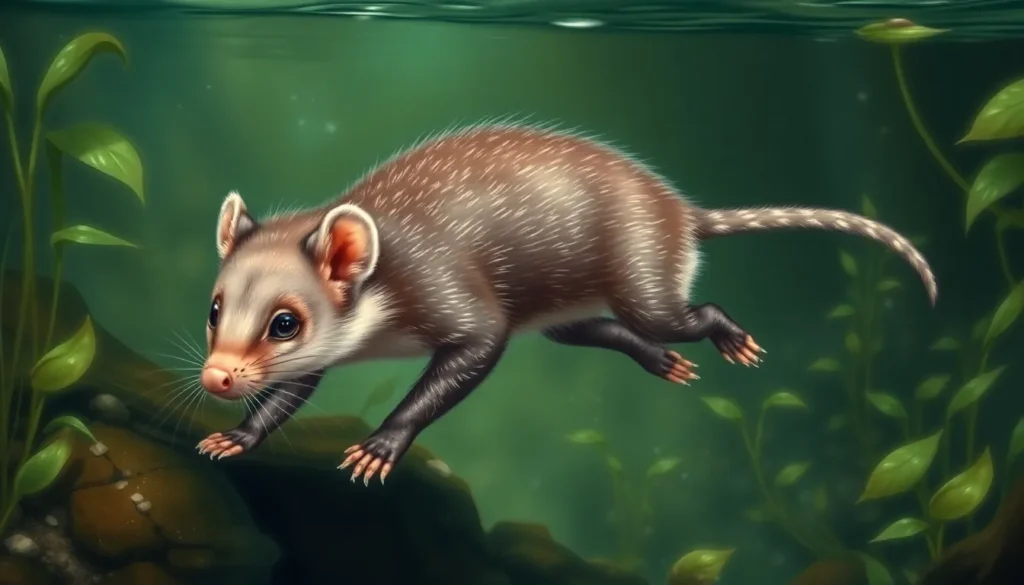
Unlike most marsupials, yapoks have webbed hind feet that aid in swimming efficiently underwater. - Waterproof Fur
Their fur is dense and water-repellent, helping them stay dry and insulated while swimming. - Nocturnal Behavior
Yapoks are mainly nocturnal, hunting for food during the night and resting during the day. - Diet Consists Mainly of Aquatic Prey
They primarily feed on fish, crustaceans, and other small aquatic animals, using their sensitive whiskers to detect prey underwater. - Waterproof Pouch
Female yapoks have a unique waterproof pouch in which they carry their young while swimming, an unusual trait among marsupials. - Solitary Animals
Yapoks tend to be solitary except during mating and rearing offspring. - Excellent Swimmers
They can swim rapidly and dive underwater for extended periods to catch prey or avoid predators. - Distribution Range
Yapoks inhabit freshwater streams, rivers, and lakes from Mexico to northern Argentina. - Limited Climbing Ability
Although marsupials are often arboreal, yapoks spend most of their time in water and are not proficient climbers. - Reproduction and Development
After a short gestation, females give birth to tiny underdeveloped young that continue development inside the pouch. - Adaptations to Aquatic Life
Their nostrils and ears can close underwater to prevent water entry while diving. - Predators and Threats
Natural predators include large fish, birds of prey, and crocodilians; human activities also pose threats through habitat degradation. - Conservation Status
Currently listed as Least Concern by the IUCN but facing localized threats due to pollution and habitat loss. - Role in Ecosystem
Yapoks help control aquatic invertebrate and fish populations, contributing to freshwater ecosystem balance. - Behavioral Communication
They use vocalizations and scent marking to communicate with conspecifics. - Water-Dependent Lifespan
Their survival depends heavily on clean freshwater environments, making them sensitive to ecological changes. - Historical Scientific Interest
Yapoks have fascinated scientists due to their unique adaptations among marsupials and aquatic mammals. - Distinct from Other Opossums
Unlike terrestrial opossums, yapoks exhibit strong swimming and diving capabilities. - Limited Public Awareness
Despite their interesting biology, yapoks remain relatively unknown outside scientific communities and local regions.
Habitat and Behavior
Yapoks inhabit freshwater environments such as streams, rivers, and lakes throughout Central and South America, from Mexico down to northern Argentina. They prefer clear, slow-moving water with abundant vegetation, which provides shelter and hunting grounds. These nocturnal creatures forage mainly at night, using their sensitive whiskers to detect prey underwater. Their webbed hind feet and waterproof fur enable proficient swimming and diving. Yapoks are solitary animals, coming together only to mate. Females carry their young in a specialized waterproof pouch that protects them while swimming. Their ability to close nostrils and ears underwater allows them to remain submerged while hunting or evading predators. Yapoks rarely climb trees and spend most of their time in or near water.
Why This Animal Matters
Yapoks play a significant ecological role as mid-level predators in freshwater ecosystems, helping regulate populations of fish, crustaceans, and insects. This contributes to maintaining the health and balance of aquatic environments. Their presence can indicate good water quality, as they depend on clean freshwater habitats. Additionally, yapoks represent a unique evolutionary adaptation among marsupials, providing valuable insight into mammalian adaptation to aquatic life. Their cultural importance is limited but notable in some indigenous communities familiar with local wildlife. From a conservation perspective, protecting yapoks helps preserve freshwater biodiversity and ecosystem integrity in their native range.
Common Misconceptions
Misconception: Yapoks are fully aquatic like otters.
Correction: While yapoks are excellent swimmers and spend much time in water, they are semi-aquatic and rely on terrestrial environments for resting and denning.
Misconception: All opossums have pouches that are waterproof.
Correction: The waterproof pouch is unique to the yapok among opossums, adapted specifically for carrying young during swimming.
Misconception: Yapoks are common and widespread everywhere in their range.
Correction: Although their distribution is broad, yapoks are often locally rare and sensitive to environmental disturbances.
Misconception: Yapoks can climb trees like other opossums.
Correction: Yapoks are mostly aquatic and not adept climbers, contrasting with many terrestrial opossum species.
Misconception: Yapoks are dangerous to humans.
Correction: Yapoks are shy and non-aggressive; they pose no threat to humans.
FAQ
What is a yapok?
A yapok, or water opossum, is a semi-aquatic marsupial native to Central and South America, known for its unique adaptations to freshwater environments.
How do yapoks carry their young underwater?
Female yapoks have a specialized waterproof pouch that keeps their young dry and secure when swimming underwater.
Are yapoks related to other opossums?
Yes, yapoks belong to the same family Didelphidae as other opossums but have distinct adaptations for an aquatic lifestyle.




Leave a Reply