
Short Answer
21 Facts About Zebra and Wildebeest Herds
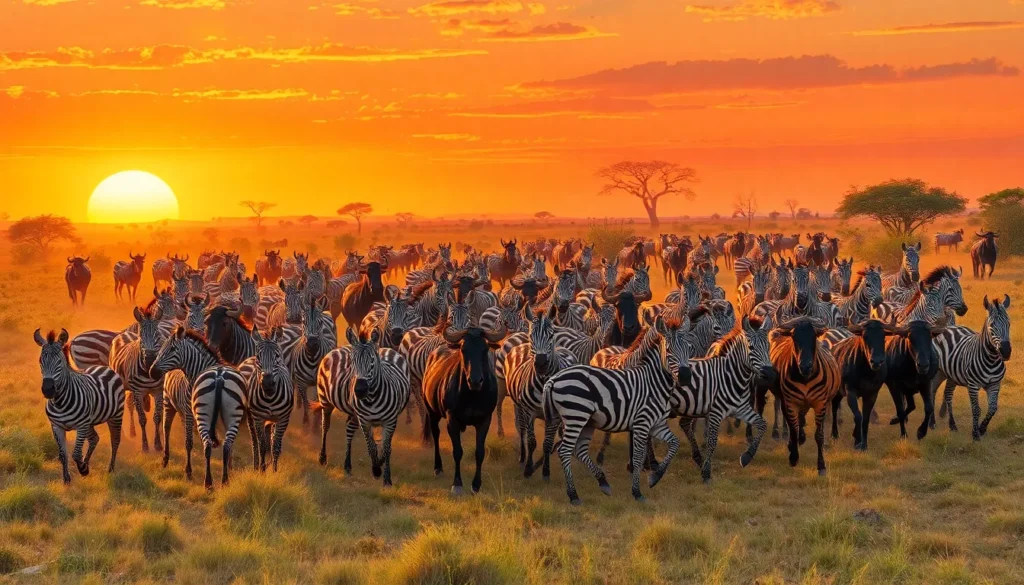
- Migration Phenomenon: Wildebeest and zebras participate in one of the largest terrestrial migrations on Earth, traveling thousands of kilometers annually in search of fresh grazing grounds.
- Mixed Herds: Zebras and wildebeests often form mixed herds, benefiting from each other’s vigilance against predators.
- Social Structure: Zebras live in stable family groups called harems, while wildebeests tend to form larger, more fluid herds.
- Communication: Both species use vocalizations and body language to communicate within the herd, particularly to warn of predators.
- Predator Avoidance: Herding behavior reduces individual predation risk through the dilution effect and enhanced detection of threats.
- Water Dependency: Wildebeests are highly dependent on water sources, influencing their migratory patterns more than zebras.
- Feeding Habits: Zebras primarily graze on tougher grasses, while wildebeests prefer shorter, more nutritious grasses, which reduces competition when herding together.
- Breeding Synchrony: Wildebeests often synchronize calving to overwhelm predators with a large number of vulnerable young simultaneously.
- Calf Protection: Zebra foals imprint on their mothers and the herd, gaining protection through group vigilance.
- Seasonal Movements: The timing of migrations is closely linked to seasonal rains and grass availability.
- Herd Size Variation: Herd sizes can range from small family groups to massive aggregations numbering in the tens of thousands.
- Role of Dominant Males: In zebra harems, a dominant stallion defends the group and mates with the females.
- Territoriality: Wildebeest males establish territories during breeding season but do not maintain permanent territories year-round.
- Resting Behavior: Both species rest in groups, with some individuals remaining alert to watch for predators.
- Cross-Species Alert Systems: Zebras and wildebeests respond to alarm calls from each other, enhancing group safety.
- Energy Efficiency: Moving in herds reduces individual effort during migration by utilizing aerodynamic advantages.
- Impact on Vegetation: Grazing by large herds influences savanna ecology by promoting grass regrowth and maintaining open landscapes.
- Parasite Exposure: Herd living can increase exposure to parasites, but grooming and movement help manage this risk.
- Waterhole Dynamics: Herds often gather at waterholes, which can become hotspots for predator attacks.
- Learning and Culture: Young zebras and wildebeests learn migratory routes and survival skills by following older herd members.
- Human Impact: Barriers such as fences and roads have disrupted traditional migratory routes, affecting herd health and survival.
Habitat and Behavior
Zebras and wildebeests primarily inhabit the savannas and open woodlands of eastern and southern Africa. Their habitat is characterized by wide expanses of grassland, seasonal rainfall, and the presence of water sources such as rivers and waterholes. Both species are grazers, relying on grasses as their main food source. Wildebeests prefer short, fresh grasses, while zebras can digest tougher grasses, allowing these species to coexist with reduced feeding competition.
Behaviorally, zebras form stable family units called harems, consisting of one stallion, several mares, and their offspring. Wildebeests, in contrast, form larger herds that fluctuate in composition and size, especially during migration. Both species rely heavily on social structures for predator detection and defense. Herding behavior provides safety in numbers, as individuals can benefit from the collective vigilance of the group. Their migrations are triggered by seasonal changes in rainfall and food availability, leading to annual movements that are crucial for their survival.
Why This Animal Matters
Zebra and wildebeest herds are keystone components of their ecosystems. Their grazing patterns influence vegetation structure and promote biodiversity by preventing overgrowth and facilitating nutrient cycling. The annual migration of these herds supports a wide range of predators and scavengers, maintaining a balanced food web. Ecologically, their movement patterns help sustain the health of savanna habitats.
Culturally, these animals have significance across Africa; they are iconic symbols featured in art, folklore, and tourism. Conservation of zebras and wildebeests is important not only for biodiversity but also for sustaining local economies that depend on wildlife tourism. However, threats such as habitat fragmentation and climate change pose challenges to their long-term survival.
Common Misconceptions
Misconception: Zebras and wildebeests always travel separately.
Correction: Zebras and wildebeests frequently form mixed herds, especially during migrations, benefiting from shared vigilance and complementary grazing habits.
Misconception: Wildebeests are slow and defenseless.
Correction: Wildebeests are fast runners capable of reaching speeds up to 80 km/h (50 mph) and use herd behavior to evade predators effectively.
Misconception: Zebra stripes serve only as camouflage.
Correction: While camouflage may play a role, research suggests zebra stripes also help deter biting flies and regulate body temperature.
Misconception: Migration is a random movement.
Correction: Migration routes are learned and follow predictable patterns influenced by rainfall and food availability.
Misconception: Larger herds mean more competition for food.
Correction: Mixed species herds reduce direct competition by grazing on different grass types and improve survival through collective vigilance.
FAQ
Why do wildebeests and zebras migrate together?
They migrate together because their different feeding habits reduce competition, and together they provide better protection from predators through increased vigilance.
How do zebra stripes help them survive?
Zebra stripes may help deter biting flies, confuse predators by disrupting their outline, and assist with thermoregulation, although the exact benefits are still studied.
What threats do zebra and wildebeest herds face?
Threats include habitat fragmentation from human activities, fencing that blocks migration routes, poaching, and climate change altering rainfall patterns critical for migration.


Leave a Reply