
Short Answer
21 Facts About Eagles and Power Lines
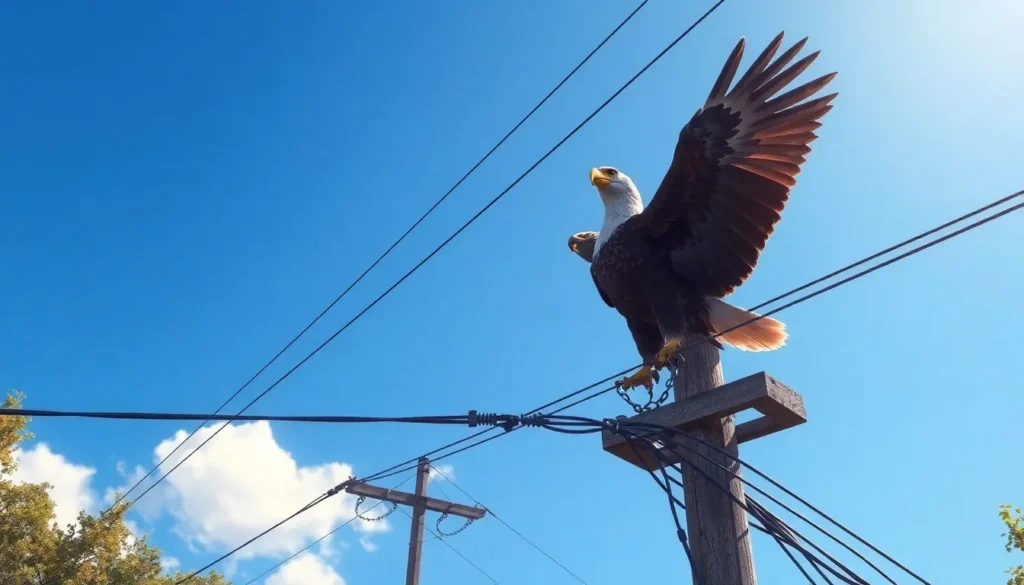
- Electrocution is a major cause of eagle deaths. Eagles often perch on power poles or lines and can be electrocuted when they touch two wires simultaneously or a wire and grounded equipment.
- Collisions with power lines also cause fatalities. Eagles may not see power lines during flight, leading to fatal crashes, especially in poor visibility conditions.
- Bald eagles and golden eagles are particularly vulnerable. Their large wingspans increase the risk of touching multiple conductors or colliding with lines.
- Power line design affects electrocution risk. Structures with closely spaced wires and conductive crossarms pose higher threats to eagles.
- Habitat overlap increases risk. Power lines often run through eagle habitats such as open plains, wetlands, and mountainous regions.
- Young eagles are more susceptible. Juveniles are inexperienced and may be more likely to perch on dangerous poles or misjudge flight paths around lines.
- Mitigation efforts include installing bird-safe designs. Utilities use insulated wires, perch deterrents, and wider spacing between conductors to reduce risks.
- Marker balls and diverters improve line visibility. These devices help eagles detect and avoid power lines during flight.
- Power line collisions often peak during migration. Eagles traveling long distances encounter unfamiliar lines and may be less cautious.
- Electrocution can cause population declines locally. In some areas, power line deaths have reduced eagle numbers, especially where other threats exist.
- Research and monitoring guide conservation actions. Studies on eagle interactions with power infrastructure help identify high-risk locations and effective solutions.
- Legislation protects eagles from power line impacts. Laws like the Bald and Golden Eagle Protection Act regulate activities that may harm eagles, including power line management.
- Collaborations between utilities and wildlife agencies are essential. Joint efforts develop and implement safer power line technologies and habitat management strategies.
- Power line-related deaths contribute to overall eagle mortality. Along with habitat loss and poisoning, electrocution and collisions are significant mortality factors.
- Climate change may influence risks. Changes in eagle migration patterns and habitat use could alter exposure to power lines.
- Public awareness initiatives aid conservation. Educating communities about power line dangers promotes support for mitigation projects.
- Power line retrofitting is costly but effective. Upgrading existing infrastructure to bird-safe standards reduces eagle deaths substantially.
- Some eagle species adapt by avoiding high-risk areas. However, this may limit habitat availability and affect survival.
- Technology advances provide new solutions. Innovations include real-time monitoring and automated deterrent devices to prevent eagle interactions with power lines.
- Power line-related mortality is a global issue. Eagles in North America, Europe, and Asia face similar threats from electrical infrastructure.
- Continued research is needed. Understanding species-specific behaviors and risk factors will improve mitigation and conservation outcomes.
Habitat and Behavior
Eagles primarily inhabit diverse environments such as forests, wetlands, mountains, and open plains. They are apex predators, relying on keen eyesight to hunt fish, mammals, and birds. Eagles are known for their soaring flight patterns, which can bring them into close proximity with human-made structures like power lines. These birds often perch on tall structures, including power poles, which can increase their risk of electrocution if the infrastructure is not designed with their safety in mind. Eagles are territorial and may use the same nesting sites for many years, often near water sources or open hunting grounds that may intersect with power line routes.
Why This Animal Matters
Eagles play a crucial ecological role as top predators, helping regulate populations of prey species and maintain balanced ecosystems. Their presence often indicates healthy environmental conditions. Culturally, eagles are significant symbols of strength, freedom, and national identity in many societies, including the United States where the bald eagle is the national bird. Conservation of eagles is important not only for biodiversity but also for cultural heritage. Protecting eagles from power line-related mortality is critical to preserving these iconic species and the ecological functions they support.
Common Misconceptions
Misconception: Eagles are naturally immune to electrical hazards.
Correction: Eagles are not immune to electrocution; their large wingspan and perching habits make them vulnerable to electrical shocks from power lines.
Misconception: All power lines are equally dangerous to eagles.
Correction: The risk varies depending on power line design, spacing of wires, and whether mitigation measures like insulation or markers are in place.
Misconception: Eagle deaths from power lines are accidental and unavoidable.
Correction: Many deaths can be prevented through careful infrastructure design, retrofitting, and ongoing monitoring and mitigation efforts.
Misconception: Eagles avoid all human structures naturally.
Correction: Eagles often perch on or near human structures, including power poles, which can increase their risk of injury or death if those structures are unsafe.
Misconception: Power line fatalities are the only major threat to eagles.
Correction: While significant, power lines are one of several threats, including habitat loss, poisoning, and collisions with vehicles or wind turbines.
FAQ
Why are eagles electrocuted by power lines?
Eagles can be electrocuted when their large wingspans touch two energized wires or a wire and grounded equipment simultaneously, completing an electrical circuit that results in fatal shocks.
What measures can reduce eagle deaths on power lines?
Installing insulated wires, increasing spacing between conductors, adding perch deterrents, and using marker balls to improve visibility are effective strategies to reduce mortality.
Are all eagle species equally affected by power lines?
No, larger species like bald and golden eagles are more vulnerable due to their size and perching habits, whereas smaller raptors may be less frequently affected.




Leave a Reply