
Short Answer
21 Facts About Gila Monsters
- Venomous Lizard: Gila monsters (Heloderma suspectum) are one of the few venomous lizard species in the world, with venom glands located in their lower jaws.
- Native Range: They are native to the southwestern United States and northwestern Mexico, including deserts and semi-arid regions.
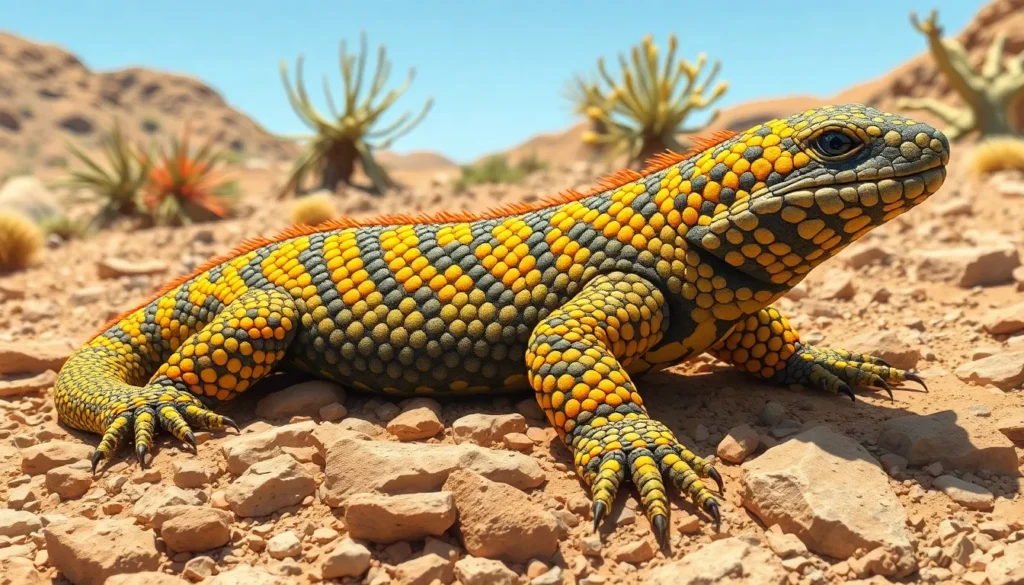
- Distinctive Appearance: Gila monsters have bead-like scales and bright coloration, typically a mix of black, pink, orange, and yellow patterns.
- Size: Adults typically measure between 18 and 24 inches in length, making them one of the largest lizards in their range.
- Slow and Deliberate Movement: Unlike many lizards, Gila monsters move slowly and deliberately, conserving energy in their hot environments.
- Venom Delivery: Their venom is delivered through grooves in their teeth by chewing on their victim, rather than injecting it through fangs like snakes.
- Diet: Their diet primarily consists of eggs, small mammals, birds, and reptiles.
- Venom Composition: Their venom contains compounds that are being researched for potential medical uses, including diabetes treatment.
- Conservation Status: Gila monsters are protected by law in many areas due to habitat loss and collection pressures.
- Burrowing Habits: They spend much of their time in burrows or under rocks, avoiding extreme heat and predators.
- Longevity: They can live up to 20 years or more in the wild.
- Reproduction: Females lay clutches of approximately 4 to 12 eggs in spring or early summer.
- Thermoregulation: Gila monsters regulate their body temperature by basking in the sun and seeking shade as needed.
- Slow Metabolism: Their metabolism is slow, allowing them to survive on infrequent meals.
- Defensive Behavior: When threatened, they may hiss, bite, and release a foul-smelling saliva.
- Nocturnal and Crepuscular: They are most active during cooler parts of the day, such as dawn, dusk, and nighttime.
- Not Aggressive: Despite their venom, Gila monsters are generally docile and avoid human contact.
- Scientific Name Origin: The genus Heloderma means “studded skin,” referring to their bumpy scales.
- Ecological Role: As predators and scavengers, they help control populations of small animals and clean up carrion.
- Historical Significance: The Gila monster was the first venomous lizard to be scientifically described in North America.
- Unique Venom Delivery System: Gila monsters lack hollow fangs; instead, venom flows from glands into grooves on the teeth during chewing.
Habitat and Behavior
Gila monsters inhabit desert and semi-arid regions primarily in the southwestern United States, including Arizona, New Mexico, Utah, and parts of California, as well as northwestern Mexico. They prefer rocky, scrubland, and desert habitats where they can find shelter in burrows, under logs, or in rock crevices. These lizards are primarily solitary and spend much of their time underground or hidden to avoid extreme heat and predators. Their slow metabolism and energy-conserving movements are adaptations to the harsh desert environment. Gila monsters are mostly nocturnal and crepuscular, active during dawn, dusk, and nighttime to hunt for prey such as eggs, small mammals, and birds. They use their strong jaws to crush eggs and small animals, and their venom serves both for defense and subduing prey.
Why This Animal Matters
Gila monsters play an important ecological role as both predators and scavengers in desert ecosystems. By consuming eggs and small animals, they help regulate populations and maintain balance within their habitats. Their venom has attracted scientific interest due to compounds that may have medicinal applications, including treatments for diabetes. Additionally, Gila monsters are culturally significant in Indigenous and local folklore, often symbolizing survival and resilience in harsh environments. Due to habitat loss and illegal collection, they are protected species, highlighting their conservation relevance. Studying Gila monsters contributes to understanding venom evolution and desert ecology.
Common Misconceptions
Misconception: Gila monsters are deadly to humans.
Correction: While their bite is venomous and painful, it is rarely fatal to humans and typically only causes localized pain and swelling.
Misconception: Gila monsters are aggressive and will attack unprovoked.
Correction: They are generally shy and avoid humans, biting only when threatened or handled.
Misconception: Gila monsters can inject venom quickly like snakes.
Correction: Their venom delivery is slow and requires chewing to introduce venom into the wound, unlike the rapid injection seen in venomous snakes.
Misconception: Gila monsters are common and not at risk.
Correction: Their populations are vulnerable due to habitat destruction and collection for the pet trade, leading to legal protections.
Misconception: Gila monsters are related to monitor lizards.
Correction: Despite some similarities, Gila monsters belong to a distinct family (Helodermatidae) and are not closely related to monitors.
FAQ
Are Gila monsters dangerous to humans?
Gila monsters are venomous, but their bite is rarely fatal to humans. It can cause intense pain and swelling but usually requires medical attention rather than being life-threatening.
Where do Gila monsters live?
They are native to the southwestern United States and northwestern Mexico, inhabiting desert and semi-arid regions where they live in burrows and rocky areas.
What do Gila monsters eat?
Their diet mainly consists of eggs, small mammals, birds, and reptiles. They use their strong jaws to crush eggs and prey.





Leave a Reply