
Short Answer
21 Facts About Wolves
- Wolves are highly social animals. They live and hunt in packs that usually consist of a family group including a breeding pair and their offspring.
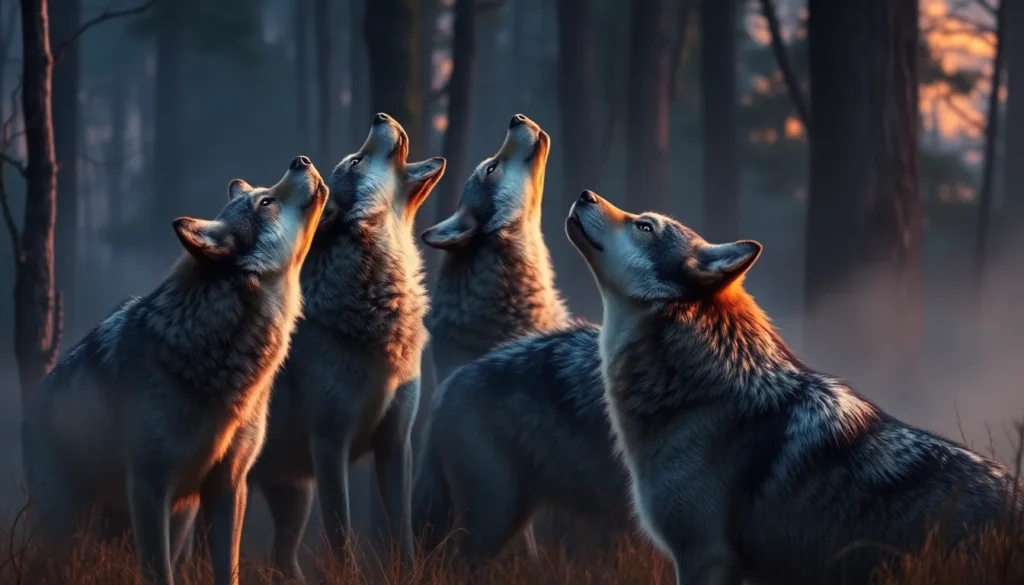
- They communicate through vocalizations, body language, and scent marking. Howling is the most recognized vocalization and serves to coordinate pack activities and mark territory.
- Wolves have a diverse diet. Although primarily carnivorous, they occasionally consume fruits and vegetables.
- They can cover large distances. Wolves are capable of traveling up to 30 miles in a single day when hunting or patrolling their territory.
- Wolf packs have a hierarchical social structure. The alpha male and female lead the pack, with subordinate members having varying roles.
- Wolves are apex predators. They play a critical role in controlling prey populations and maintaining ecosystem balance.
- They have strong family bonds. Pack members cooperate in raising pups and hunting, displaying cooperative behavior uncommon in many other animals.
- Wolf pups are born blind and deaf. They rely entirely on adults for care during their early weeks.
- Wolves have a keen sense of smell and hearing. These senses help them locate prey and communicate over long distances.
- They have adapted to a wide range of habitats. Wolves are found in forests, tundras, deserts, and grasslands across North America, Europe, and Asia.
- Wolf fur color varies. It can range from white, gray, brown, black, to a mix, depending on the subspecies and environment.
- Wolves have been present for thousands of years. They are believed to be one of the earliest domesticated animals’ ancestors, leading to the domestic dog.
- They use scent marking to define territory. Urine and feces serve as markers to warn other packs to stay away.
- Wolves have a wide vocal range. Besides howling, they bark, growl, whine, and yip to express different emotions or signals.
- Wolf populations have declined due to habitat loss and persecution. Conservation efforts have helped some populations recover.
- They are capable swimmers. Wolves can cross rivers and lakes to reach prey or new territory.
- Wolves play a role in cultural mythology. Many indigenous and ancient cultures feature wolves prominently in their stories and symbolism.
- They hunt primarily at night or during dawn and dusk. This crepuscular activity helps them avoid heat and human activity.
- Wolf packs typically consist of 6 to 10 members. However, pack size can vary widely depending on food availability and habitat.
- They exhibit territorial behavior. Packs defend their home range aggressively from other wolves.
- Wolves are intelligent and adaptable. They can modify their hunting strategies and social dynamics in response to environmental changes.
Habitat and Behavior
Wolves inhabit a wide variety of environments, including boreal forests, tundra, mountains, and grasslands across North America, Europe, and northern Asia. They are highly adaptable, able to survive in both cold and temperate climates. Wolves live in packs that function as cooperative units for hunting, raising pups, and territory defense. Their hunting strategies often involve endurance and teamwork to chase and exhaust prey such as deer, elk, and smaller mammals. Wolves tend to mark and defend territories ranging from tens to hundreds of square miles, depending on prey density. They communicate using howls, body postures, facial expressions, and scent marking to maintain pack cohesion and coordinate activities. Their social structure is hierarchical but flexible, with roles that can change depending on circumstances such as illness or death of pack members.
Why This Animal Matters
Wolves are apex predators that help regulate prey populations, preventing overgrazing and supporting biodiversity. Their presence can trigger trophic cascades, influencing entire ecosystems positively. Culturally, wolves have been significant symbols in many societies, representing wilderness, intelligence, and freedom. They also have a complex relationship with humans, inspiring both fear and admiration. Conservation efforts for wolves have highlighted the importance of preserving large carnivores and their habitats, contributing to broader environmental awareness. Protecting wolves also supports the health of forests, rivers, and other wildlife species, underscoring their ecological significance.
Common Misconceptions
Misconception: Wolves are dangerous to humans and frequently attack people.
Correction: Wild wolves generally avoid humans and attacks are extremely rare. Most conflicts arise from misunderstanding or provocation.
Misconception: Wolves kill indiscriminately and devastate prey populations.
Correction: Wolves typically hunt weak, sick, or old animals, which helps maintain healthy prey populations and ecosystem balance.
FAQ
Are wolves dangerous to humans?
Wild wolves generally avoid humans and attacks on people are extremely rare. Most wolves tend to be shy and wary around humans unless threatened or cornered.
How do wolves communicate with each other?
Wolves use a combination of vocalizations such as howling, body postures, facial expressions, and scent marking to communicate within the pack and to other wolves.
Why are wolves important to ecosystems?
As apex predators, wolves regulate prey populations, which helps maintain biodiversity and ecosystem health by preventing overgrazing and encouraging balanced food webs.





Leave a Reply