
Short Answer
21 Facts About Marine Worms
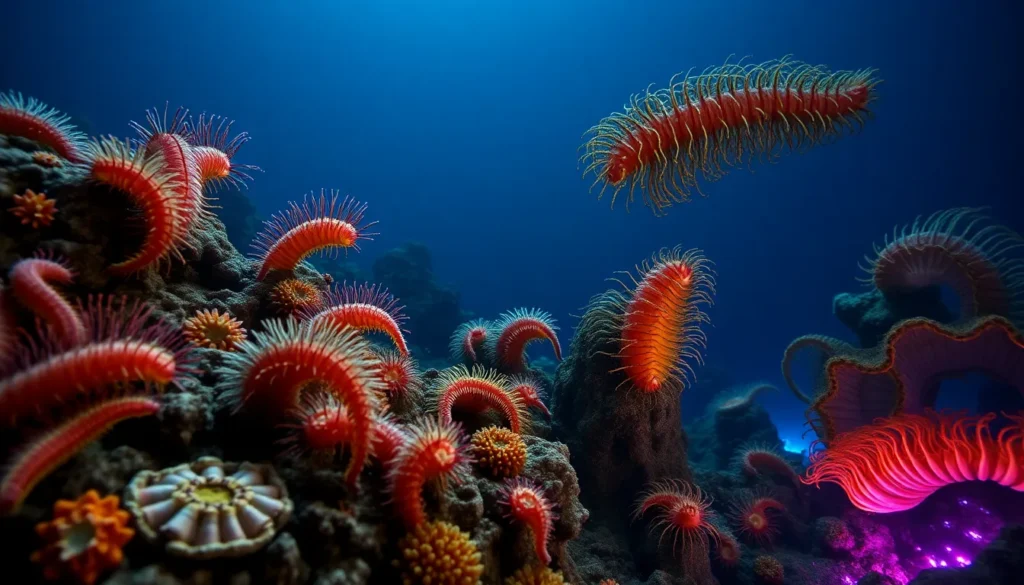
- Marine worms belong to several phyla. These include Annelida (segmented worms), Nemertea (ribbon worms), and Polychaeta (bristle worms), among others, showing great diversity in form and function.
- They inhabit a wide range of marine environments. From shallow intertidal zones to deep-sea hydrothermal vents, marine worms have adapted to various oceanic habitats.
- Many marine worms are segmented. Particularly annelids, whose bodies are divided into repeated segments, aiding locomotion and flexibility.
- Polychaete worms possess parapodia. These paired, fleshy appendages help in movement and respiration.
- Some marine worms have bioluminescent capabilities. They can produce light through chemical reactions, which may serve to attract prey or deter predators.
- Marine worms exhibit various feeding strategies. They can be detritivores, scavengers, predators, or filter feeders depending on species.
- Several species build tubes or burrows. Tube worms create protective structures from secreted materials or sediment, providing shelter and anchorage.
- Reproduction in marine worms varies widely. Some reproduce sexually with distinct sexes, while others are hermaphroditic; many release eggs and sperm into the water for external fertilization.
- Some marine worms display remarkable regeneration. They can regrow lost segments or even entire parts of their bodies, aiding survival after injury.
- Marine worms are important for sediment mixing. Their burrowing activity aerates the substrate and facilitates nutrient cycling in benthic ecosystems.
- Certain marine worms form symbiotic relationships. For example, some live in association with hydrothermal vent communities, hosting chemosynthetic bacteria.
- Marine worms exhibit diverse locomotion methods. They may crawl, swim, or anchor themselves depending on species and environment.
- Many marine worms have complex sensory organs. These may include eyespots, antennae, or specialized chemoreceptors to detect changes in their surroundings.
- Some species can produce toxins. These toxins can serve as defense mechanisms against predators or help subdue prey.
- Marine worms contribute to the diet of many marine animals. They are a vital food source for fish, crustaceans, and other invertebrates.
- Giant tube worms can reach over 2 meters in length. These remarkable worms inhabit deep-sea hydrothermal vents and have unique adaptations for survival in extreme conditions.
- Marine worms have been studied for their potential biomedical applications. Their regenerative abilities and unique chemical compounds are of interest in scientific research.
- Some marine worms can tolerate low oxygen conditions. This adaptation allows them to survive in oxygen-poor sediments or environments.
- Fossil evidence shows marine worms have existed for over 500 million years. They are among the earliest multicellular animals in the fossil record.
- Marine worms vary greatly in size. They range from microscopic species to the large giant tube worms of the deep sea.
- They play essential roles in marine ecosystems. By recycling nutrients and supporting food webs, marine worms help maintain ocean health.
Habitat and Behavior
Marine worms inhabit a wide variety of oceanic environments, from shallow coastal waters to the deep sea. Many live within sediments, burrowing into sand or mud where they feed on organic matter or small organisms. Others attach themselves to rocks, coral reefs, or hydrothermal vent structures. Behaviorally, marine worms may be sedentary or highly mobile, depending on their ecological niche. They often use parapodia or cilia for locomotion and can exhibit complex reproductive behaviors such as synchronized spawning. Some species build tubes or burrows to protect themselves from predators and environmental stressors. Their feeding strategies are varied, including deposit feeding, filter feeding, predation, and scavenging, enabling them to exploit diverse food resources.
Why This Animal Matters
Marine worms are ecologically significant due to their roles in nutrient recycling and sediment turnover. Their burrowing activities aerate the sea floor, enhancing the breakdown of organic materials and supporting healthy benthic ecosystems. They serve as a crucial food source for many marine predators, contributing to the stability of food webs. Additionally, some species are indicators of environmental health and water quality. From a scientific perspective, marine worms are important models for studying regeneration, development, and adaptation to extreme environments. Their unique chemical compounds also provide potential for biomedical and pharmacological applications. Conserving marine worm diversity helps maintain ocean ecosystem functions critical to global biodiversity.
Common Misconceptions
Misconception: Marine worms are all harmful parasites.
Correction: While some marine worms are parasitic, the vast majority are free-living and play beneficial roles in their ecosystems.
Misconception: Marine worms are simple, primitive animals.
Correction: Marine worms exhibit complex anatomy, behaviors, and adaptations, reflecting their evolutionary success and diversity.
FAQ
What are marine worms?
Marine worms are a diverse group of worm-like invertebrates that inhabit ocean environments, including various classes such as annelids, polychaetes, and nemerteans.
How do marine worms contribute to the ecosystem?
They are essential in nutrient cycling, sediment aeration, and serve as a food source for many marine species, supporting healthy ocean ecosystems.
Can marine worms regenerate lost body parts?
Yes, many marine worm species have remarkable regenerative abilities, allowing them to regrow segments or entire body parts after injury.



Leave a Reply