
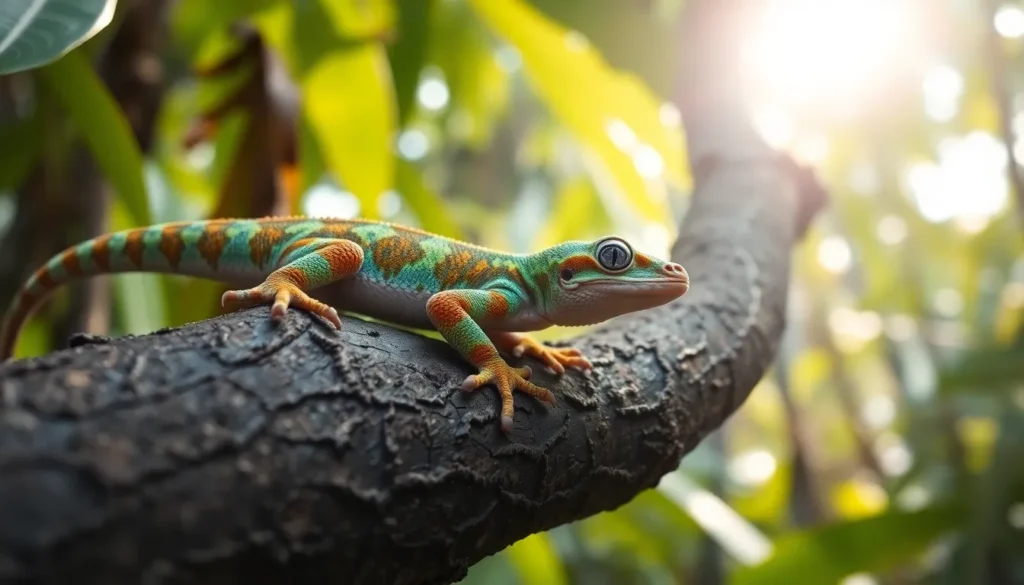
Short Answer
21 Facts About Geckos
- Geckos can climb smooth surfaces. Their feet have specialized toe pads covered with tiny hair-like structures called setae that allow them to adhere to and walk on walls and ceilings.
- They are found worldwide in warm climates. Geckos inhabit regions ranging from tropical rainforests to deserts, adapting to diverse environments.
- Most geckos are nocturnal. They are primarily active at night, which helps them avoid predators and extreme daytime temperatures.
- Geckos communicate using vocalizations. Unlike many lizards, geckos produce chirping, clicking, and barking sounds to communicate with others.
- Some species can lose their tails to escape predators. This process, called autotomy, allows the gecko to distract a predator while it escapes; the tail later regenerates.
- Geckos have excellent night vision. Their large eyes contain specialized cells that enhance their ability to see in low light conditions.
- They use their tongues for self-cleaning. Geckos often lick their eyes and body to keep them clean and moist.
- Gecko skin can have a variety of colors and patterns. These adaptations aid in camouflage and thermoregulation.
- Some species possess adhesive toe pads, while others do not. For example, the leaf-tailed gecko relies on camouflage rather than climbing abilities.
- Geckos can regenerate damaged skin and tails. This regenerative ability helps with survival and healing.
- They primarily eat insects and other small invertebrates. Their diet plays a role in controlling pest populations.
- The smallest gecko species can be under 2 centimeters long. The Jaragua dwarf gecko is one of the tiniest reptiles known.
- Geckos have no eyelids. Instead, they have a transparent scale called a spectacle covering their eyes, which they clean with their tongues.
- Some geckos exhibit parental care. Certain species guard their eggs or stay near them until they hatch.
- Geckos have been present on Earth for at least 100 million years. Fossils show their ancient lineage dating to the Cretaceous period.
- They use camouflage and mimicry for protection. Many geckos blend into their environment to avoid predators.
- Geckos are popular in the pet trade. Their manageable size and unique behaviors attract reptile enthusiasts worldwide.
- Some gecko species are threatened by habitat loss. Deforestation and urbanization impact gecko populations in various regions.
- Geckos play an important role in their ecosystems. By preying on insects, they help maintain balance in food webs.
- They have inspired scientific research. The structure of gecko feet has influenced developments in materials science and robotics.
- Geckos are culturally significant in many societies. In some cultures, they are considered symbols of good luck or protection.
Habitat and Behavior
Geckos are found on every continent except Antarctica, predominantly in warm and temperate regions. Their habitats vary widely, including tropical rainforests, deserts, rocky outcrops, and even urban environments. Being mostly nocturnal, they avoid the heat of the day and actively hunt insects during the night. Geckos are generally solitary but communicate through vocalizations and body language. Their climbing ability enables them to exploit niches inaccessible to many predators and competitors. Tail autotomy provides a crucial defense mechanism, and their regenerative capacity aids in recovery. Some species exhibit parental care by guarding eggs or hatchlings. Their adaptability allows many geckos to thrive in diverse and changing environments.
Why This Animal Matters
Geckos serve important ecological functions by controlling insect populations, which benefits agriculture and human health by reducing pests. Their presence indicates ecosystem health, as they are sensitive to environmental changes. Geckos also contribute to cultural heritage in various societies where they are regarded as symbols or subjects of folklore. From a scientific perspective, their unique adhesive toe pads have inspired biomimetic research, influencing the development of new materials and technologies. Conservation efforts are critical for some species threatened by habitat destruction and the pet trade. Protecting geckos helps preserve biodiversity and the ecological balance within their native habitats.
Common Misconceptions
Misconception: Geckos can stick to any surface indefinitely.
Correction: While geckos can adhere to many surfaces using microscopic hairs on their toes, their grip is not permanent. They can detach their feet easily to move and do not stick to surfaces coated with oils or dust.
Misconception: All geckos are harmless and safe pets.
Correction: Although many geckos are popular and safe as pets, some species require specialized care, and wild-caught geckos may carry parasites or diseases. Responsible pet ownership and sourcing are important.
FAQ
How do geckos stick to walls and ceilings?
Geckos use specialized toe pads covered with microscopic hair-like structures called setae, which exploit van der Waals forces to adhere to smooth surfaces, enabling them to climb walls and ceilings.
Are all geckos able to vocalize?
Most gecko species can produce vocalizations such as chirps, clicks, or barks for communication, which is unusual among lizards, but the extent and type of vocalization vary among species.
Can geckos regenerate their tails?
Yes, many gecko species can shed their tails when threatened—a process called autotomy—and later regenerate a new tail, although the new tail may differ in color and structure from the original.





Leave a Reply