
Short Answer
21 Facts About Crabs
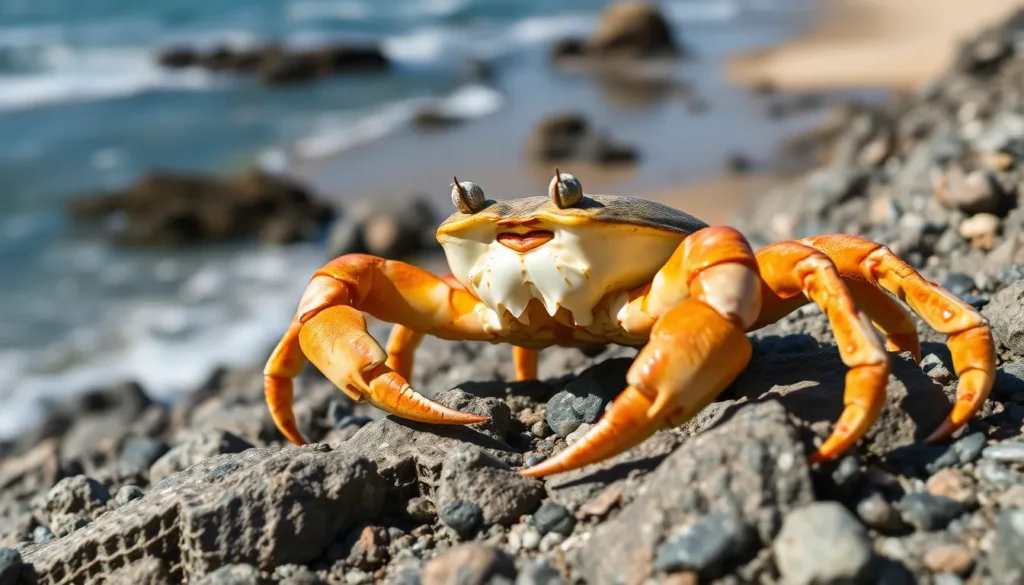
- Crabs belong to the order Decapoda. They are part of the larger group of crustaceans characterized by having ten legs.
- There are over 6,800 known species of crabs. These species vary widely in size, shape, and habitat.
- Crabs walk sideways. This is due to the structure of their legs, which are jointed in a way that makes lateral movement more efficient.
- Crabs have a hard exoskeleton called a carapace. This protects their soft internal organs from predators and environmental hazards.
- Most crabs have two large claws called chelae. These claws are used for defense, communication, and manipulating food.
- Crabs can regenerate lost limbs. If a crab loses a claw or leg, it can regrow it over successive molts.
- Molting is essential for crab growth. Crabs periodically shed their exoskeleton to grow a larger one.
- Some crab species are terrestrial, while others are aquatic. They inhabit diverse environments including oceans, freshwater, and land.
- Hermit crabs use empty shells for protection. Unlike true crabs, they have a soft abdomen and rely on scavenged shells for shelter.
- Crabs have complex eyes on stalks. This adaptation enhances their field of vision and helps detect predators and prey.
- Many crabs are omnivores. Their diet can include algae, plankton, mollusks, and detritus.
- Some species of crabs engage in elaborate courtship rituals. These behaviors often involve claw waving, drumming, or dancing to attract mates.
- Crabs communicate through a range of signals. These include visual displays, sounds, and chemical signals.
- Ghost crabs can run exceptionally fast. They can reach speeds up to 10 miles per hour to escape predators.
- Crabs play an important role in the ecosystem. They help recycle nutrients by consuming dead organisms and are prey for many animals.
- The largest crab is the Japanese spider crab. It can have a leg span of up to 12 feet, making it the largest known arthropod.
- Some crabs exhibit parental care. For example, certain species protect their eggs and young until they are capable of independent survival.
- Crabs have existed for more than 200 million years. Fossil records show that they evolved during the Jurassic period.
- Crabs use their claws for defense and offense. They can deliver strong pinches to deter predators or compete for territory.
- Cultural significance of crabs exists worldwide. Crabs appear in mythology, cuisine, and art across many societies.
- Climate change and habitat loss threaten some crab species. Changes to coastal environments impact their survival and reproduction.
Habitat and Behavior
Crabs inhabit a wide range of environments including marine, freshwater, and terrestrial habitats. Marine crabs live in oceans, often found in coastal areas such as rocky shores, coral reefs, and estuaries. Freshwater crabs inhabit rivers, lakes, and streams, while terrestrial crabs are commonly found in tropical forests and mangroves, often returning to water to reproduce. Behaviorally, crabs are generally scavengers and opportunistic feeders, consuming algae, detritus, mollusks, and small animals. Many crabs are nocturnal, avoiding predators by being active at night. Crabs use their claws not only for feeding but also for communication and defense. Their movement is typically sideways, which facilitates quick escapes from threats. Molting is a vital behavior enabling growth, during which crabs are vulnerable until their new exoskeleton hardens.
Why This Animal Matters
Crabs play critical ecological roles by contributing to nutrient cycling and maintaining healthy ecosystems. As scavengers, they help break down organic material, preventing the accumulation of detritus. They also serve as prey for a variety of animals, including fish, birds, and mammals, thus supporting food webs. Economically, many crab species are important for fisheries worldwide, providing food and livelihoods for millions. Culturally, crabs feature prominently in folklore, art, and cuisine in many regions. Conservation-wise, some crab populations are indicators of environmental health, with their decline signaling habitat degradation. Protecting crab species and their habitats is essential for sustaining biodiversity and ecosystem services.
Common Misconceptions
Misconception: All crabs are marine animals.
Correction: While many crabs live in the ocean, numerous species inhabit freshwater and terrestrial environments.
Misconception: Crabs always walk sideways.
Correction: Although sideways movement is common, crabs can move forwards and backwards, especially in confined spaces or while climbing.
Misconception: Hermit crabs are true crabs.
Correction: Hermit crabs belong to a different infraorder and possess a soft abdomen, unlike true crabs that have a hard exoskeleton covering their body.
Misconception: Crabs are solitary creatures.
Correction: Many crab species are social and communicate with each other through various signals and behaviors.
FAQ
Why do crabs walk sideways?
Crabs walk sideways because the structure of their legs makes lateral movement more efficient and faster than walking forwards or backwards.
Can crabs live on land?
Yes, some crab species are terrestrial and live primarily on land but usually return to water to reproduce.
How do crabs protect themselves from predators?
Crabs protect themselves using their hard exoskeleton, large claws for defense, camouflage, and by quickly retreating to burrows or water.


Leave a Reply