
Short Answer
21 Facts About Xantus’s Hummingbird
- Scientific Classification: Xantus’s hummingbird is classified as Hylocharis xantusii and belongs to the family Trochilidae.
- Geographic Range: It is endemic to the Baja California Peninsula in Mexico, primarily found in the southern regions.
- Size: This species is relatively small, measuring about 8 to 9 centimeters in length.
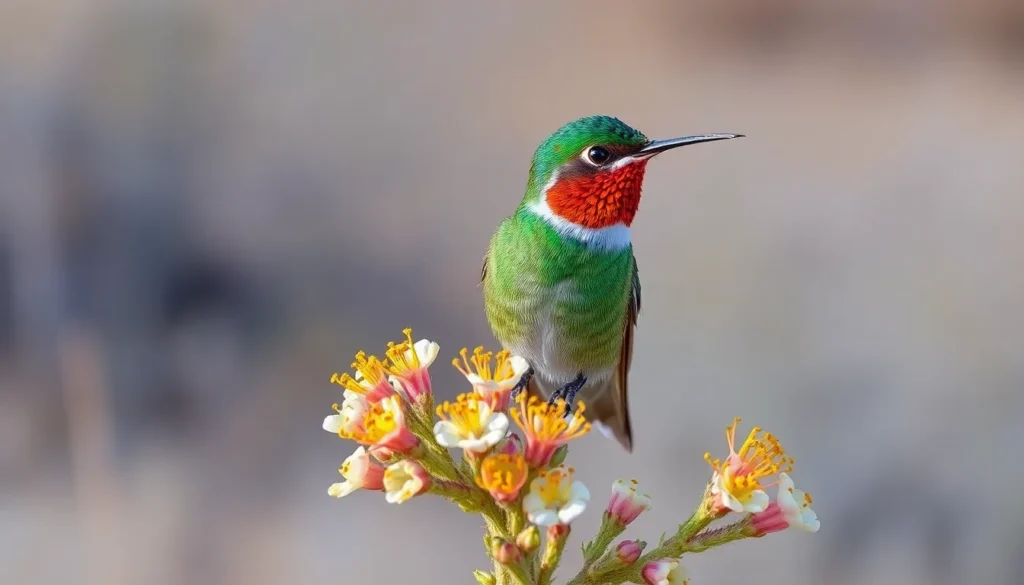
- Coloration: Males display iridescent green plumage with a bright orange-red throat patch, while females are generally duller with greenish underparts.
- Sexual Dimorphism: Males and females differ in coloration and throat patch presence, aiding in sex identification.
- Diet: Like other hummingbirds, Xantus’s hummingbird primarily feeds on nectar from flowers but also consumes small insects for protein.
- Feeding Adaptations: It has a specialized long, slender bill adapted for accessing nectar deep within flowers.
- Flight Behavior: Known for their agility, these hummingbirds can hover mid-air and perform rapid flight maneuvers while feeding.
- Breeding Season: Breeding typically occurs from March through July, coinciding with the flowering of many plants in its habitat.
- Nesting: Females build small cup-shaped nests using plant fibers and spider silk, often camouflaged with lichen.
- Reproduction: Clutch size is usually two eggs, which the female incubates alone for approximately two weeks.
- Territoriality: Males are territorial, often defending rich nectar sources against rivals.
- Migration: Xantus’s hummingbird is generally non-migratory, remaining within its range year-round.
- Habitat Preferences: It favors arid and semi-arid regions, including scrublands, canyons, and areas with abundant flowering plants.
- Pollination Role: As a nectar feeder, it acts as an important pollinator for various native plant species in Baja California.
- Conservation Status: Currently, it is listed as Least Concern but may face threats from habitat loss and climate change.
- Adaptability: It shows some adaptability to altered habitats, including gardens and urban areas with flowering plants.
- Vocalizations: Its calls include high-pitched chirps and trills used during courtship and territorial displays.
- Scientific Discovery: The species was named after John Xantus de Vesey, a 19th-century Hungarian zoologist and collector.
- Longevity: In the wild, individuals live several years, although precise lifespan data is limited.
- Research Importance: Studying this hummingbird aids understanding of pollination ecology and species adaptation in arid environments.
Habitat and Behavior
Xantus’s hummingbird inhabits the arid and semi-arid environments of the Baja California Peninsula, where it is closely associated with flowering plants that provide nectar. It is typically found in scrublands, dry canyons, and areas with dense flowering shrubs. The species is largely sedentary, maintaining small territories rich in nectar sources. Males defend these territories aggressively to secure feeding and mating opportunities. Their flight is highly agile, allowing them to hover and maneuver efficiently while feeding. Reproduction involves females building well-camouflaged nests and caring for eggs and hatchlings alone. In general, their behavior is typical of hummingbirds but adapted to the relatively dry and seasonal environment in which they live.
Why This Animal Matters
Xantus’s hummingbird plays a crucial ecological role as a pollinator for many native plants in Baja California. By transferring pollen while feeding on nectar, it supports the reproduction of various flowering species, contributing to the health of local ecosystems. Its presence also indicates the state of habitat quality in the region. Culturally, the bird is part of the natural heritage of Baja California and is of interest to birdwatchers and researchers. From a conservation perspective, understanding its population trends helps monitor environmental changes, especially those related to climate and habitat disturbance.
Common Misconceptions
Misconception: Xantus’s hummingbird migrates long distances like some other hummingbirds.
Correction: Unlike many hummingbird species, Xantus’s hummingbird is largely non-migratory and remains within its limited range year-round.
Misconception: All hummingbirds have identical feeding habits.
Correction: While all hummingbirds feed on nectar, Xantus’s hummingbird has specific floral preferences and also supplements its diet with insects for protein.
Misconception: The bright throat patch is present in both male and female Xantus’s hummingbirds.
Correction: Only males have the distinctive iridescent throat patch; females have more subdued coloring without this feature.
FAQ
Where is Xantus’s hummingbird found?
Xantus’s hummingbird is endemic to the Baja California Peninsula in Mexico, primarily in southern regions with arid to semi-arid environments.
What does Xantus’s hummingbird eat?
This species feeds mainly on nectar from flowers but also consumes small insects to supplement its protein intake.
Is Xantus’s hummingbird migratory?
No, Xantus’s hummingbird is generally non-migratory and stays within its range throughout the year.

Leave a Reply