
Short Answer
21 Facts About Axolotls
- Axolotls are neotenic salamanders. Unlike most amphibians, they retain their larval features such as gills and aquatic lifestyle throughout their lives instead of undergoing metamorphosis.
- Scientific name is Ambystoma mexicanum. This species belongs to the family Ambystomatidae and is native to Mexico.
- They are native only to Lake Xochimilco and Lake Chalco in Mexico. These lakes were historically the axolotl’s natural habitat, but urbanization has restricted their range.
- Axolotls can regenerate entire limbs and other body parts. They have remarkable regenerative abilities, including regrowing limbs, spinal cord, heart, and parts of their brain.
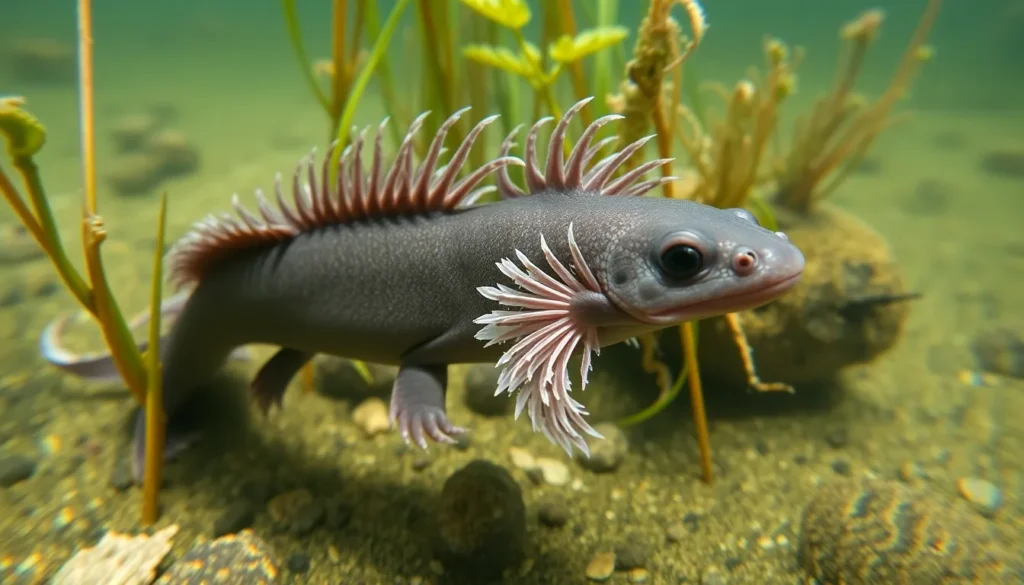
- They have external gills that resemble feathery structures on their heads. These gills enable them to extract oxygen from water efficiently.
- Adult axolotls typically measure between 15 and 45 centimeters in length. Size can vary depending on environmental conditions and captivity.
- Axolotls exhibit a variety of colors, including wild-type dark, leucistic (pale pink with red gills), albino, and melanoid. Color variations are often seen in captive-bred specimens.
- They are carnivorous and primarily feed on small prey such as worms, insects, and small fish. They use suction feeding to capture their food.
- Axolotls have a lifespan of about 10 to 15 years in captivity. Lifespan in the wild is not well documented but is believed to be shorter due to environmental pressures.
- They are often used in scientific research due to their regenerative capabilities and genetic makeup. Studies on axolotls contribute to understanding tissue regeneration and developmental biology.
- Axolotls are critically endangered in the wild. Habitat loss, pollution, and invasive species have drastically reduced their natural populations.
- They breathe through both lungs and external gills but rely mainly on gills for oxygen exchange. They can also absorb oxygen through their skin.
- Axolotls are primarily nocturnal and tend to hide under debris during the day. Their behavior helps them avoid predators.
- They do not undergo metamorphosis naturally but can be induced to metamorphose through hormonal treatment. This transformation converts them into a more typical salamander form but is stressful and often detrimental.
- Axolotls have a wide head with lidless eyes and a broad mouth. Their appearance is distinct and often described as smiling.
- They communicate mainly through body language and movement rather than vocalizations. This is common among amphibians with aquatic habitats.
- Axolotls have been part of Mexican culture and mythology for centuries. They are linked to Aztec legends, particularly associated with the god Xolotl.
- They are popular exotic pets but require specialized care. Their aquatic environment needs to be carefully maintained to mimic natural conditions.
- Axolotls have relatively simple diets in captivity but require protein-rich food sources. Often fed worms, pellets, and small aquatic animals.
- They have a unique method of swallowing food by suction. They rapidly open their mouth to create a vacuum that pulls prey inside.
- Their genome is large and complex, approximately 10 times the size of the human genome. This contributes to their regenerative abilities and has attracted scientific interest.
Habitat and Behavior
Axolotls are native exclusively to high-altitude freshwater lakes such as Lake Xochimilco in Mexico City. These lakes provide cool, oxygen-rich, and relatively stable aquatic environments. Axolotls are fully aquatic and prefer habitats with abundant vegetation and soft sediment where they can hide from predators. Behaviorally, axolotls are mostly nocturnal and solitary creatures. They use their keen sense of smell and lateral line system to detect prey and navigate their environment. Their ability to remain in a larval state, known as neoteny, allows them to stay aquatic throughout their life, a trait that differs from most salamanders that undergo metamorphosis to terrestrial adulthood. Axolotls rely on gills primarily for respiration but can also utilize their skin and lungs to some extent. In the wild, their population is severely threatened by habitat destruction, pollution, and invasive fish species, leading to their classification as critically endangered. Conservation efforts include captive breeding and habitat restoration projects.
Why This Animal Matters
Axolotls hold significant ecological, scientific, and cultural importance. Ecologically, they are an integral part of their native freshwater ecosystems, contributing to the aquatic food web as both predator and prey. Scientifically, axolotls are valuable model organisms for research on regenerative biology, developmental processes, and genetics due to their extraordinary ability to regenerate complex tissues and organs without scarring. Their genome has provided insights into vertebrate evolution and potential medical applications. Culturally, axolotls are embedded in Mexican heritage, symbolizing resilience and transformation in Aztec mythology. Their plight has also raised awareness about freshwater biodiversity conservation and the impact of urbanization on native species. Protecting axolotls helps preserve unique genetic resources and freshwater habitats that support many other species.
Common Misconceptions
Misconception: Axolotls are fish.
Correction: Axolotls are amphibians, specifically neotenic salamanders, not fish. They have lungs and gills and belong to the class Amphibia.
Misconception: Axolotls can live indefinitely without metamorphosis.
Correction: While axolotls naturally retain larval features throughout life, they eventually die of natural causes, and metamorphosis can be artificially induced but is not naturally occurring in most cases.
Misconception: Axolotls are easy pets that require minimal care.
Correction: Axolotls require specific water conditions, temperature control, and diet for healthy care, making them more demanding than many common pet species.
Misconception: Axolotls regenerate limbs instantly.
Correction: Although axolotls regenerate limbs effectively, the process takes several weeks to months depending on the limb and environmental conditions.
Misconception: Axolotls are widely found across many aquatic habitats.
Correction: Axolotls are endemic to a very limited region in Mexico, and their wild populations are critically endangered.
FAQ
What makes axolotls different from other salamanders?
Axolotls are unique because they retain their larval aquatic form throughout their lives, a phenomenon called neoteny, whereas most salamanders undergo metamorphosis to become terrestrial adults.
Why are axolotls important to scientific research?
Axolotls are studied for their extraordinary ability to regenerate limbs, spinal cords, and other complex tissues, providing valuable insights into regenerative medicine and developmental biology.
Are axolotls endangered?
Yes, wild axolotls are classified as critically endangered due to habitat loss, pollution, and invasive species affecting their native lakes in Mexico.

Leave a Reply