
Short Answer
21 Facts About Zebras
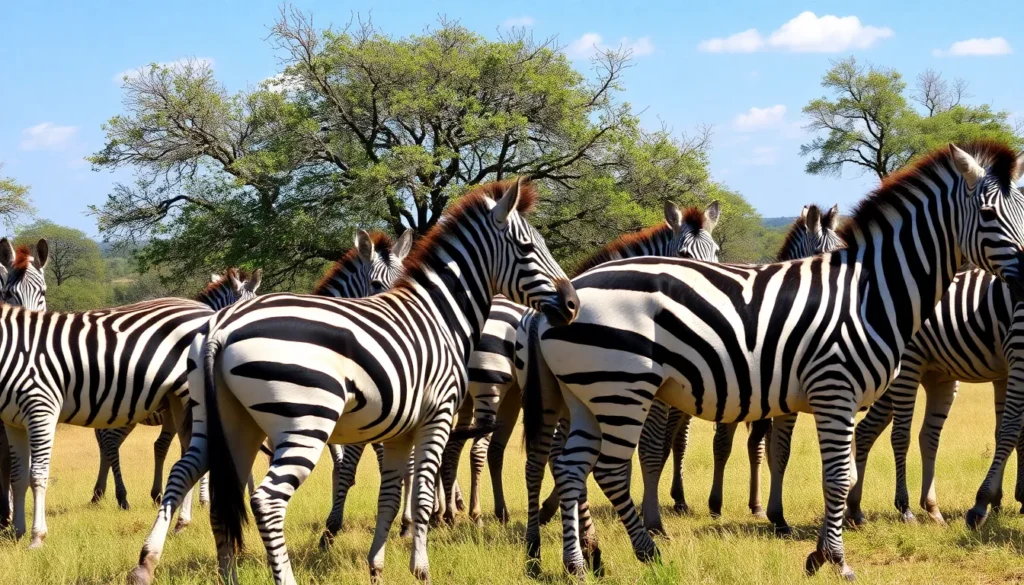
- Unique Stripe Patterns: Each zebra has a distinctive pattern of black and white stripes, much like a human fingerprint, which helps with individual identification.
- Three Main Species: Zebras are classified into three species: Plains zebra, Grevy’s zebra, and Mountain zebra, each with different habitats and physical characteristics.
- Striping Purpose Theories: The stripes may serve various functions, including camouflage, deterring biting flies, regulating body temperature, and social bonding.
- Social Animals: Zebras are highly social and typically live in herds consisting of harems or bachelor groups depending on species and age.
- Communication: They communicate through vocalizations, body postures, and facial expressions, such as barking, braying, and ear positioning.
- Herbivorous Diet: Zebras primarily graze on grasses but also consume leaves and twigs when grass is scarce.
- Adapted to Various Habitats: Depending on species, zebras inhabit savannas, grasslands, mountainous regions, and even semi-arid areas across Africa.
- Strong Legs and Speed: Zebras can run at speeds up to 65 km/h (40 mph) to escape predators and have strong legs capable of delivering powerful kicks.
- Migration Patterns: Plains zebras are known for their long-distance migrations in search of food and water, often traveling alongside wildebeest and other herbivores.
- Predator Defense: Zebras use group vigilance and coordinated movements to confuse predators such as lions, hyenas, and wild dogs.
- Social Hierarchy: Within harems, there is a dominant stallion that protects the group, while females establish their own social rankings.
- Reproduction: Female zebras typically give birth to a single foal after a gestation period of about 12-13 months.
- Foal Development: Zebra foals are able to stand and run within an hour of birth, an adaptation to predator-rich environments.
- Conservation Status Varies: Grevy’s zebra is classified as endangered, while plains and mountain zebras have more stable populations but face habitat loss and hunting pressures.
- Striping and Temperature Regulation: Some studies suggest stripes may help with thermoregulation by creating air currents along the skin.
- Stripes and Insect Deterrence: Research indicates that stripes may confuse or repel biting flies like tsetse and horseflies.
- Importance in Ecosystems: Zebras play a role in shaping grassland ecosystems through grazing, which influences plant communities and other herbivores.
- Historical Cultural Significance: Zebras have appeared in African folklore, art, and symbolism, often representing freedom and individuality.
- Human Impact: Habitat fragmentation, hunting, and competition with livestock threaten some zebra populations.
- Captivity and Research: Zebras are kept in zoos and reserves worldwide for conservation, education, and scientific study.
- Hybridization: Zebras can sometimes interbreed with other equids such as horses and donkeys, producing hybrids like zorses and zonkeys, though these are typically sterile.
Habitat and Behavior
Zebras are native to various regions of sub-Saharan Africa, occupying diverse habitats including savannas, grasslands, woodlands, and mountainous areas. Plains zebras (Equus quagga) are the most widespread and often found in open plains and savannas, while Grevy’s zebras (Equus grevyi) prefer arid and semi-arid environments, and mountain zebras (Equus zebra) inhabit rocky, mountainous terrain. As social animals, zebras live in groups that provide protection from predators through collective vigilance and coordinated movement. They are primarily grazers, feeding mainly on grasses but adapting their diet according to availability. Zebras communicate through a combination of vocalizations, body language, and facial expressions, which help maintain social bonds and alert group members to threats. Their migratory behavior, especially in plains zebras, helps them access seasonal resources, traveling in large herds often alongside other herbivores such as wildebeests.
Why This Animal Matters
Zebras play a critical role in their ecosystems by influencing vegetation patterns through their grazing, which benefits other herbivores and maintains grassland health. Their presence supports predator populations that rely on them as prey, contributing to balanced food webs. Culturally, zebras hold symbolic importance in various African traditions, representing qualities like freedom and community. From a conservation perspective, zebras highlight the challenges of wildlife management in Africa, where habitat loss, human-wildlife conflict, and poaching threaten biodiversity. Protecting zebra populations also helps preserve broader ecosystems and promotes ecotourism that supports local economies and conservation efforts.
Common Misconceptions
Misconception: Zebras are white animals with black stripes.
Correction: The underlying skin color of zebras is generally black, and their white stripes are a result of pigmentation patterns, not the other way around.
Misconception: All zebra stripes look the same.
Correction: Each zebra has a unique stripe pattern that can be used to identify individuals, similar to human fingerprints.
Misconception: Zebra stripes serve only for camouflage.
Correction: While camouflage may be one function, stripes also likely serve to deter biting insects, aid in social recognition, and help with temperature regulation.
Misconception: Zebras are solitary animals.
Correction: Zebras are highly social and typically live in herds, which provide protection and social interaction.
Misconception: Zebras can crossbreed freely with horses producing fertile offspring.
Correction: While zebras can hybridize with horses or donkeys, the resulting hybrids, such as zorses or zonkeys, are usually sterile and do not produce offspring.
FAQ
Why do zebras have stripes?
Zebra stripes serve multiple potential functions including camouflage, deterring biting insects, aiding social recognition, and possibly helping with temperature regulation.
Are zebras related to horses?
Yes, zebras belong to the same family as horses and donkeys, known as equids, sharing similar physical and behavioral traits.
Can zebras be tamed or domesticated?
Zebras are generally not domesticated due to their unpredictable nature and strong flight instincts, unlike horses which have been selectively bred for domestication.

Leave a Reply