
Short Answer
21 Facts About Asexual Reproduction in Aphids
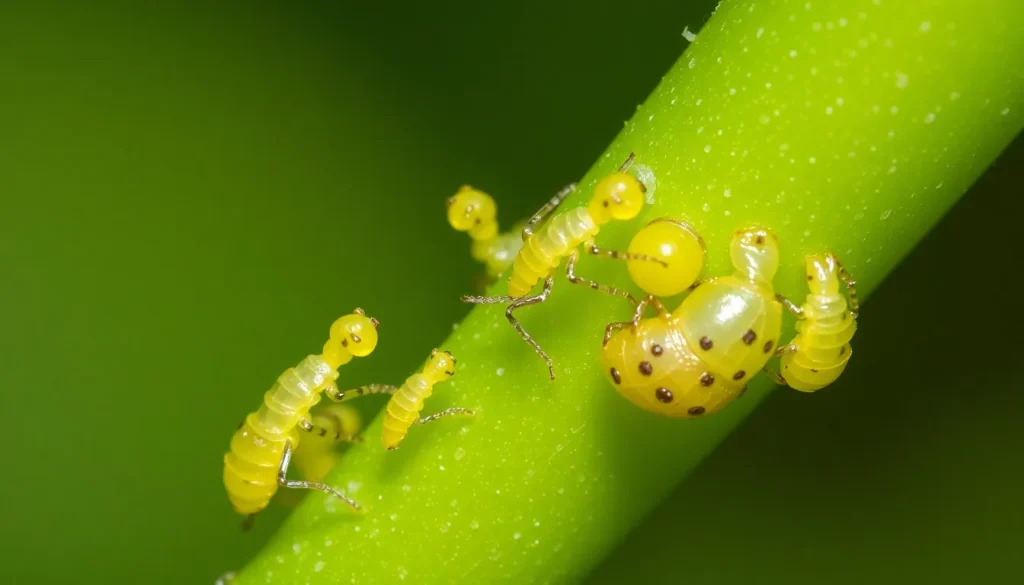
- Parthenogenesis is the primary mode of asexual reproduction in aphids. This process allows female aphids to produce offspring without fertilization by males.
- Aphids can give birth to live young rather than laying eggs during asexual reproduction. This is known as viviparity and enables faster population increase.
- Aphids produce genetically identical clones in asexual reproduction. This leads to low genetic diversity within a population during these periods.
- Asexual reproduction in aphids occurs predominantly during favorable environmental conditions. Warm temperatures and abundant food promote rapid parthenogenetic reproduction.
- Some aphid species alternate between asexual and sexual reproduction seasonally. This life cycle is called cyclical parthenogenesis.
- During asexual phases, aphids can reproduce multiple generations in a single season. This contributes to their ability to become agricultural pests.
- The lack of males during asexual reproduction phases is common in many aphid populations. Males often only appear during sexual reproduction phases.
- Asexual reproduction enables aphids to colonize new plants quickly. Because offspring are born live and mature rapidly, populations can expand swiftly.
- Some aphids can produce winged offspring asexually. Winged forms allow dispersal to new host plants.
- Embryonic development in asexual aphids is often internal. Developing embryos receive nutrients directly from the mother.
- Aphids’ asexual reproduction can lead to large, dense colonies on host plants. This can cause significant damage to crops and garden plants.
- Population explosions through asexual reproduction can attract natural predators and parasitoids. This helps regulate aphid numbers naturally.
- Aphids’ ability to reproduce asexually is an evolutionary adaptation to unstable environments. It allows rapid population growth when conditions are optimal.
- Some aphid species exhibit viviparous parthenogenesis year-round in mild climates. This means they rarely undergo sexual reproduction in such environments.
- Asexual reproduction in aphids limits genetic recombination. This can make populations susceptible to diseases or environmental changes.
- During sexual reproduction phases, aphids produce eggs that overwinter and hatch in spring. This ensures survival through harsh conditions.
- Aphids’ asexual reproduction strategy contributes to their success as pests worldwide. Their rapid multiplication overwhelms plant defenses quickly.
- Scientists study aphids’ reproductive strategies to understand pest control and evolutionary biology. Their dual reproductive modes offer insights into adaptation mechanisms.
- Aphids’ asexual reproduction involves rapid cell division without fertilization. This process is known as mitotic parthenogenesis.
- The ability to switch between asexual and sexual reproduction is hormonally regulated in aphids. Environmental cues trigger these reproductive changes.
- Research shows that asexual reproduction in aphids can occur through telescoping generations. This means developing embryos may already contain embryos themselves, speeding population growth.
Habitat and Behavior
Aphids are small sap-sucking insects found worldwide, inhabiting a wide range of environments from gardens and agricultural fields to wild plant ecosystems. They typically live on the undersides of leaves, stems, and roots of host plants, where they feed on plant sap using specialized mouthparts. Their behavior is closely tied to their reproductive strategies; during favorable conditions, aphids reproduce asexually to rapidly increase their numbers and exploit food sources. When conditions change, such as the onset of colder weather, some species switch to sexual reproduction to produce hardy eggs capable of overwintering. Aphids also produce winged forms during population pressure or environmental stress, enabling dispersal to new habitats. Their colonies often attract ants, which protect aphids in exchange for honeydew, a sugary secretion aphids produce.
Why This Animal Matters
Aphids play a significant ecological role as primary consumers feeding on plant sap. Their rapid asexual reproduction allows them to influence plant health significantly, often to the detriment of agricultural productivity. As a result, aphids are considered major pests worldwide, causing economic losses in crops by weakening plants and transmitting plant viruses. Conversely, they are an important food source for many predators, including lady beetles, lacewings, and parasitic wasps, supporting biodiversity. Understanding aphids’ reproductive biology aids in developing effective pest management strategies. Additionally, aphids serve as model organisms in biological and evolutionary research due to their unique reproductive cycles and genetic features.
Common Misconceptions
Misconception: Aphids only reproduce sexually.
Correction: Aphids primarily reproduce asexually through parthenogenesis during favorable conditions and switch to sexual reproduction seasonally.
Misconception: Asexual reproduction in aphids leads to harmful mutations and weak populations.
Correction: While asexual reproduction limits genetic diversity, aphids maintain population resilience through cyclical sexual reproduction and rapid adaptation.
Misconception: Aphids always produce winged offspring.
Correction: Aphids produce winged forms primarily in response to environmental triggers such as overcrowding or declining host quality, not continuously.
Misconception: All aphids reproduce asexually year-round.
Correction: Many species alternate between asexual and sexual reproduction depending on environmental conditions and season.
FAQ
How do aphids reproduce asexually?
Aphids reproduce asexually primarily through parthenogenesis, where females produce live offspring without fertilization, allowing rapid population growth.
Why do aphids switch between asexual and sexual reproduction?
Aphids alternate reproductive modes to maximize survival: asexual reproduction allows quick population increases in favorable conditions, while sexual reproduction produces eggs that can survive harsh conditions.
Do aphids produce genetically identical offspring during asexual reproduction?
Yes, offspring produced asexually are clones of the mother, resulting in low genetic variation within the population during these periods.





Leave a Reply