
Short Answer
21 Facts About Poison Dart Frogs
- Toxicity Originates From Diet. Poison dart frogs acquire their skin toxins through their diet of ants, mites, and other small arthropods in the wild, rather than producing the toxins themselves.
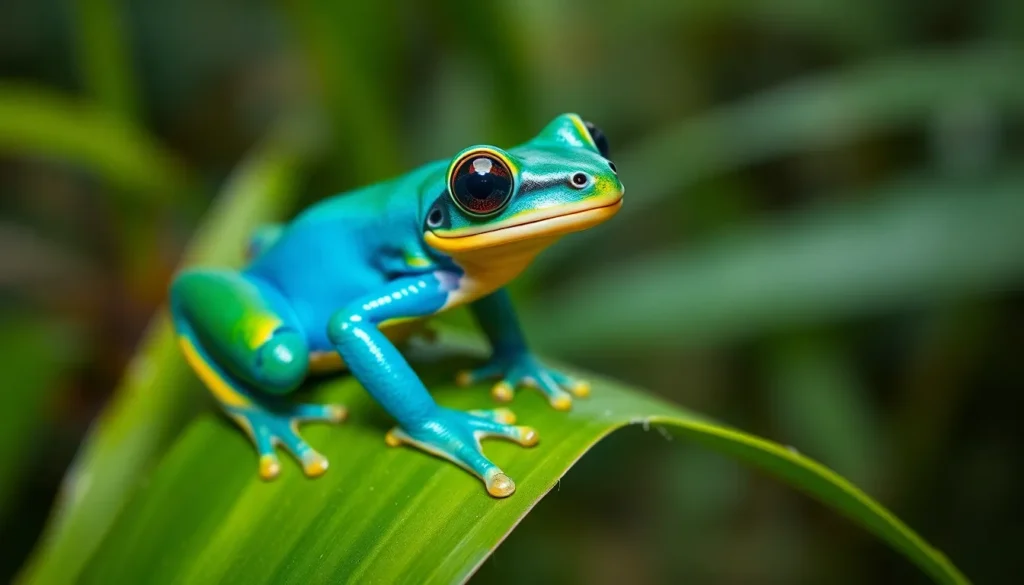
- Bright Colors Serve as Warning Signals. Their vivid colors, ranging from blues and reds to yellows and greens, act as aposematic signals to potential predators about their toxicity.
- Not All Species Are Equally Toxic. Some species have potent toxins capable of causing serious harm, while others have mild or no toxicity.
- Indigenous Use for Hunting. Certain indigenous groups in Central and South America have historically used the frogs’ toxins to poison the tips of blow darts for hunting, hence the name “poison dart frog.”
- Small Size but Potent Defense. Despite their small size—typically 1.5 to 6 cm long—their toxins provide an effective defense mechanism against many predators.
- Habitat Range is Primarily Tropical Rainforests. These frogs are mainly found in Central and South American rainforests, especially in countries like Colombia, Ecuador, and Brazil.
- Parental Care is Notable. Many species exhibit parental care behaviors, such as transporting tadpoles to water-filled bromeliads or tree holes.
- Some Species Are Diurnal. Unlike many other frogs, poison dart frogs are active during the day, which makes their bright colors more visible.
- Varied Reproductive Strategies. Some species lay eggs on land, and once hatched, the adults transport the tadpoles to aquatic environments.
- They Have Specialized Toe Pads. Their toes have adhesive pads that allow them to climb and cling to wet and smooth surfaces.
- Captive-Bred Frogs Lack Toxicity. Frogs raised in captivity on a diet lacking specific arthropods do not develop their characteristic toxins.
- Some Species Are Endangered. Habitat destruction and the pet trade threaten several poison dart frog species.
- Communication Includes Vocal Calls. Males produce calls to attract females and establish territory, with calls varying by species.
- Several Species Exhibit Color Morphs. Within a single species, individuals may display different color patterns depending on geographic location.
- Poison Dart Frogs Have Complex Skin Alkaloids. Their skin contains diverse alkaloid compounds, which have been studied for potential medicinal uses.
- They Are Part of the Dendrobatidae Family. Poison dart frogs belong to the family Dendrobatidae, which comprises over 170 species.
- They Can Live Up to 10 Years. In captivity, some species have been known to live up to a decade or more.
- They Play a Role in Ecosystem Balance. By preying on small arthropods, they help control insect populations.
- They Are Popular Subjects of Scientific Research. Their toxins and behaviors are studied in fields such as pharmacology, ecology, and evolutionary biology.
- Bright Colors Are Used in Mimicry. Some non-toxic frogs mimic the appearance of toxic poison dart frogs to deter predators.
- Conservation Efforts Include Habitat Protection. Organizations and researchers work to protect natural habitats and regulate trade to ensure the survival of these frogs.
Habitat and Behavior
Poison dart frogs inhabit tropical rainforests primarily in Central and South America, with concentrations in countries such as Colombia, Ecuador, Venezuela, and Brazil. They prefer humid, warm environments with abundant vegetation and access to small water bodies. These frogs are diurnal and often found on the forest floor or low vegetation, where their bright coloration serves as a deterrent to predators. They are insectivorous, feeding on small arthropods including ants, mites, and termites, which contribute to their toxicity. Reproductive behavior varies, but many species lay eggs on land and transport their tadpoles to water-filled bromeliads or other small aquatic habitats. Parental care is an important aspect of their life cycle, increasing offspring survival rates. Socially, males use vocalizations to attract mates and defend territories.
Why This Animal Matters
Poison dart frogs serve essential ecological roles as both predators and prey within their ecosystems. By consuming arthropods, they help regulate insect populations, contributing to ecological balance. Their toxins, derived from their specialized diet, have piqued scientific interest for potential medical applications, particularly in the development of painkillers and other pharmaceuticals. Culturally, poison dart frogs have significance to indigenous people who have historically used their toxins for hunting. Conservation-wise, many species face threats from habitat loss and illegal pet trade, making them important subjects for biodiversity preservation efforts. Protecting poison dart frogs also helps safeguard the complex rainforest ecosystems they inhabit.
Common Misconceptions
Misconception: All poison dart frogs are deadly to humans.
Correction: While some species have potent toxins, most are not dangerous to humans unless their toxins are ingested or enter the bloodstream. Additionally, captive-bred frogs typically lack toxins altogether.
Misconception: Poison dart frogs produce their own toxins.
Correction: These frogs obtain their toxins through their diet in the wild, mainly from consuming toxic arthropods. Frogs raised in captivity without these dietary components do not develop toxicity.
Misconception: Poison dart frogs are aggressive toward humans.
Correction: Poison dart frogs are generally small, shy, and not aggressive. They rely on their toxins and bright coloration to deter predators rather than confrontation.
FAQ
Are all poison dart frogs poisonous?
Not all poison dart frog species are equally toxic. Some have potent toxins, while others have milder or no toxicity, especially those bred in captivity without their natural diet.
How do poison dart frogs get their toxins?
Poison dart frogs obtain their toxins from their diet in the wild, primarily by consuming toxic ants, mites, and other small arthropods that contain alkaloids.
Can poison dart frogs harm humans?
While some species produce toxins that can be harmful, poison dart frogs generally do not pose a threat to humans unless toxins enter the bloodstream or are ingested. Captive-bred frogs are usually non-toxic.



Leave a Reply