
Short Answer
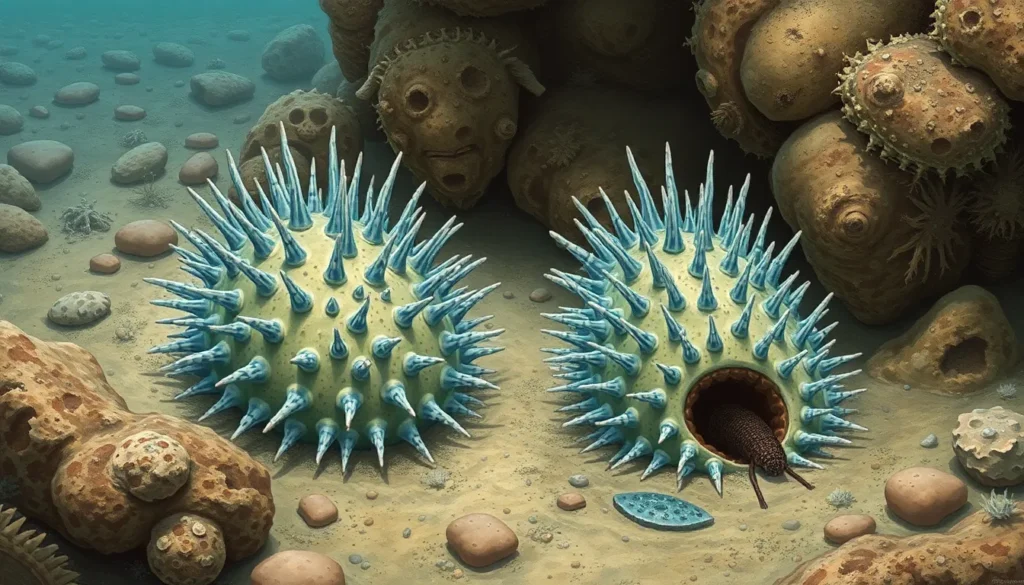
21 Facts About Kinorhynch Spines
- Kinorhynchs are microscopic animals. They are part of the phylum Kinorhyncha, which consists of small, segmented organisms found in marine environments.
- They have a unique body structure. Kinorhynchs possess a head or introvert that can be retracted and extended, allowing them to burrow into sediment.
- Spines are a key feature. The spines on their bodies assist in locomotion and anchoring within their habitat.
- There are over 200 species. Kinorhyncha includes a diverse range of species, each adapted to specific marine environments.
- They inhabit marine sediments. Kinorhynchs are typically found in benthic zones, residing in mud or sand at varying depths.
- Kinorhynchs have an elongated body. Their bodies are segmented, typically consisting of 11 to 13 segments, with a variable number of spines.
- They exhibit a simple nervous system. Kinorhynchs possess a rudimentary nervous system, enabling basic sensory functions.
- Kinorhynchs are detritivores. They primarily feed on organic material found in sediment, playing a role in nutrient recycling.
- They can survive extreme conditions. Some kinorhynchs can withstand high pressure and low oxygen levels, making them resilient to environmental changes.
- Reproduction is sexual and asexual. Kinorhynchs can reproduce through both methods, depending on the environmental conditions.
- They play a role in sediment turnover. By burrowing in sediments, kinorhynchs help aerate the substrate, contributing to the health of marine ecosystems.
- Kinorhynchs have been around for millions of years. Their fossil records date back to the Cambrian period, indicating their long-standing presence on Earth.
- They are often studied in ecological research. Kinorhynchs serve as indicators of environmental health due to their sensitivity to changes in sediment quality.
- Some species exhibit bioluminescence. Certain kinorhynchs have been observed to emit light, although the function is not fully understood.
- They are not widely known. Despite their ecological importance, kinorhynchs remain relatively obscure in popular science.
- Kinorhynchs can regenerate. They have demonstrated the ability to regenerate lost segments, enhancing their survival capabilities.
- They have a unique cuticle. The cuticle of kinorhynchs is made of chitin, providing protection and structural integrity.
- Kinorhynchs are part of the meiofauna. They belong to a group of small organisms that are crucial for the functioning of marine ecosystems.
- They exhibit limited mobility. Kinorhynchs primarily move by crawling through sediments, which limits their dispersal.
- Kinorhynchs are important for research. Their simple body structure makes them ideal subjects for studying evolutionary biology and ecology.
- They are often found in diverse habitats. Kinorhynchs can inhabit various marine environments, from shallow coastal areas to deep-sea sediments.
Habitat and Behavior
Kinorhynchs primarily inhabit marine sediments, including mud, sand, and silt, across various depths in the ocean. They tend to live in environments rich in organic material, where they can feed on detritus and microorganisms. Their behavior involves burrowing into the substrate, using their retractable introvert and spines for locomotion. Kinorhynchs are generally solitary and exhibit limited mobility, remaining within their immediate habitat for sustenance.
Why This Animal Matters
Kinorhynchs play a significant role in marine ecosystems as they contribute to the breakdown of organic matter, promoting nutrient cycling. Their presence serves as an indicator of sediment quality and ecological health. Understanding kinorhynchs can provide insights into the functioning of benthic ecosystems and the effects of environmental changes on marine biodiversity. Additionally, their resilience and adaptability make them subjects of interest in evolutionary studies.
Common Misconceptions
FAQ
What adaptations do kinorhynchs have for survival?
Kinorhynchs have developed a retractable introvert, spines for anchoring, and the ability to regenerate lost segments.
Where are kinorhynchs commonly found?
They are typically found in benthic marine environments, such as mud and sand substrates.
How do kinorhynchs contribute to their ecosystems?
They aid in nutrient recycling and serve as indicators of sediment health, thus playing a vital role in marine ecosystems.





Leave a Reply