
Short Answer
21 Facts About Nyala (antelope)
- Scientific Classification: The nyala’s scientific name is Tragelaphus angasii, and it belongs to the family Bovidae.
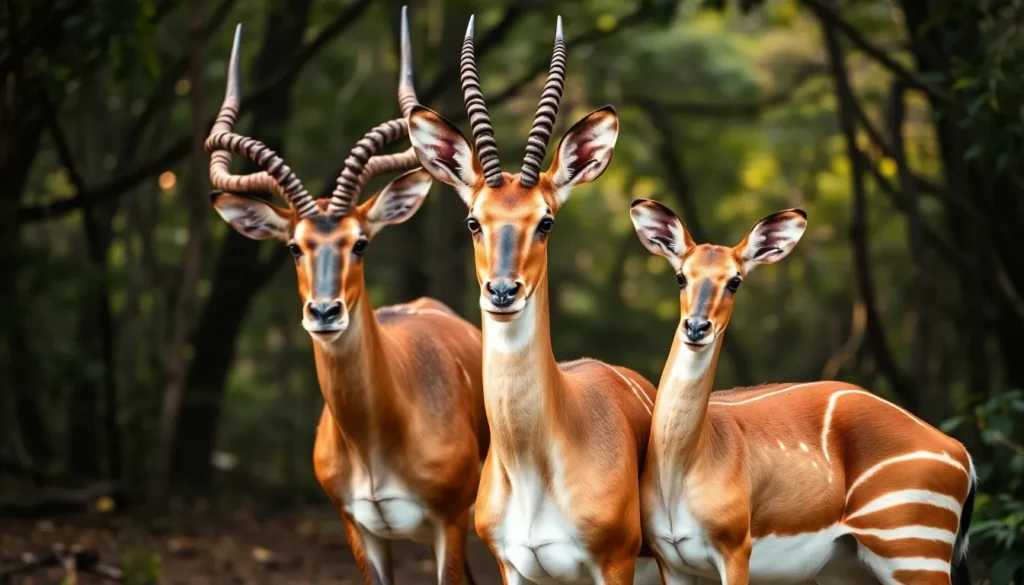
- Sexual Dimorphism: Male and female nyalas differ significantly in size and appearance, with males being larger and sporting spiral horns, while females do not have horns.
- Physical Appearance: Males have a dark brown or slate-grey coat with white stripes, while females are reddish-brown with more distinctive white markings.
- Size and Weight: Adult males typically weigh between 110 to 125 kg (240 to 275 lbs), whereas females weigh around 55 to 68 kg (120 to 150 lbs).
- Horns: Only males have horns that can reach lengths up to 83 cm (33 inches) and have a spiral shape with 1 to 2 twists.
- Habitat Range: Nyalas are native to southern Africa, primarily found in countries such as Mozambique, South Africa, Zimbabwe, and Malawi.
- Preferred Habitat: They inhabit dense woodlands, thickets, and areas near water sources, favoring environments that provide cover and browsing opportunities.
- Diet: Nyala are primarily browsers, feeding on leaves, fruits, flowers, and twigs, but they occasionally graze on grass.
- Behavior: Nyalas are generally shy and elusive, often active during early morning and late afternoon to avoid the heat of the day.
- Social Structure: Females and their offspring tend to form small groups, while males are more solitary or form loose bachelor groups.
- Breeding Season: Nyala do not have a strict breeding season but tend to mate during the rainy season when food is abundant.
- Gestation Period: The gestation period lasts about 7 months, after which a single calf is usually born.
- Calf Development: Calves can stand and walk shortly after birth and are hidden in dense vegetation for protection during their early weeks.
- Predators: Common predators include lions, leopards, hyenas, and African wild dogs.
- Camouflage: The nyala’s coat pattern helps it blend into the dense bush and woodland environments, aiding in predator avoidance.
- Conservation Status: The International Union for Conservation of Nature (IUCN) lists the nyala as Least Concern, though habitat loss and hunting pressures exist.
- Human Interaction: Nyala are sometimes hunted for their meat and horns, and they are also popular in wildlife reserves and parks.
- Territorial Behavior: Males may mark territories using scent glands located on their faces and hooves.
- Communication: Nyalas communicate through vocalizations such as grunts and snorts, as well as through body language.
- Lifespan: In the wild, nyalas typically live up to 10-12 years, while in captivity they may live longer.
- Unique Adaptations: Their strong legs and agility allow them to navigate thick brush and escape predators effectively.
Habitat and Behavior
The nyala is indigenous to the woodlands and dense thickets of southern Africa, thriving in environments where there is ample cover and access to water. They prefer areas with mixed vegetation that provide both browsing and grazing opportunities. These antelopes are crepuscular, meaning they are most active during dawn and dusk, which helps them avoid the midday heat and reduce the risk of predation.
Nyalas are solitary or live in small groups, with females and their young forming the core social units. Males tend to be more solitary and may establish territories, particularly during the breeding season. Their diet predominantly consists of leaves, fruits, and flowers, making them important browsers in their ecosystems. Their shy and secretive nature helps them evade predators, relying on dense vegetation as protection.
Why This Animal Matters
The nyala plays a significant ecological role as a browser, helping to shape the vegetation structure of its habitat. By feeding on a variety of plants, nyalas contribute to the balance and diversity of the flora in woodlands and savannas. They also serve as prey for several large African carnivores, making them integral to the food web.
From a cultural perspective, nyalas are valued by local communities for their meat and hides, and they hold importance in traditional hunting practices. Conservation-wise, while currently not considered threatened, nyalas face habitat fragmentation and hunting pressures, emphasizing the need for continued habitat protection and sustainable management.
Common Misconceptions
Misconception: Nyala males and females both have horns.
Correction: Only male nyalas possess horns; females lack horns entirely.
Misconception: Nyala are exclusively grazers like many other antelopes.
Correction: Nyala are primarily browsers, feeding mainly on leaves and fruits rather than grazing on grass.
Misconception: Nyala are aggressive animals that frequently fight.
Correction: While males may compete during the breeding season, nyalas are generally shy and avoid confrontation when possible.
FAQ
Where is the nyala primarily found?
The nyala is native to southern Africa, commonly found in countries like Mozambique, South Africa, Zimbabwe, and Malawi.
Do female nyalas have horns?
No, only male nyalas have horns; females do not grow horns.
What does the nyala eat?
Nyalas are primarily browsers that feed on leaves, fruits, flowers, and occasionally grass.



Leave a Reply