
Short Answer
21 Facts About Guppies
- Scientific Name: The guppy is scientifically known as Poecilia reticulata.
- Native Habitat: Guppies are native to northeast South America but have been introduced worldwide.
- Size: Guppies are small fish, typically growing up to 1.5 inches (3.8 cm) in length.
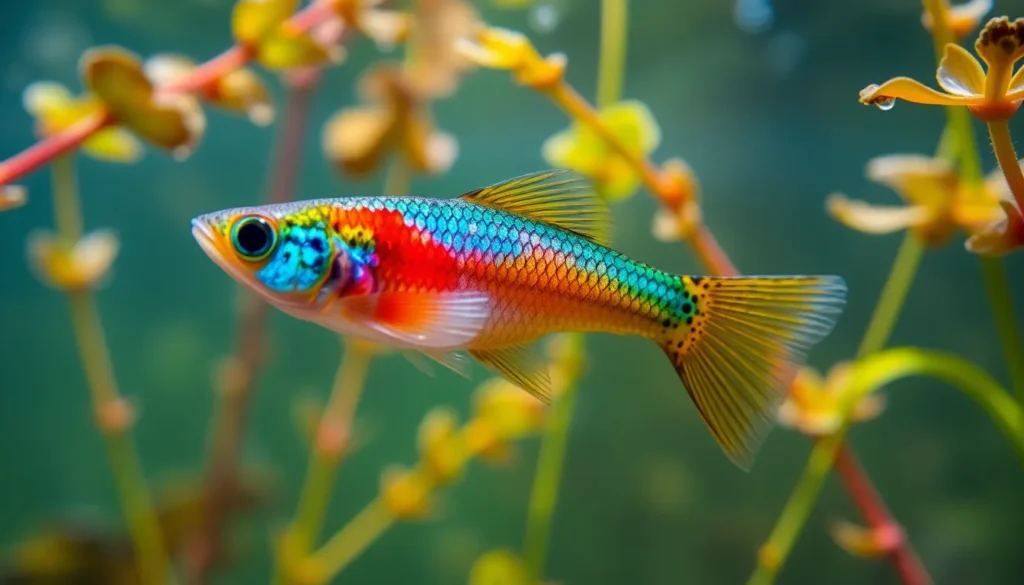
- Sexual Dimorphism: Male guppies are more colorful and smaller, while females are larger and less colorful.
- Reproduction: Guppies are livebearers, giving birth to free-swimming young instead of laying eggs.
- Lifespan: The average lifespan of a guppy is about 2 to 3 years in captivity.
- Diet: Guppies are omnivores and feed on algae, small invertebrates, and organic detritus.
- Color Variations: Selective breeding has produced numerous color and pattern variants in guppies.
- Social Behavior: Guppies are social fish that often form small groups or shoals.
- Predation Response: Guppies exhibit behavioral changes to avoid predators, such as reduced activity and schooling.
- Temperature Tolerance: Guppies thrive in temperatures between 22°C and 28°C (72°F to 82°F).
- Water Conditions: Guppies prefer slightly alkaline water with a pH between 7.0 and 8.0.
- Breeding Rate: Guppies breed rapidly and can produce offspring every 30 days under ideal conditions.
- Role in Mosquito Control: Guppies have been used in some areas to control mosquito populations by eating larvae.
- Genetic Studies: Guppies are frequently used as model organisms in evolutionary biology and genetics research.
- Environmental Indicators: Guppies can serve as indicators of freshwater ecosystem health.
- Introduced Populations: Guppies have established wild populations in many parts of the world outside their native range.
- Dietary Flexibility: Guppies adapt their feeding habits based on available resources.
- Sexual Selection: Female guppies often prefer males with brighter colors and more elaborate patterns.
- Population Dynamics: Guppy populations can fluctuate rapidly due to predation, food availability, and environmental conditions.
- Conservation Status: Guppies are not currently considered threatened and have a stable population status.
Guppies belong to the family Poeciliidae and are commonly referred to as millionfish or rainbow fish.
They originally inhabit freshwater streams and rivers in countries such as Venezuela, Barbados, and Trinidad.
Males are generally smaller than females and exhibit more vibrant coloration.
This difference helps males attract females during mating displays.
Females can store sperm and give birth multiple times from a single mating.
Environmental conditions and predation can influence their longevity in the wild.
In captivity, they can be fed flake foods, live, or frozen foods.
Wild guppies tend to have more muted coloration compared to bred varieties.
This behavior provides safety through numbers and facilitates mating.
Some populations have evolved specific coloration patterns for camouflage.
They are sensitive to sudden temperature changes which can affect their health.
They are tolerant of a range of hardness levels but do best in moderately hard water.
This prolific breeding is one reason they have become invasive in some regions.
However, their introduction to non-native environments can have ecological consequences.
Their diverse coloration and mating behaviors offer insights into natural selection.
Changes in their populations may reflect water quality or habitat alterations.
These introductions are often accidental or intentional for pest control.
This dietary flexibility contributes to their survival in a variety of habitats.
This preference drives the diversity in male coloration across populations.
Such dynamics are studied to understand ecological and evolutionary processes.
Nevertheless, habitat degradation could impact local wild populations.
Habitat and Behavior
Guppies naturally inhabit freshwater environments such as streams, rivers, and ponds with slow-moving or still water. They prefer habitats with abundant vegetation, which provides shelter and breeding sites. Guppies are adaptable and can survive in a range of water conditions, though they thrive best in warm, moderately hard, and slightly alkaline waters. Behaviorally, guppies are social and often form shoals, which offer protection from predators. Their reproductive strategy as livebearers allows for quick population growth, and females can store sperm to produce multiple broods without repeated mating. Guppies exhibit various anti-predator behaviors, including schooling and altering activity levels when threatened. They are omnivorous, feeding on algae, small invertebrates, and organic matter, and adjust their diet based on availability.
Why This Animal Matters
Guppies play a significant ecological role in freshwater ecosystems by contributing to the food web as both predators of insect larvae and prey for larger animals. Their use in mosquito control highlights their potential benefit in managing disease vectors, though this must be balanced against risks of ecological disruption from introducing non-native species. Scientifically, guppies are important model organisms in evolutionary biology, genetics, and ecology due to their rapid reproduction, diverse coloration, and observable mating behaviors. They also serve as indicators of environmental health, as changes in guppy populations can reflect water quality and habitat conditions. Additionally, guppies are culturally significant in aquarium keeping, valued for their vibrant colors and ease of care.
Common Misconceptions
Misconception: Guppies are only found in South America.
Correction: While native to northeast South America and nearby islands, guppies have been introduced worldwide and established wild populations in various continents.
Misconception: Guppies lay eggs like most fish.
Correction: Guppies are livebearers, meaning they give birth to live young rather than laying eggs.
Misconception: All guppies have bright, colorful patterns.
Correction: Wild guppies often have more subdued coloration, while bright colors are more common in selectively bred aquarium strains.
FAQ
Where are guppies originally from?
Guppies are native to northeast South America, including countries like Venezuela, as well as nearby islands such as Trinidad and Barbados.
How do guppies reproduce?
Guppies are livebearers, meaning females give birth to live, free-swimming young after internal fertilization. Females can store sperm to produce multiple broods from a single mating.
Are guppies good for beginner aquarium owners?
Yes, guppies are popular among beginner aquarium enthusiasts due to their small size, hardiness, and colorful appearance. They require stable water conditions but adapt well to aquarium life.

Leave a Reply