
Short Answer
21 Facts About Trapdoor Spiders
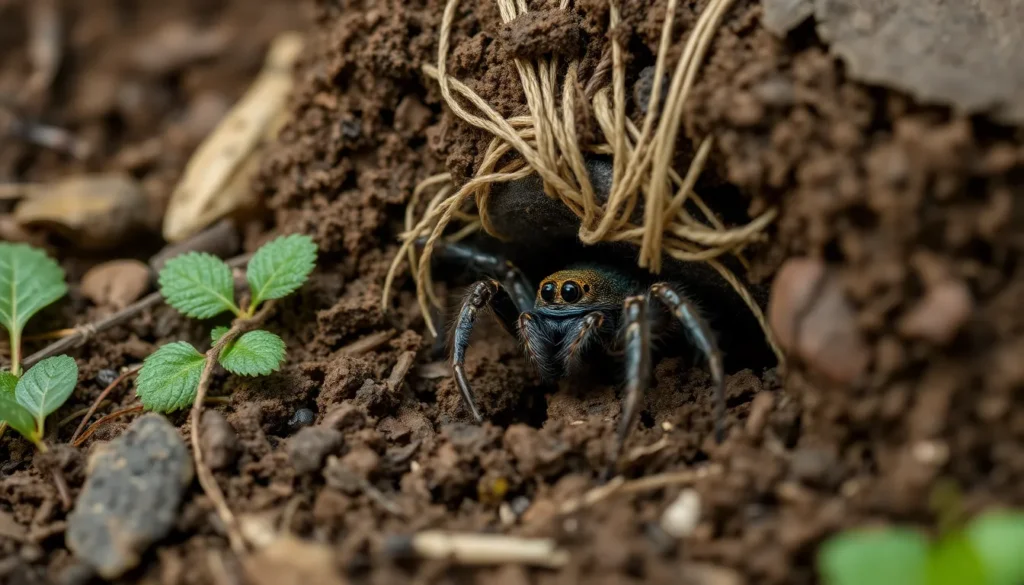
- Trapdoor spiders construct burrows with hinged doors. These spiders create silk-lined burrows with a camouflaged trapdoor made from soil, vegetation, and silk that they use to ambush prey.
- They belong to the family Ctenizidae and related families. Trapdoor spiders are part of several families within the infraorder Mygalomorphae, including Ctenizidae, Idiopidae, and others.
- Trapdoor spiders hunt by waiting for prey to approach their burrow. They sense vibrations near the trapdoor and quickly emerge to capture insects and other small animals.
- These spiders have robust, hairy bodies and powerful jaws. Their morphology is adapted for digging and subduing prey effectively.
- Trapdoor spiders can live for several years. Some species have lifespans extending up to 20 years in the wild, which is long for spiders.
- They are generally nocturnal hunters. Many trapdoor spiders are most active at night when they leave their burrows to hunt or repair their trapdoors.
- The trapdoor provides protection from predators and environmental hazards. The door conceals the spider and helps maintain moisture inside the burrow.
- Trapdoor spiders have poor vision but excellent vibration detection. They rely on sensory hairs and vibration receptors to detect prey rather than sight.
- The silk used in trapdoor construction is unique in its strength and flexibility. This silk combines with soil and debris to create a sturdy yet camouflaged door.
- Some species construct multiple trapdoors or burrows. This behavior allows spiders to escape predators and increase hunting success.
- Trapdoor spiders are found on every continent except Antarctica. They inhabit a variety of environments, including forests, grasslands, and deserts.
- Their burrow entrances are often disguised with leaves or debris. This camouflage helps the trapdoor blend seamlessly with the surroundings.
- Trapdoor spiders are solitary animals. They typically live alone, except during mating periods.
- Male trapdoor spiders leave their burrows to search for mates. Males travel above ground during mating season, which increases their vulnerability to predators.
- Some species exhibit sexual dimorphism. Males and females can differ in size, coloration, and behavior.
- Trapdoor spiders play an important role in controlling insect populations. By preying on insects, they contribute to the balance of their ecosystems.
- They have few natural predators but can fall prey to birds, lizards, and parasitic wasps. Their burrow and trapdoor provide significant defense against many threats.
- Trapdoor spider venom is generally not harmful to humans. While they possess venom to subdue prey, bites to humans are rare and typically cause only mild symptoms.
- Some species have adapted to urban environments. Trapdoor spiders have been found in gardens and suburban areas where suitable soil exists for burrowing.
- Researchers study trapdoor spiders to understand silk properties and evolutionary biology. Their unique silk and behaviors provide insights into spider evolution and biomaterials.
- Conservation concerns exist for certain trapdoor spider species due to habitat loss. Urbanization and land development threaten some populations, highlighting the need for habitat protection.
Habitat and Behavior
Trapdoor spiders are ground-dwelling arachnids that live in burrows beneath the soil surface. These burrows are typically silk-lined and feature a hinged trapdoor made from soil, vegetation, and silk. The trapdoor is expertly camouflaged to blend with the surrounding environment, allowing the spider to ambush prey efficiently. Trapdoor spiders are mostly found in warm temperate to tropical regions across the globe, inhabiting forests, grasslands, scrublands, and deserts. They prefer well-drained soil suitable for burrow construction.
Behaviorally, trapdoor spiders are solitary and primarily nocturnal. They spend much of their time inside their burrows, waiting patiently for prey to come close. When vibrations signal the presence of potential prey near the trapdoor, the spider rapidly emerges to capture it with strong jaws. The trapdoor also protects the spider from predators and helps maintain humidity within the burrow. Males leave their burrows during the breeding season to find females, while females tend to remain in or near their burrows.
Why This Animal Matters
Trapdoor spiders fulfill important ecological roles as predators of insects and other small arthropods. By controlling insect populations, they contribute to the balance of ecosystems and help reduce pest numbers naturally. Their unique silk and burrow-building behaviors are of scientific interest, providing valuable insights into spider evolution and biomaterials. Additionally, trapdoor spiders serve as indicators of environmental health since they require specific soil and habitat conditions to thrive.
Conservation concerns for some trapdoor spider species stem from habitat destruction due to urbanization and agriculture. Protecting these spiders and their habitats can help preserve biodiversity and maintain ecological balance. Moreover, trapdoor spiders hold cultural significance in some regions, often featuring in folklore and local natural history knowledge.
Common Misconceptions
Misconception: Trapdoor spiders are aggressive and dangerous to humans.
Correction: Trapdoor spiders are generally shy and avoid humans. Bites are rare and typically not medically significant.
Misconception: All trapdoor spiders build identical trapdoors.
Correction: Trapdoor construction varies by species, with differences in door materials, size, and burrow complexity.
Misconception: Trapdoor spiders live only in tropical rainforests.
Correction: They inhabit a wide range of environments, including temperate forests, grasslands, and deserts worldwide.
FAQ
Are trapdoor spiders dangerous to humans?
Trapdoor spiders are generally not dangerous to humans. They possess venom to subdue their prey, but their bites are rare and usually cause only mild localized symptoms.
How do trapdoor spiders catch their prey?
Trapdoor spiders wait inside their silk-lined burrows, hidden beneath a camouflaged trapdoor. When prey approaches, they detect vibrations and quickly emerge to grab the prey before retreating back inside.
Where can trapdoor spiders be found?
Trapdoor spiders are distributed worldwide except for Antarctica. They inhabit a variety of environments including forests, grasslands, deserts, and sometimes urban areas where suitable soil allows burrow construction.



Leave a Reply