
Short Answer
21 Facts About Pufferfish
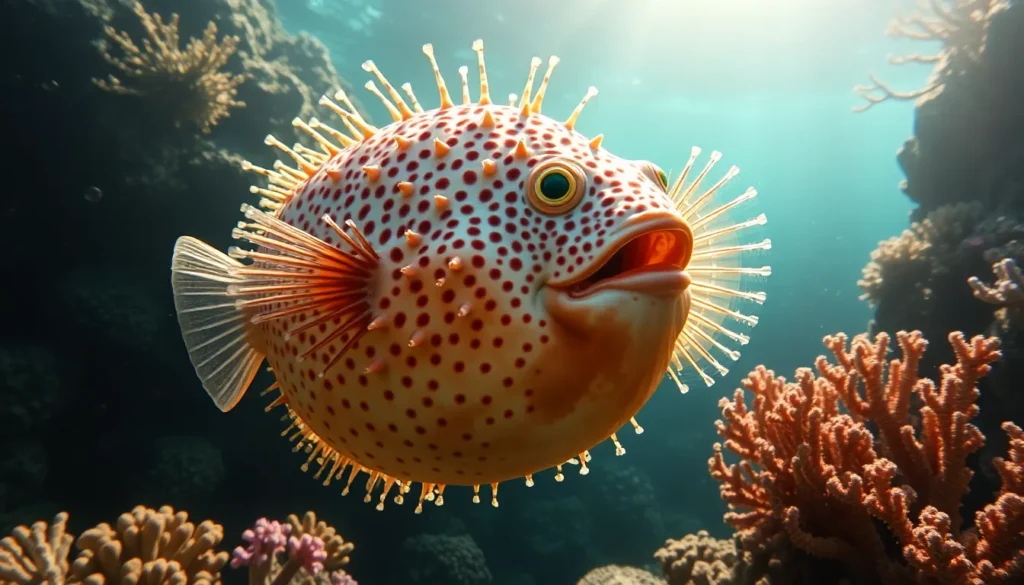
- Pufferfish can inflate their bodies. When threatened, pufferfish swallow water (or air if out of water) to expand their bodies dramatically, making themselves appear larger and more difficult for predators to eat.
- They belong to the family Tetraodontidae. This family includes around 120 species of pufferfish, found mainly in tropical and subtropical ocean waters.
- Pufferfish have a unique beak-like mouth. Their teeth are fused into a strong, parrot-like beak that helps them crush hard-shelled prey such as mollusks and crustaceans.
- Some species have spines on their skin. When inflated, these spines protrude outward, adding an additional layer of defense against predators.
- Pufferfish contain tetrodotoxin, a potent neurotoxin. This toxin is found primarily in their internal organs and skin and can be deadly to humans and other animals if ingested.
- Not all pufferfish are equally toxic. Toxicity varies among species and individuals, depending on factors such as diet and environment.
- Pufferfish are slow swimmers. They rely on their ability to inflate and toxin for defense rather than speed to escape predators.
- They have excellent eyesight. Pufferfish have large, complex eyes that allow them to detect predators and prey effectively.
- Some pufferfish species create elaborate mating nests. Male pufferfish use their fins to carve intricate circular patterns on the sea floor to attract females during breeding.
- Pufferfish are omnivores. Their diet includes algae, invertebrates, and sometimes small fish.
- Pufferfish can change color. They may alter their coloration to camouflage with their environment or signal mood and intentions.
- The inflation mechanism is unique among fish. They can inflate rapidly by gulping water into their elastic stomachs, a process that takes only a few seconds.
- Pufferfish lack traditional scales. Instead, their skin is rough or spiny, which provides additional protection.
- The inflation ability has limits. Over-inflation can harm the pufferfish, and they cannot stay inflated indefinitely.
- Pufferfish have a slow metabolism. This trait helps them survive in various environmental conditions with limited food availability.
- They are found in diverse habitats. While many species inhabit coral reefs, others live in estuaries, brackish waters, and even freshwater rivers.
- Pufferfish have few natural predators. Their toxin and inflation defense make them less desirable prey for most marine predators.
- Some pufferfish are kept in aquariums. However, their care requires caution due to their toxin and specific environmental needs.
- Pufferfish are culturally significant in some regions. For example, in Japan, certain species are prepared as the delicacy “fugu,” which requires expert preparation to avoid poisoning.
- Climate change and habitat loss threaten some pufferfish species. Changes in water temperature and coral reef degradation can impact their populations.
- Scientific research uses pufferfish to study neurotoxins. Their tetrodotoxin is valuable for neurological and pharmacological studies.
Habitat and Behavior
Pufferfish primarily inhabit tropical and subtropical waters across the Atlantic, Indian, and Pacific Oceans. They are commonly found in coral reefs, lagoons, estuaries, and sometimes freshwater environments. Their behavior is characterized by a slow swimming style and a preference for staying near the seabed or coral structures where they can find food and shelter. When threatened, they inflate rapidly, deterring predators by increasing their apparent size and exposing sharp spines in some species. Pufferfish are generally solitary but may exhibit complex mating behaviors, particularly males who create intricate sand patterns to attract females. Their omnivorous diet helps them adapt to various habitats, feeding on algae, invertebrates, and small fish.
Why This Animal Matters
Pufferfish play an important ecological role as both predator and prey within their marine ecosystems. By feeding on algae and invertebrates, they contribute to the health and balance of coral reef systems. Their unique defense mechanisms and toxins have attracted scientific interest, providing insights into neurobiology and potential medical applications. Additionally, pufferfish hold cultural significance, particularly in Japan, where the preparation of fugu is a culinary tradition requiring specialized knowledge to avoid poisoning. Conservation concerns arise due to habitat degradation and climate change, which threaten their populations, making them important species for marine biodiversity and conservation efforts.
Common Misconceptions
Misconception: All pufferfish are deadly to humans.
Correction: While many pufferfish contain tetrodotoxin, toxicity varies greatly among species and individual fish. Only some species pose significant risks, particularly when improperly prepared as food.
Misconception: Pufferfish inflate by swallowing air.
Correction: Pufferfish inflate primarily by rapidly gulping water into their elastic stomachs. They may swallow air when out of water, but this is not their typical inflation method in natural conditions.
Misconception: Pufferfish are aggressive predators.
Correction: Pufferfish are generally slow-moving and feed mostly on slow or stationary prey like algae and shellfish. They rely on defense rather than aggression to survive.
Misconception: Pufferfish can inflate indefinitely.
Correction: Inflation is a temporary defense mechanism. Over-inflation can injure the fish, and they cannot maintain an inflated state for long periods.
Misconception: All pufferfish live in saltwater.
Correction: While most pufferfish inhabit marine environments, some species can live in brackish or freshwater habitats.
FAQ
Are all pufferfish poisonous?
Not all pufferfish are poisonous. While many contain tetrodotoxin, toxicity varies by species and individual. Some pufferfish have little or no toxin.
How do pufferfish inflate?
Pufferfish inflate by rapidly swallowing water into their elastic stomachs, expanding their bodies to deter predators.
Can pufferfish kill humans?
Yes, the toxin tetrodotoxin found in some pufferfish can be lethal to humans if ingested in sufficient quantities, especially from improperly prepared fugu dishes.


Leave a Reply