
Short Answer
21 Facts About Himalayan Monals (Pheasants)
- Scientific Name: The Himalayan Monal is scientifically known as Lophophorus impejanus, belonging to the Phasianidae family.
- Common Names: It is also commonly called the Impeyan Monal or Danphe.
- National Bird: The Himalayan Monal is the national bird of Nepal.
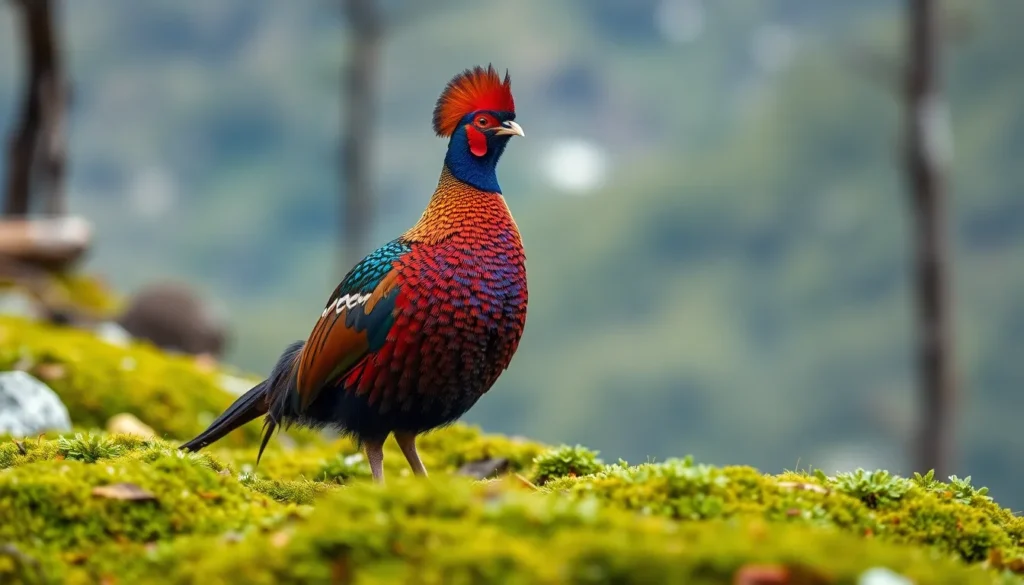
- Distinctive Male Plumage: Adult males have iridescent plumage with a metallic sheen, displaying colors ranging from green, blue, and purple to red and gold.
- Female Plumage: Females have more subdued brown and gray colors, which provide better camouflage.
- Size: Himalayan Monals measure approximately 70 cm (28 inches) in length, with males generally larger than females.
- Diet: Their diet primarily consists of tubers, bulbs, seeds, insects, and small invertebrates found on the forest floor.
- Habitat Range: They inhabit alpine and subalpine forests and meadows at elevations between 2,100 and 4,500 meters in the Himalayas.
- Geographic Distribution: The bird is found in parts of India, Nepal, Bhutan, and Tibet.
- Behavior: Himalayan Monals are ground dwellers but can fly short distances when threatened.
- Breeding Season: Their breeding season typically occurs from April to June.
- Nesting: Females build nests on the ground, often hidden among shrubs or vegetation.
- Eggs: Clutch size usually ranges from 3 to 5 eggs, which the female incubates alone for about 28 days.
- Vocalization: They produce loud, melodious calls that can be heard throughout their habitat, particularly during the breeding season.
- Conservation Status: The species is currently listed as Least Concern by the IUCN, but habitat loss and hunting pose localized threats.
- Cultural Significance: The bird is an important cultural symbol in the Himalayan region, featured in folklore and traditional art.
- Adaptations: Their strong legs and sharp claws help them forage and dig in the soil for food.
- Molting: Males undergo annual molting to renew their bright feathers.
- Flight Ability: Though capable of flight, they prefer to run or hide to avoid predators.
- Predators: Natural predators include large birds of prey, foxes, and other carnivorous mammals.
- Ecological Role: Himalayan Monals contribute to seed dispersal and insect population control in their ecosystem.
Habitat and Behavior
Himalayan Monals are native to the high-altitude regions of the Himalayas, including parts of India, Nepal, Bhutan, and Tibet. They prefer alpine meadows and mixed coniferous forests ranging from 2,100 to 4,500 meters above sea level. Their habitat consists of dense undergrowth and open areas where they forage for tubers, seeds, and insects. Behaviorally, these birds are primarily terrestrial, spending much of their time on the forest floor. They are known for their shy and elusive nature, often fleeing on foot or flying short distances when disturbed. During the breeding season, males become more conspicuous, displaying their vibrant plumage to attract females. Nesting occurs on the ground, with females incubating the eggs and caring for the hatchlings alone. Himalayan Monals are vocal birds, using calls for communication within dense habitats.
Why This Animal Matters
The Himalayan Monal plays a crucial ecological role within its native environment by aiding in seed dispersal and controlling insect populations, thus contributing to the health of alpine and subalpine ecosystems. Culturally, it holds significant value in Nepal and surrounding Himalayan regions, symbolizing beauty and grace in folklore and art. Its status as Nepal’s national bird underscores its importance in national identity. From a conservation perspective, the survival of the Himalayan Monal is indicative of the health of its fragile montane habitat, making it an important species for monitoring environmental changes in the Himalayas. Although currently not endangered, protecting its habitat from deforestation and hunting is vital to maintaining its populations.
Common Misconceptions
Misconception: The Himalayan Monal can only be found in Nepal.
Correction: While it is Nepal’s national bird, the Himalayan Monal is also found in parts of India, Bhutan, and Tibet.
Misconception: All pheasants have dull colors similar to females.
Correction: The male Himalayan Monal is renowned for its bright, iridescent plumage, which is among the most colorful of all pheasants.
Misconception: Himalayan Monals are poor flyers.
Correction: While they prefer to run or hide, Himalayan Monals can fly short distances effectively when necessary, especially to escape predators.
Misconception: The Himalayan Monal is an endangered species.
Correction: Currently, the species is listed as Least Concern by the IUCN, although habitat loss and hunting threaten some local populations.
Misconception: The bright colors of the male Himalayan Monal are visible year-round.
Correction: Males undergo molting annually, during which their plumage changes, and the brightest colors are most prominent during the breeding season.
FAQ
What does the Himalayan Monal eat?
The Himalayan Monal primarily feeds on tubers, bulbs, seeds, insects, and other small invertebrates found on the forest floor, using its strong legs and claws to dig and forage.
Why is the Himalayan Monal important culturally?
The Himalayan Monal holds cultural significance as the national bird of Nepal and is featured prominently in local folklore, traditional art, and symbolism representing beauty and grace in the Himalayan region.
Is the Himalayan Monal endangered?
Currently, the Himalayan Monal is classified as Least Concern by the IUCN due to its wide distribution, although localized threats such as habitat loss and hunting do affect some populations.



Leave a Reply