
Short Answer
21 Facts About Fireflies
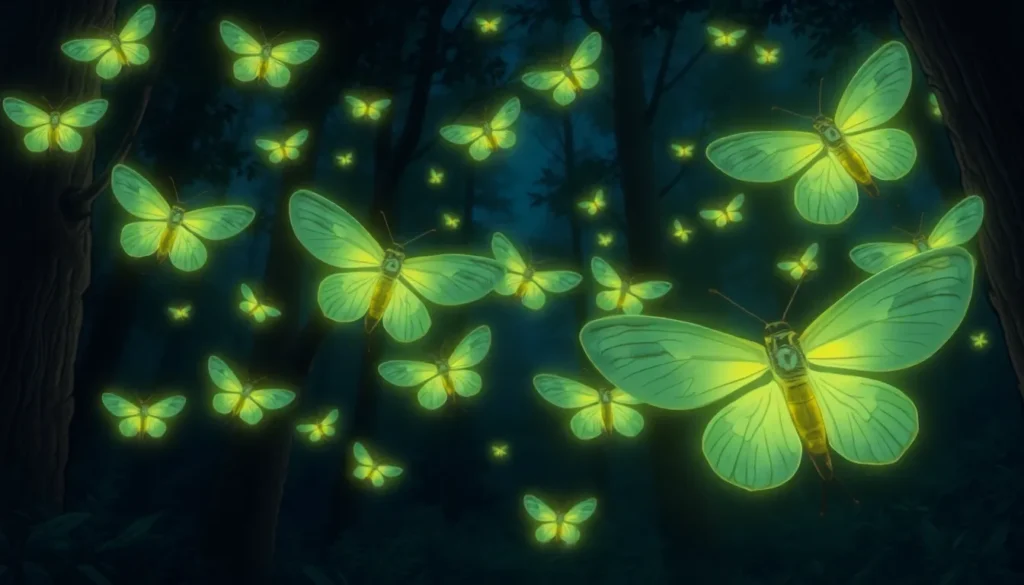
- Fireflies are beetles. Despite their name, fireflies belong to the family Lampyridae within the order Coleoptera, meaning they are a type of beetle rather than flies.
- They produce light through bioluminescence. Fireflies create light using a chemical reaction involving luciferin, luciferase, oxygen, and ATP inside specialized organs usually located on their abdomen.
- Their light is cold light. Unlike incandescent bulbs, firefly light produces almost no heat, making it an efficient form of illumination.
- Light patterns vary by species. Different firefly species have distinct flash patterns used to attract mates and communicate.
- Only adult fireflies produce light. Juvenile fireflies and some adult species may not glow at all.
- Fireflies use their light primarily for mating signals. Males typically fly and flash to attract females, who respond with their own flashes if interested.
- Some firefly species use light for defense. The glow can signal toxicity to potential predators.
- Firefly larvae are also bioluminescent. Larvae produce a faint glow, which may serve as a warning to predators.
- Fireflies live worldwide except Antarctica. They are found in temperate and tropical regions, especially near moist environments like wetlands and forests.
- Firefly populations are declining in some areas. Habitat loss, light pollution, and pesticide use threaten their numbers.
- Their glowing has inspired scientific research. Firefly luciferase is widely used in molecular biology as a reporter gene.
- Fireflies have a relatively short adult lifespan. Adults typically live only a few weeks, focusing on reproduction during this time.
- Some firefly species synchronize their flashes. In certain locations, large groups of fireflies flash in unison, creating spectacular light shows.
- Firefly light colors range from green to yellow to pale red. The exact color depends on the species and chemical makeup of their light organs.
- Fireflies do not bite or sting. They are harmless to humans and do not carry diseases.
- Firefly larvae are predatory. They often feed on snails, slugs, and other small invertebrates using digestive enzymes.
- Fireflies are culturally significant in many societies. They appear in folklore, literature, and festivals worldwide as symbols of wonder and nature.
- Light pollution disrupts firefly communication. Artificial lighting can interfere with their mating signals, reducing reproduction success.
- Fireflies can be indicators of environmental health. Their presence often reflects the quality of habitat and ecosystem integrity.
- Firefly flashing is controlled neurologically. Specialized neurons regulate the timing and pattern of light emission.
- Not all fireflies flash; some use continuous glow. Certain species produce a steady glow rather than flashing to communicate.
Habitat and Behavior
Fireflies predominantly inhabit warm, humid environments such as forests, fields, marshes, and near bodies of water. They require moist habitats for their larvae, which depend on damp soil or leaf litter to find prey. Adult fireflies are mostly nocturnal and use their light signals primarily for mating communication during twilight or nighttime hours. Flashing patterns are species-specific and serve to attract mates while reducing cross-species mating. Some species exhibit synchronized flashing, especially in Southeast Asia and parts of the United States, creating natural light displays. Fireflies feed primarily during their larval stage, preying on soft-bodied invertebrates. Adults typically consume nectar, pollen, or may not feed at all, focusing on reproduction. Their life cycle includes egg, larval, pupal, and adult stages, with the larval period lasting up to two years in some species. Environmental factors such as temperature, humidity, and light pollution can influence their behavior and survival.
Why This Animal Matters
Fireflies play an important ecological role as both predators and prey within their ecosystems. Larvae help control populations of pest invertebrates like snails and slugs, contributing to natural pest management. Fireflies themselves serve as food for birds, amphibians, and other insects. Their bioluminescent abilities have significant scientific value; the enzymes involved in their light production are widely used in biomedical research, including genetic studies and medical diagnostics. Culturally, fireflies have inspired art, folklore, and festivals globally, symbolizing beauty, mystery, and the magic of nature. However, their populations are declining due to habitat destruction, pollution, and artificial lighting, making fireflies important indicators of environmental health. Conservation efforts are underway in some regions to protect firefly habitats and raise public awareness about these unique insects.
Common Misconceptions
Misconception: Fireflies are flies.
Correction: Fireflies are not flies but beetles belonging to the family Lampyridae. They have hardened wing covers typical of beetles.
Misconception: Fireflies produce heat when they glow.
Correction: Firefly bioluminescence is a form of cold light that generates very little heat, making it highly efficient.
Misconception: All fireflies flash in the same pattern.
Correction: Different species have unique flashing patterns used for mate recognition and communication.
Misconception: Fireflies can cause harm to humans.
Correction: Fireflies do not bite, sting, or carry diseases and are harmless to humans.
Misconception: Fireflies only live in tropical regions.
Correction: Fireflies have a wide distribution and can be found in temperate as well as tropical regions worldwide.
FAQ
Why do fireflies glow?
Fireflies glow primarily to attract mates through species-specific light signals. The light can also serve as a warning to predators about their toxicity.
Are fireflies harmful to humans?
No, fireflies do not bite or sting and are harmless to humans. They are safe to observe and handle gently.
What causes firefly populations to decline?
Firefly populations are threatened by habitat loss, pesticide use, and light pollution, which interfere with their mating signals and survival.


Leave a Reply