
Short Answer
21 Facts About Dolphin Names (Signature Whistles)
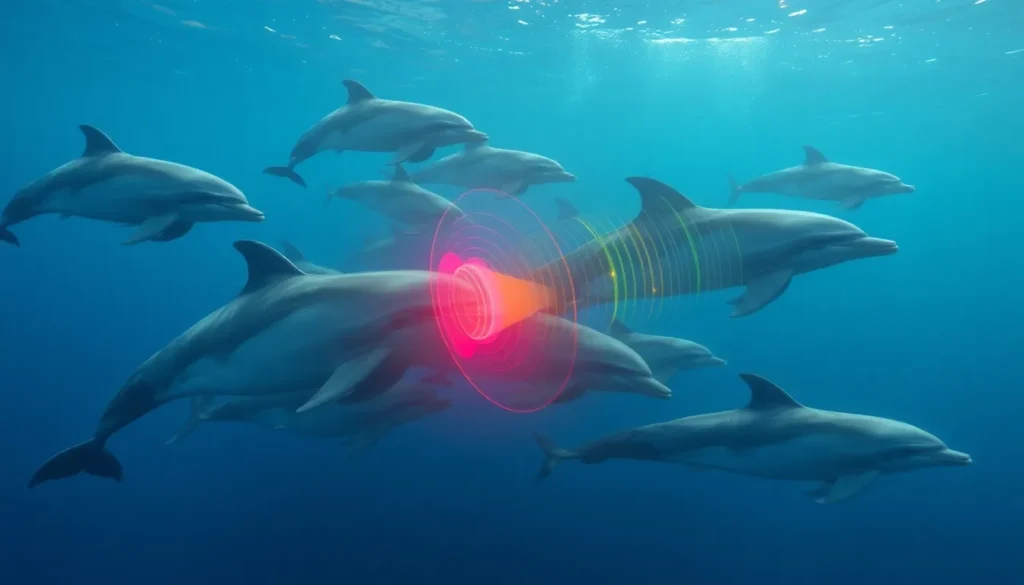
- Dolphins use signature whistles as individual identifiers. Each dolphin develops a unique whistle pattern that functions much like a name, allowing others to recognize them specifically.
- Signature whistles are learned early in life. Calves begin to produce their own distinct whistle within the first year, often influenced by their mother’s whistle but ultimately unique.
- These whistles are stable over time. Once established, a dolphin’s signature whistle remains consistent for years, providing a reliable acoustic identity.
- Dolphins respond selectively to their own signature whistles. Playback experiments show that individuals react more strongly to recordings of their own whistles than to others.
- Signature whistles are used in social interactions. Dolphins use these whistles to call each other, maintain group cohesion, and facilitate reunions after separation.
- Whistle copying occurs among dolphins. Sometimes dolphins imitate the signature whistles of close associates, which may strengthen social bonds or serve as a form of address.
- Signature whistles are distinctive in frequency and modulation. Their acoustic structure includes unique patterns in pitch and timing that differentiate one dolphin’s whistle from another’s.
- Not all dolphin vocalizations are signature whistles. Dolphins produce a range of sounds for echolocation and other communication, but signature whistles specifically serve as individual labels.
- Research on signature whistles began in the 1960s. Pioneering studies by researchers such as John Lilly and later studies by Janik and Sayigh expanded understanding of these vocalizations.
- Signature whistles have been documented in several dolphin species. While most studied in bottlenose dolphins, evidence suggests other species also use individualized whistle patterns.
- These whistles play a role in mother-calf bonding. Calves respond preferentially to their mother’s whistle and use their own signature whistle to communicate identity.
- Dolphins can recognize signature whistles of familiar individuals even after long separations. This indicates long-term memory of acoustic identities.
- Signature whistles facilitate group coordination. In complex social groups, they help maintain contact and coordinate activities such as hunting or travel.
- Human researchers use signature whistles to study dolphin social structure. By identifying individuals acoustically, scientists can monitor interactions without physical tagging.
- Whistle sharing is rare but significant. When dolphins copy whistles, it may signal close affiliation or social status.
- Environmental noise can affect whistle transmission. Increased ocean noise pollution may interfere with dolphins’ ability to communicate using signature whistles.
- Signature whistles are produced on the dolphin’s exhalation. The sound generation involves specialized anatomical structures in the nasal region.
- Dolphins can modify signature whistles slightly in social contexts. This flexibility may allow for nuanced communication or adaptation to environmental conditions.
- Some evidence suggests signature whistles may convey emotional states. Variations in whistle features could reflect excitement, distress, or other feelings.
- Studies of signature whistles contribute to broader understanding of animal communication. They provide a model for vocal learning and individual recognition in non-human species.
- Conservation efforts benefit from knowledge of signature whistles. Acoustic monitoring using signature whistles assists in tracking populations and assessing behavioral health.
Habitat and Behavior
Dolphins are found in oceans and some freshwater environments worldwide, inhabiting coastal and open waters. They are highly social animals living in groups called pods, where communication is essential for coordination, cooperation, and social bonding. Their behavior includes foraging collaboratively, playing, and engaging in complex interactions that rely heavily on acoustic signals, including signature whistles. These whistles allow dolphins to identify one another individually, maintain pod cohesion, and navigate their environment effectively.
Why This Animal Matters
Dolphins play a crucial ecological role as mid-level predators, helping regulate fish populations and maintain marine ecosystem balance. Their sophisticated communication system, including signature whistles, illustrates advanced cognitive abilities and social complexity, providing valuable insights into animal intelligence and vocal learning. Culturally, dolphins have fascinated humans for centuries, symbolizing intelligence and grace in many societies. Conservation-wise, understanding signature whistles aids in monitoring dolphin populations, crucial for protecting them amid increasing threats from habitat degradation and human activity.
Common Misconceptions
Misconception: Dolphins have names just like humans.
Correction: While dolphins use signature whistles that function similarly to names by identifying individuals, these are not names in the human linguistic sense but unique acoustic signals.
Misconception: All dolphin whistles are signature whistles.
Correction: Dolphins produce various sounds, but only certain whistles serve as individual identifiers; others are used for echolocation or general communication.
Misconception: Signature whistles are innate and identical within a species.
Correction: Signature whistles are learned and individually distinct, with each dolphin developing a unique whistle pattern.
FAQ
What is a dolphin's signature whistle?
A signature whistle is a unique, individually distinctive whistle pattern used by dolphins to identify themselves and communicate with others, functioning similarly to a name.
Do all dolphins have signature whistles?
Most studied dolphin species, especially bottlenose dolphins, develop unique signature whistles, though not all species have been thoroughly researched.
How do dolphins use signature whistles socially?
Dolphins use signature whistles to maintain contact, recognize individuals, coordinate activities, reinforce social bonds, and facilitate reunions within their pods.
Leave a Reply