
Short Answer
21 Facts About Olingos
- Taxonomic Classification: Olingos belong to the genus Bassaricyon within the family Procyonidae, which also includes raccoons and coatis.
- Number of Species: There are five recognized species of olingos, each varying slightly in size and habitat preference.
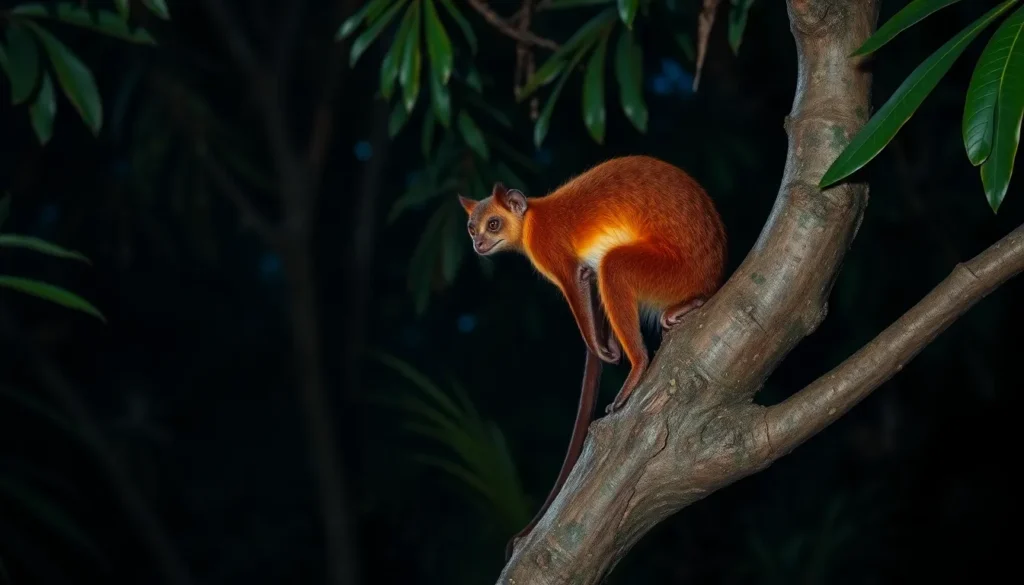
- Physical Appearance: Olingos have slender bodies, long tails, and soft, dense fur that is typically brown or reddish-brown.
- Size: They are small mammals, generally measuring between 30 and 45 centimeters in body length with tails often as long as their bodies.
- Arboreal Lifestyle: Olingos are primarily tree-dwelling animals, spending most of their time in the forest canopy.
- Nocturnal Behavior: They are mainly active at night, using their excellent climbing skills to forage in the dark.
- Diet: Olingos are omnivorous but have a strong preference for fruits, especially figs, supplemented by insects and small vertebrates.
- Habitat Range: They are distributed from Central America down through the western Amazon basin in South America.
- Habitat Preferences: Olingos prefer tropical rainforests, often inhabiting humid lowland and montane forests.
- Reproduction: Little is known about their reproductive habits, but it is believed they have small litters of one to two offspring.
- Social Structure: Olingos are generally solitary or found in pairs, with limited social interaction outside mating.
- Communication: They use vocalizations and scent marking to communicate with other olingos.
- Predators: Natural predators include larger mammals and birds of prey such as ocelots and hawks.
- Conservation Status: Most olingo species are considered of least concern but are vulnerable to habitat loss due to deforestation.
- Adaptations: Their prehensile tail helps with balance and grasping branches while navigating the canopy.
- Relation to Kinkajous: Olingos are closely related to kinkajous but differ in size, diet, and some behavioral traits.
- Research Challenges: Their nocturnal and arboreal nature makes them difficult to study in the wild.
- Ecological Role: As frugivores, olingos play a role in seed dispersal, contributing to forest regeneration.
- Distinctive Features: Unlike raccoons, olingos lack the distinctive facial mask and have a more elongated body.
- Historical Taxonomy: Olingos were once confused with kinkajous but have since been classified separately based on morphological and genetic data.
- Human Interaction: They are generally shy and avoid humans, with limited impact on agriculture or human activities.
Habitat and Behavior
Olingos primarily inhabit dense tropical rainforests in Central and South America, ranging from southern Mexico to the western Amazon basin. They favor humid lowland and montane forests where the canopy provides abundant fruit resources. Being nocturnal and arboreal, olingos spend most of their time in trees, using their prehensile tails for balance and movement. Their diet mainly consists of fruits like figs, supplemented by insects and small animals, which they forage for at night. Solitary or occasionally found in pairs, olingos communicate through vocalizations and scent marking to establish territory and find mates. Their shy and elusive nature, combined with their nocturnal habits, makes them challenging to observe and study.
Why This Animal Matters
Olingos play a vital ecological role as frugivores in tropical forest ecosystems, aiding in seed dispersal which supports forest regeneration and biodiversity. Their presence indicates healthy forest environments. Although not widely recognized culturally, they contribute to local biodiversity and are part of the complex food web, serving as prey for larger predators. Conserving olingo populations helps maintain ecosystem balance, especially as deforestation threatens tropical habitats. Understanding olingos also contributes to broader knowledge of the Procyonidae family and tropical mammal ecology.
Common Misconceptions
Misconception: Olingos are just small raccoons.
Correction: While olingos belong to the raccoon family, they differ significantly in appearance, behavior, and habitat, being more arboreal and nocturnal compared to raccoons.
Misconception: Olingos are the same as kinkajous.
Correction: Though closely related and similar in some ways, olingos and kinkajous are distinct species with different physical characteristics and ecological niches.
FAQ
What are olingos?
Olingos are small, arboreal mammals belonging to the raccoon family, native to Central and South American tropical forests.
How do olingos differ from raccoons?
Unlike raccoons, olingos are more slender, arboreal, nocturnal, and lack the distinctive facial mask common to raccoons.
What do olingos eat?
Olingos primarily eat fruits such as figs, but they also consume insects and small vertebrates, making them omnivores with a strong frugivorous preference.




Leave a Reply