
Short Answer
21 Facts About Mammoths
- Mammoths belonged to the Elephantidae family. They are closely related to today’s elephants but are a distinct genus known as Mammuthus.
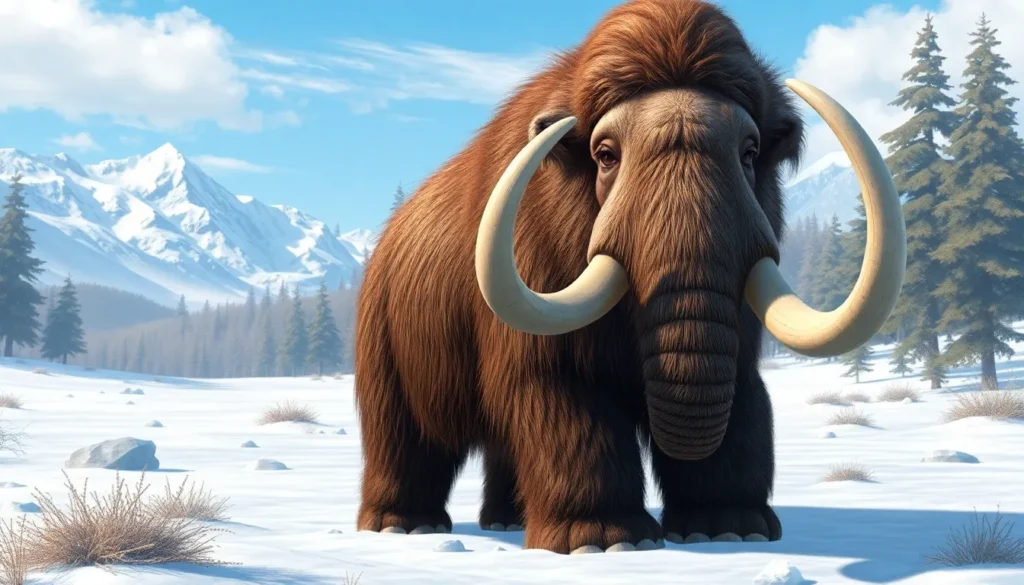
- The Woolly Mammoth is the most well-known species. It was adapted to cold, Ice Age environments with thick fur and a layer of fat for insulation.
- Mammoths lived during the Pleistocene epoch. They appeared around 5 million years ago and survived until about 4,000 years ago in isolated regions.
- Mammoth tusks could grow very long, up to 15 feet. These tusks were used for defense, foraging, and social interaction.
- Mammoths were herbivores. Their diet mainly consisted of grasses, shrubs, and other vegetation found in their habitats.
- They had a hump of fat behind their heads. Similar to modern camels, this fat helped them survive in harsh winter conditions.
- Mammoths had large, flat teeth designed for grinding tough plant material. Their molars were replaced several times throughout their lives.
- Some mammoth species grew up to 13 feet tall at the shoulder. For example, the Imperial Mammoth was among the largest members of the genus.
- Mammoths migrated across vast areas of North America, Europe, and Asia. Their range shifted with the changing climate over millennia.
- The last known population of Woolly Mammoths survived on Wrangel Island until about 1650 BCE. This isolated group outlasted mainland populations by thousands of years.
- Mammoths coexisted with early humans. Humans hunted them for food, tools, and materials, as evidenced by archaeological findings.
- Frozen mammoth remains have been discovered in Siberia. These well-preserved carcasses offer valuable insights into mammoth biology and Ice Age environments.
- Mammoth extinction is linked to climate change and human activities. The end of the Ice Age reduced their habitat, and hunting pressure contributed to their decline.
- Mammoths had a thick coat of fur, including a woolly underlayer and longer guard hairs. This adaptation was crucial for surviving cold steppe-tundra environments.
- Mammoth bones and tusks have been used historically by humans. Indigenous peoples crafted tools, art, and shelter components from these materials.
- Scientific interest in mammoths includes attempts at de-extinction. Researchers study their DNA in hopes of potentially reviving some traits or species in the future.
- There were multiple mammoth species with varying sizes and adaptations. These ranged from the smaller Southern Mammoth to the massive Columbian Mammoth.
- Mammoths played a key role in shaping Ice Age ecosystems. Their grazing influenced vegetation patterns and soil composition.
- Mammoths had a social structure similar to modern elephants. They likely lived in matriarchal herds led by older females.
- Mammoth ivory remains a valuable archaeological and artistic resource. It has been used for carvings and trade for thousands of years.
- The study of mammoths provides important information about past climate and environmental changes. Their fossils help scientists understand Ice Age dynamics and extinction processes.
Habitat and Behavior
Mammoths primarily inhabited the cold steppe-tundra regions of the Northern Hemisphere, including parts of North America, Europe, and northern Asia. Their thick fur and fat layers enabled them to survive harsh glacial climates. Mammoths were herbivores, feeding on grasses, sedges, shrubs, and other tundra plants. They likely lived in social groups similar to modern elephants, with complex herd structures dominated by females. Migration was common, as they followed seasonal vegetation growth and adapted to changing climates. Mammoths used their large tusks for digging through snow to reach food, defense against predators, and intra-species competition.
Why This Animal Matters
Mammoths hold significant ecological, cultural, and scientific importance. Ecologically, they were keystone herbivores that shaped Ice Age environments, influencing plant communities and nutrient cycles. Culturally, mammoths played a crucial role in the lives of prehistoric humans, providing food, tools, and materials, as well as inspiring art and mythology. Scientifically, mammoths offer insights into evolutionary processes, extinction dynamics, and past climate conditions. Their well-preserved remains have advanced fields such as paleontology, genetics, and conservation biology. The possibility of de-extinction has sparked ethical and scientific discussions about biodiversity and human impact on ecosystems.
Common Misconceptions
Misconception: Mammoths are just giant elephants.
Correction: While closely related, mammoths are a distinct genus with unique adaptations like thick fur and curved tusks, adapted to Ice Age environments.
Misconception: All mammoths went extinct at the end of the Ice Age.
Correction: Some populations survived in isolated locations, such as Wrangel Island, until around 1650 BCE.
Misconception: Mammoths and mastodons are the same animals.
Correction: They are different prehistoric proboscideans; mammoths belong to the Elephantidae family, while mastodons are from a separate family with different teeth and dietary habits.
Misconception: Mammoths were hunted to extinction by humans alone.
Correction: Extinction was likely caused by a combination of climate change and human hunting pressures.
Misconception: All mammoths had long, curved tusks.
Correction: Tusks varied among species in shape and length, with some species having straighter or shorter tusks.
FAQ
When did mammoths live?
Mammoths lived during the Pleistocene epoch, appearing around 5 million years ago and surviving until about 4,000 years ago in some isolated populations.
What caused the extinction of mammoths?
The extinction of mammoths is believed to be caused by a combination of climate change at the end of the Ice Age and hunting pressures from humans.
Are mammoths related to modern elephants?
Yes, mammoths are closely related to modern elephants, belonging to the same family Elephantidae but are classified in a distinct genus called Mammuthus.



Leave a Reply