
Short Answer
21 Facts About Entoprocts
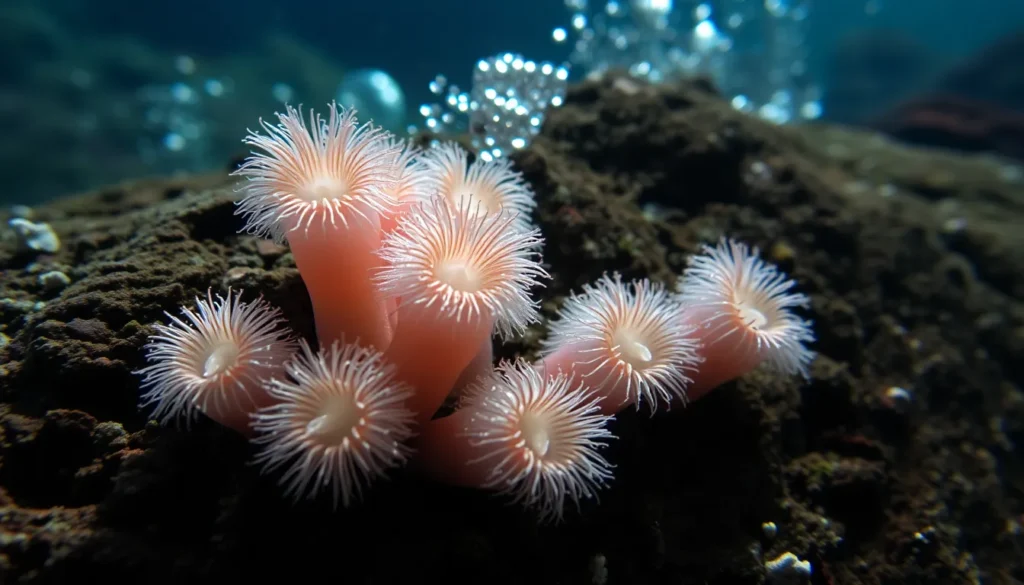
- Entoprocts are a distinct phylum: Also known as Kamptozoa, entoprocts form a small phylum of mostly marine animals characterized by a crown of ciliated tentacles used for feeding.
- They are colonial or solitary: Some entoproct species live as solitary individuals, while others form colonies connected by stolons or other structures.
- Unique feeding mechanism: Entoprocts feed by creating water currents with their ciliated tentacles to trap plankton and detritus particles.
- Distinct from Bryozoans: Although they superficially resemble bryozoans, entoprocts differ anatomically, especially in the position of the anus inside the tentacular crown.
- Small size: Most entoprocts are microscopic or a few millimeters in size, making them difficult to observe without magnification.
- Body structure: Their body typically consists of a calyx (tentacle crown and internal organs) and a stalk that anchors them to substrates.
- Internal anatomy: They possess a U-shaped gut with both mouth and anus located within the tentacle ring.
- Reproductive modes: Entoprocts can reproduce sexually and asexually; some species release larvae into the water, while others propagate through budding.
- Larval forms: Their larvae are generally free-swimming and ciliated, facilitating dispersal before settling down.
- Habitat preference: Most entoprocts are marine, living on hard substrates such as shells, algae, and rocks, often in shallow waters.
- Few freshwater species: Although primarily marine, a limited number of freshwater entoproct species are known.
- Symbiotic relationships: Some entoprocts grow on other marine organisms like sponges or mollusks, sometimes benefiting from their hosts’ protection or feeding currents.
- Simple nervous system: They possess a basic nerve net without a centralized brain, reflecting their simple body plan.
- Fossil record: The fossil record of entoprocts is sparse due to their soft bodies and small size, making their evolutionary history difficult to trace.
- Evolutionary position: Their phylogenetic placement has been debated, but molecular studies often place them within Lophotrochozoa close to mollusks and annelids.
- Filter feeders: As filter feeders, entoprocts play a role in aquatic ecosystems by removing suspended particles from the water.
- Low commercial importance: Entoprocts have no direct economic or commercial significance but are of interest to scientists studying invertebrate evolution and ecology.
- Limited research focus: Due to their small size and obscure nature, entoprocts have been less studied compared to other marine invertebrates.
- Identification challenges: Species identification often requires microscopic examination of tentacle arrangement and internal anatomy.
- Resilience and adaptability: Some entoproct species can survive in variable environmental conditions, including different salinities.
- Indicator species potential: Their presence and health may serve as indicators of marine habitat quality, although this is not widely applied.
Habitat and Behavior
Entoprocts predominantly inhabit marine environments, where they attach to hard substrates such as rocks, shells, algae, and occasionally other animals like sponges or mollusks. Their sessile lifestyle involves anchoring to a surface via a stalk or basal plate. They use their crown of ciliated tentacles to generate water currents, drawing in suspended food particles such as plankton and detritus. This filter-feeding behavior supports their nutritional needs. Entoprocts can be solitary or colonial, with some species forming mats or clusters connected by stolon-like structures. Their free-swimming larvae enable dispersal to new habitats where they metamorphose into the sessile adult form. Behaviorally, entoprocts are simple animals with limited mobility, relying on water currents and the beating of tentacles for feeding and respiration.
Why This Animal Matters
Although entoprocts are small and inconspicuous, they contribute to the health of marine ecosystems by filtering particulate matter from the water, which helps maintain water clarity and nutrient cycling. Their role as filter feeders supports the aquatic food web by transforming suspended organic material into biomass accessible to predators. Furthermore, entoprocts serve as a subject of scientific interest for evolutionary biologists studying the relationships among lophotrochozoans, invertebrate developmental biology, and the evolution of feeding structures. Despite their limited commercial or cultural significance, entoprocts highlight the diversity and complexity of marine life, emphasizing the importance of small and understudied organisms in ecological research and biodiversity.
Common Misconceptions
Misconception: Entoprocts are a type of bryozoan.
Correction: Although they resemble bryozoans, entoprocts are a separate phylum distinguished by anatomical features such as the position of the anus inside the tentacle crown, unlike bryozoans whose anus lies outside.
Misconception: Entoprocts are of no ecological significance due to their small size.
Correction: Despite their small size, entoprocts contribute to marine ecosystems as filter feeders, helping maintain water quality and serving as part of the food web.
Misconception: All entoprocts live in marine habitats.
Correction: While most entoprocts are marine, a few species have been found in freshwater environments, demonstrating some habitat diversity within the phylum.
FAQ
What are entoprocts?
Entoprocts are a small phylum of mostly marine invertebrates characterized by a crown of ciliated tentacles used for feeding, with a distinct body layout differing from similar groups.
How do entoprocts feed?
They use their ciliated tentacles to create water currents that trap plankton and organic particles, which are then transported to the mouth for ingestion.
Are entoprocts related to bryozoans?
While entoprocts and bryozoans share superficial similarities, they belong to separate phyla and differ anatomically, especially in the position of the anus relative to the tentacle crown.



Leave a Reply