
Short Answer
21 Facts About Zebra Duikers (Antelopes)
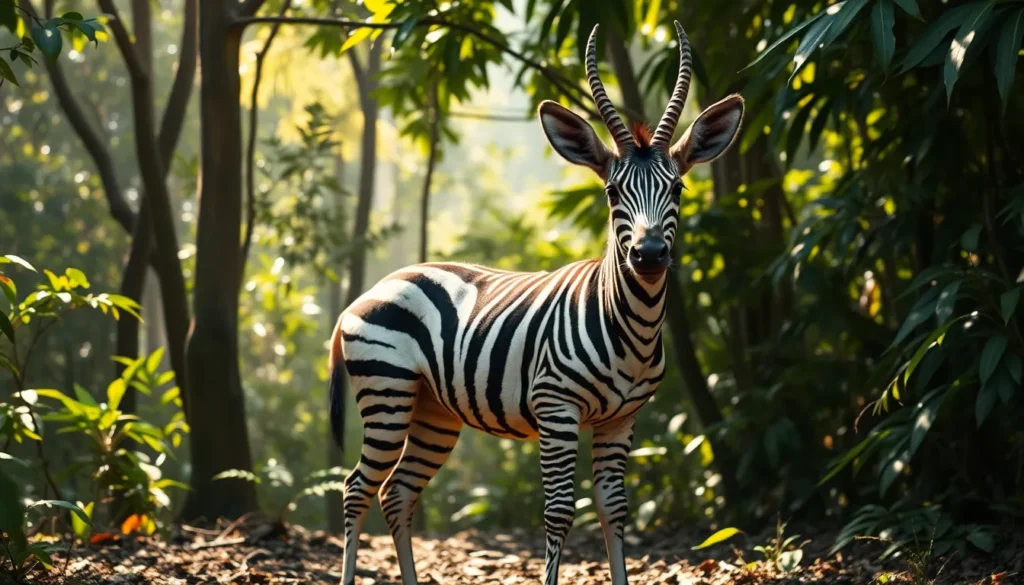
- Distinctive Stripes: Zebra duikers get their name from the zebra-like stripes running vertically along their bodies, which help them camouflage in dense forest environments.
- Scientific Classification: They belong to the genus Cephalophus within the family Bovidae, which includes other duiker species.
- Small Size: Zebra duikers are relatively small antelopes, measuring about 50 to 65 cm (20 to 26 inches) at the shoulder.
- Weight Range: Adults typically weigh between 15 and 28 kg (33 to 62 pounds), making them one of the smaller duiker species.
- Forest Dwellers: They inhabit the dense tropical rainforests of West Africa, including countries like Liberia, Ivory Coast, and Ghana.
- Solitary Behavior: Zebra duikers are generally solitary or found in pairs, unlike some other antelope species that form large herds.
- Diet: They are primarily frugivores, feeding mainly on fallen fruits, but also consume leaves, seeds, and occasionally small insects.
- Nocturnal Activity: Zebra duikers are mostly active during the night or early morning, helping them avoid predators and human activity.
- Predators: Natural predators include large snakes, leopards, and birds of prey, although their elusive nature helps reduce predation risk.
- Reproduction: Females typically give birth to a single calf after a gestation period of about 4 to 6 months.
- Communication: They use a variety of sounds, including grunts and whistles, as well as body language to communicate with others.
- Territoriality: Males maintain territories and mark them with scent glands located on their faces and hooves.
- Conservation Status: The zebra duiker is currently listed as Vulnerable by the International Union for Conservation of Nature (IUCN) due to habitat loss and hunting pressures.
- Dietary Adaptations: Their digestive system is adapted to process tough plant material and fibrous fruits typical of their forest habitat.
- Speed and Agility: Zebra duikers are agile runners capable of quick bursts of speed to escape predators through dense undergrowth.
- Camouflage: Their striped coat not only resembles that of a zebra but serves as effective camouflage in the dappled light of the forest floor.
- Social Structure: While often solitary, zebra duikers may occasionally form small family groups, especially a mother with her offspring.
- Activity Patterns: They spend much of their time foraging quietly and resting in shaded areas during the day.
- Role in Seed Dispersal: By consuming fruits and excreting seeds, zebra duikers contribute to the regeneration of their forest habitats.
- Hunting Threats: In some regions, they are hunted for bushmeat, which has contributed to population declines.
- Research Challenges: Their elusive and shy nature makes studying zebra duikers difficult, limiting detailed knowledge about their ecology.
Habitat and Behavior
Zebra duikers are native to the dense tropical rainforests of West Africa, where they prefer habitats with thick undergrowth and abundant fruiting trees. Their camouflaged striped coats help them blend into the dappled light and shadow of the forest floor, aiding in predator avoidance. They are predominantly solitary and shy animals, often active during the night or at dawn and dusk. Their diet mainly consists of fallen fruits, supplemented by leaves, seeds, and occasionally small invertebrates. Territorial males mark their domains using scent glands and defend them against rivals. Due to their secretive behavior and forest habitat, zebra duikers are rarely seen in the wild and are considered elusive by researchers.
Why This Animal Matters
Zebra duikers play an important ecological role as seed dispersers in their forest environments, helping maintain the diversity and regeneration of tropical rainforests. Their feeding habits contribute to the cycling of nutrients and the propagation of many plant species. From a conservation perspective, zebra duikers are indicators of healthy forest ecosystems. However, their populations are vulnerable due to habitat destruction from logging and agricultural expansion, as well as hunting for bushmeat. Protecting zebra duikers helps preserve West African biodiversity and supports broader efforts to conserve endangered forest habitats.
Common Misconceptions
Misconception: Zebra duikers are closely related to zebras because of their stripes.
Correction: Despite their name and striped appearance, zebra duikers are antelopes and are only distantly related to zebras, which are equids.
Misconception: Zebra duikers live in open savannas like other antelope species.
Correction: Zebra duikers primarily inhabit dense tropical forests rather than open savanna areas.
Misconception: Zebra duikers form large herds similar to other antelope species.
Correction: They are generally solitary or found in small groups, not large herds.
FAQ
Where are zebra duikers found?
Zebra duikers are native to the tropical rainforests of West African countries such as Liberia, Ivory Coast, and Ghana.
What do zebra duikers eat?
They primarily consume fallen fruits but also eat leaves, seeds, and occasionally small insects.
Are zebra duikers endangered?
They are classified as Vulnerable due to habitat loss and hunting, which have caused declines in their population.
Leave a Reply