
Short Answer
21 Facts About Barreleye Fish
- Unique Head Structure
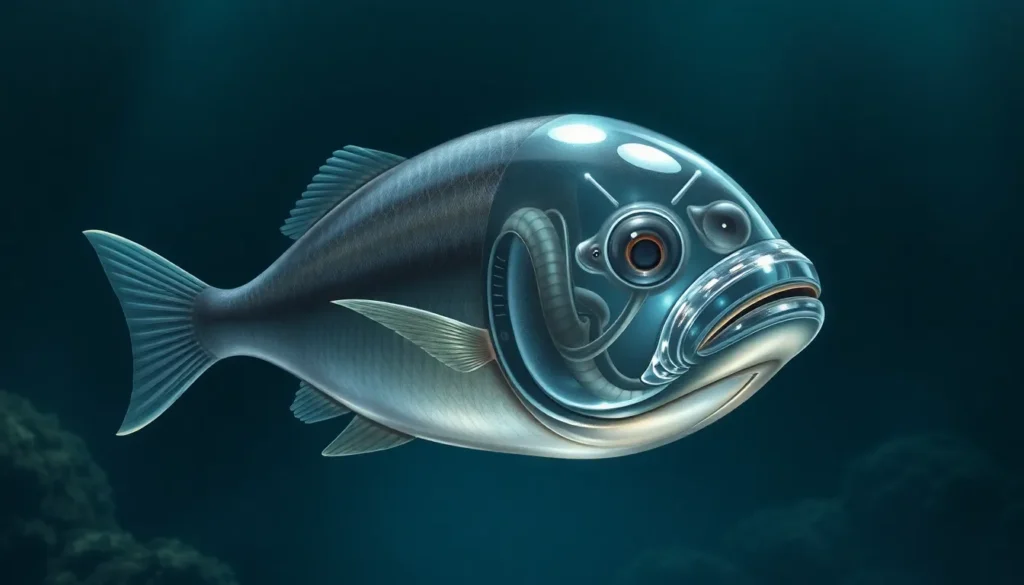
The Barreleye fish (Macropinna microstoma) is renowned for its transparent head, which allows it to see its surroundings more clearly in the dark depths of the ocean. - Binocular Vision
Its eyes can rotate to look upward, providing a binocular view to spot prey and predators. - Deep-Sea Habitat
This fish typically resides at depths of 600 to 800 meters (about 1,970 to 2,620 feet) in the Pacific Ocean. - Diet
Barreleye fish primarily feed on jellyfish and other small marine organisms that drift into their range. - Body Structure
They possess a gelatinous body, which helps them maintain buoyancy in their deep-sea environment. - Coloration
The Barreleye fish is generally a greenish color, which may help it blend in with the ocean environment. - Size
Adults typically grow to about 15 centimeters (6 inches) in length. - Discovery
The species was first described scientifically in 1939, but it wasn’t observed alive until 2004. - Transparent Dome
The transparent dome of its head is filled with fluid and acts like a lens for its eyes. - Adaptation
This unique adaptation allows the fish to maximize its field of vision while minimizing the amount of light that enters. - Reproductive Behavior
Little is known about the reproductive habits of Barreleye fish, as they are difficult to study in their natural habitat. - Movement
Barreleye fish are known to swim slowly, conserving energy in their deep-sea habitat. - Predation Risks
Their transparent head may help them avoid detection by predators in the dark ocean depths. - Research Interest
The Barreleye fish is of significant interest to scientists studying adaptation and evolution in extreme environments. - Behavioral Studies
Observations suggest that these fish may use their transparent heads to hunt more effectively. - Bioluminescence
While not bioluminescent itself, the Barreleye fish is known to inhabit areas where bioluminescent organisms are common. - Environmental Indicators
As part of the ocean ecosystem, Barreleye fish can serve as indicators of environmental health in their habitats. - Longevity
The lifespan of Barreleye fish is not well-documented but is believed to be several years. - Conservation Status
Currently, there are no specific conservation measures for Barreleye fish, but their habitat may be affected by climate change. - Visual Acuity
Their eyes are adapted to detect faint light, enhancing their ability to see in dark waters. - Social Behavior
Barreleye fish are generally solitary, though little is known about their social interactions.
Habitat and Behavior
The Barreleye fish is predominantly found in the deep, dark waters of the Pacific Ocean, specifically at depths ranging from 600 to 800 meters. This fish has adapted to its environment with a gelatinous body that aids in buoyancy. Its unique transparent head allows for a greater field of vision, crucial for spotting prey such as jellyfish. Barreleye fish are typically slow swimmers, a behavior that helps them conserve energy while navigating their sparse surroundings.
Why This Animal Matters
The Barreleye fish plays a significant role in the marine ecosystem, primarily as a predator of jellyfish and other small organisms. Its intriguing adaptations make it a subject of interest for scientists studying evolution and adaptation in extreme environments. Understanding the Barreleye fish contributes to broader ecological knowledge, particularly concerning the health of deep-sea habitats, which are increasingly threatened by climate change and human activities.
Common Misconceptions
Misconception: The transparent head of the Barreleye fish is purely for aesthetic purposes.
Correction: The transparent head serves a functional role, allowing the fish to see better in the low-light conditions of its deep-sea habitat.
Misconception: Barreleye fish are commonly seen and studied.
Correction: Due to their deep-sea habitat, Barreleye fish are rarely observed in the wild, making scientific studies challenging.
FAQ
What is the primary habitat of Barreleye fish?
Barreleye fish primarily inhabit the deep waters of the Pacific Ocean, typically at depths of 600 to 800 meters.
How do Barreleye fish see in the dark?
Their transparent head and specialized eyes allow them to detect faint light, enhancing their vision in dark environments.
What do Barreleye fish eat?
They mainly feed on jellyfish and other small marine organisms that drift into their range.



Leave a Reply