
Short Answer
21 Facts About Rotifers
- Microscopic Size
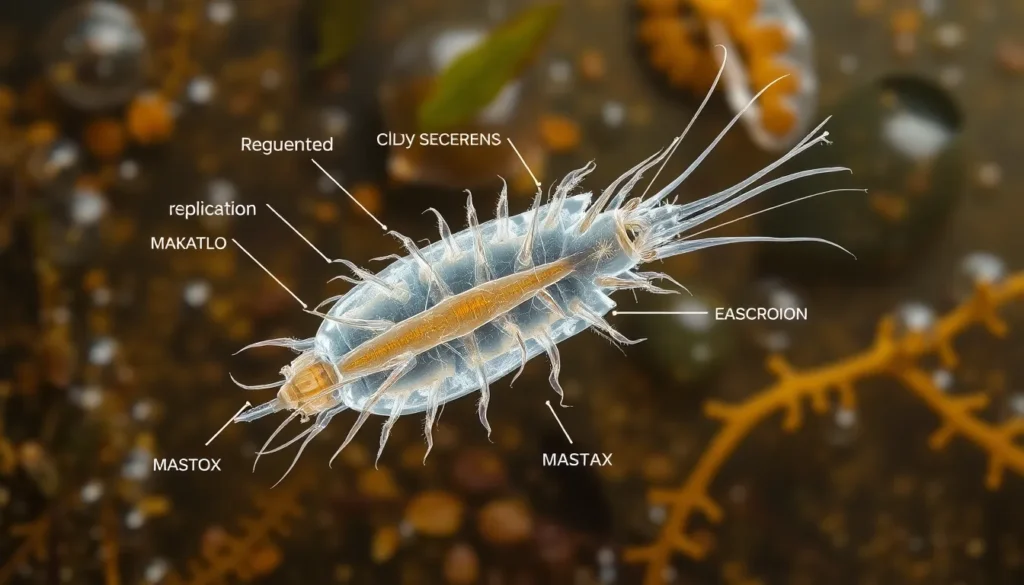
Rotifers are typically between 50 and 500 micrometers in length, making them visible only under a microscope. - Wheel Organ (Corona)
They possess a crown of cilia called the corona, which appears like rotating wheels and is used for locomotion and feeding. - Body Structure
Rotifers have a bilaterally symmetrical, soft body divided into a head, trunk, and foot. - Habitat Diversity
They inhabit freshwater, marine, and moist terrestrial environments worldwide. - Filter Feeders
Rotifers feed mainly on small particles like algae, bacteria, and detritus by filtering water with their cilia. - Reproductive Modes
Many rotifers reproduce by parthenogenesis, where females produce offspring without fertilization, though sexual reproduction also occurs. - Cryptobiosis Capability
Some species can enter a dormant state called cryptobiosis to survive unfavorable conditions like desiccation. - Short Lifespan
The typical lifespan of a rotifer is a few days to a few weeks, depending on the species and environment. - Complex Jaw Structure
Rotifers possess a mastax, a muscular pharynx with jaws called trophi that help grind food particles. - Ecological Indicators
Due to their sensitivity to environmental changes, rotifers serve as bioindicators in water quality assessments. - Genomic Studies
Rotifers have been studied for their unique genome structures, including horizontal gene transfer in some species. - Wide Distribution
They are found on every continent, including Antarctica, demonstrating their adaptability. - Parthenogenetic Dominance
In many populations, males are rare or absent, with females dominating reproduction through parthenogenesis. - Swimming and Attachment
While many rotifers swim freely, others attach themselves temporarily or permanently to substrates using adhesive glands. - Role in Food Webs
Rotifers are an important food source for small invertebrates and fish larvae in aquatic ecosystems. - Species Diversity
There are about 2,000 known species of rotifers, showcasing significant morphological and ecological variety. - Locomotion
Besides ciliary movement, some rotifers use muscular contractions to crawl or inch along surfaces. - Adaptations to Environmental Stress
Rotifers can survive extreme temperatures, UV radiation, and pollutants better than many other microscopic animals. - Sexual Reproduction Triggers
Sexual reproduction is often induced by environmental stress or population density changes. - Symbiotic Relationships
Some rotifers have symbiotic relationships with algae or bacteria that contribute to their nutrition. - Ancient Lineage
Rotifers have a fossil record dating back to the Cambrian period, indicating a long evolutionary history.
Habitat and Behavior
Rotifers are predominantly aquatic animals inhabiting freshwater environments like ponds, lakes, rivers, and wetlands, though some species live in marine habitats or damp terrestrial areas such as mosses and soil. Their ability to survive desiccation and survive in temporary water bodies allows them to colonize diverse habitats globally. Behaviorally, rotifers use their ciliated corona to create water currents that draw food particles toward their mouths. Many swim actively, while others attach to surfaces to feed. Their reproductive behavior varies, with many species reproducing asexually under favorable conditions and switching to sexual reproduction to promote genetic diversity when stressed.
Why This Animal Matters
Rotifers play a critical ecological role as primary consumers, feeding on microorganisms and organic detritus, thereby contributing to nutrient cycling in aquatic ecosystems. They serve as a vital food source for larger invertebrates and juvenile fish, supporting aquatic food webs. Their sensitivity to pollutants and environmental changes makes them valuable bioindicators for monitoring water quality. Additionally, their remarkable biological features, such as cryptobiosis and unique reproductive strategies, provide important insights for scientific research in ecology, evolutionary biology, and genetics.
Common Misconceptions
Misconception: Rotifers are a type of bacteria.
Correction: Rotifers are multicellular animals belonging to the phylum Rotifera, not bacteria, which are unicellular microorganisms.

Misconception: Rotifers only live in water.
Correction: While mostly aquatic, some rotifers can survive in moist terrestrial environments such as soil, mosses, and leaf litter.
Misconception: Rotifers reproduce only sexually.
Correction: Many rotifers reproduce primarily through parthenogenesis, a form of asexual reproduction, with sexual reproduction occurring under specific conditions.
Misconception: Rotifers are harmful to humans.
Correction: Rotifers are harmless microscopic animals with no known negative impact on human health.
FAQ
What are rotifers?
Rotifers are microscopic aquatic animals characterized by a crown of cilia used for feeding and locomotion, belonging to the phylum Rotifera.
Where do rotifers live?
They predominantly inhabit freshwater environments but can also be found in marine and moist terrestrial habitats worldwide.
How do rotifers reproduce?
Many rotifers reproduce asexually through parthenogenesis, but sexual reproduction occurs in response to environmental stress or population changes.


Leave a Reply