
Short Answer
21 Facts About Hoatzins (birds)
- Hoatzins are the only extant species in the family Opisthocomidae. This means they represent a unique evolutionary lineage among birds, without close living relatives.
- They are native to the Amazon and Orinoco river basins in South America. Their range includes countries such as Brazil, Venezuela, Colombia, Ecuador, Peru, and Bolivia.
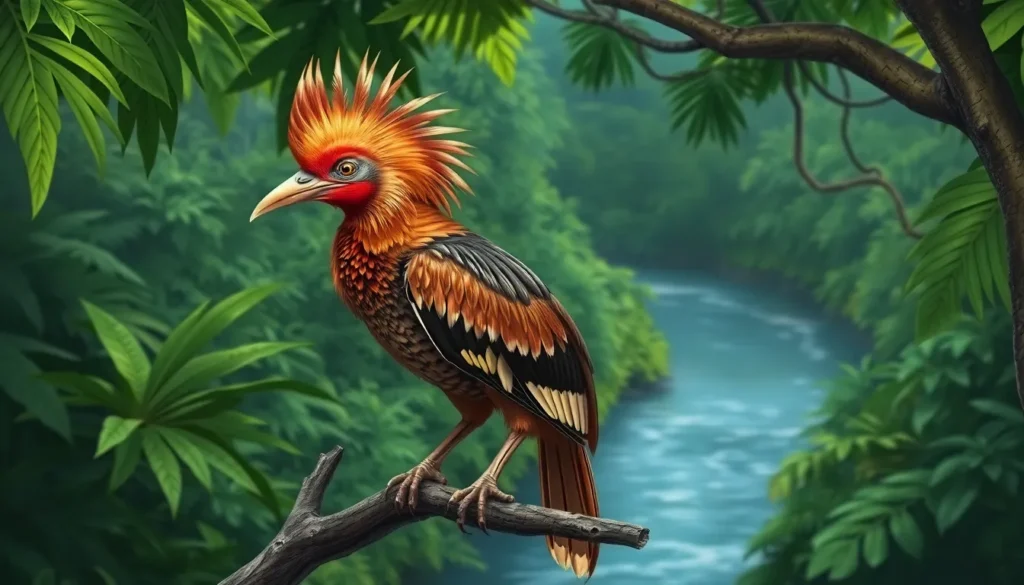
- Hoatzins have a distinctive appearance characterized by a spiky crest on their heads. This crest consists of long, thin feathers that stand erect and give them a prehistoric look.
- Their plumage is mostly brown with white and black streaks, providing excellent camouflage in dense vegetation. This coloring helps them blend into riverbank forests and swamps.
- They are sometimes called “stink birds” due to the odor produced by their digestive system. Their unique gut fermentation process emits a manure-like smell.
- Hoatzins have a specialized digestive system that ferments vegetation in an enlarged crop. This is similar to the rumination process in cows and allows them to digest leaves and other plant material efficiently.
- They are primarily folivores, feeding mostly on leaves, flowers, and fruits. This diet is unusual among birds, which typically consume more protein-rich foods.
- Their digestive process is slow, requiring them to spend long periods resting to allow fermentation. This limits their activity and flight capabilities.
- Hoatzins are poor fliers and tend to move awkwardly through dense vegetation. Their flight is short and labored, often described as fluttering or gliding.
- Unlike most birds, hoatzin chicks have claws on their wings. These claws help young birds climb branches and vegetation before they can fly.
- This wing-claw trait is considered a primitive characteristic, linking hoatzins to ancient birds. It has drawn scientific interest for insights into avian evolution.
- Hoatzins build nests over water or in flooded areas to protect against predators. Their nests are typically constructed in shrubs or trees near slow-moving rivers or swamps.
- Both parents and sometimes helpers participate in caring for the young. This cooperative breeding behavior supports chick survival in challenging habitats.
- Hoatzins are social birds, often seen in small groups or family units. They communicate through a variety of calls and vocalizations.
- Their calls are described as low, grunting noises, unlike the songs of many other birds. These sounds help maintain group cohesion in dense forest environments.
- They have a low metabolic rate compared to other birds of similar size. This is linked to their herbivorous diet and fermentation-based digestion.
- Hoatzins have been known since pre-Columbian times and appear in indigenous folklore. Various native cultures have recognized and named the bird.
- They have few natural predators due to their habitat and nesting strategies. However, eggs and chicks may be vulnerable to snakes, mammals, and large birds.
- Hoatzins are not currently considered threatened but face habitat loss risks from deforestation and river pollution. Their dependence on wetland and riparian habitats makes them sensitive to environmental changes.
- Scientists continue to study hoatzins to better understand their unique physiology and evolutionary history. Their distinct traits make them important for avian biological research.
- The hoatzin is sometimes referred to as a “living fossil” due to its primitive features and ancient lineage. This designation emphasizes its value in understanding bird evolution.
Habitat and Behavior
Hoatzins inhabit tropical lowland rainforests, swamps, and riverine forests primarily in the Amazon and Orinoco basins. They prefer dense vegetation near slow-flowing or stagnant water bodies, where they can forage for leaves, flowers, and fruits. Their behavior is generally slow and deliberate, correlating with their low-energy folivorous diet. Hoatzins are social birds, often observed in small groups, and communicate using a range of calls that help maintain group cohesion in dense environments. Their poor flight abilities mean they rely heavily on climbing and short bursts of fluttering flight to move through their habitat. Nesting typically occurs in shrubs or low trees over water, which helps protect eggs and chicks from many predators. Both parents and sometimes additional group members care for the young, demonstrating cooperative breeding behavior.
Why This Animal Matters
Hoatzins play an important ecological role as one of the few folivorous birds in their ecosystem, contributing to the cycling of plant material in tropical wetlands. Their unique digestive system represents an evolutionary adaptation to a leaf-based diet, offering scientists valuable insight into convergent evolution and digestive specialization. Culturally, hoatzins have been recognized by indigenous peoples for centuries, featuring in local folklore and traditional knowledge. From a conservation perspective, while hoatzins are not currently endangered, they serve as indicators of wetland health and biodiversity. Protecting hoatzin habitats aligns with broader efforts to conserve the rich and diverse ecosystems of the Amazon and Orinoco river basins.
Common Misconceptions
Misconception: Hoatzins are related to chickens or other common birds.
Correction: Despite some superficial similarities, hoatzins belong to their own unique family (Opisthocomidae) and have no close relatives among commonly known birds.
Misconception: The wing claws on hoatzin chicks mean they are primitive or “missing links.”
Correction: While the wing claws are a rare trait in modern birds, they represent a retained ancestral feature rather than evidence of hoatzins being direct evolutionary intermediates.
Misconception: Hoatzins produce an unpleasant odor because they are unhealthy or dirty.
Correction: The strong odor is a natural byproduct of their unique digestive fermentation process, not a sign of poor health.
FAQ
Why do hoatzins have a strong odor?
Hoatzins produce a strong, manure-like odor because of the bacterial fermentation that occurs in their enlarged crop, which helps them digest leaves and other tough plant materials.
How do hoatzin chicks use their wing claws?
The wing claws of hoatzin chicks allow them to climb branches and vegetation before they are capable of sustained flight, a trait that helps them navigate dense habitats safely.
Are hoatzins endangered?
Hoatzins are currently not considered endangered, but their populations depend on healthy wetland and riverine forest habitats that face threats from deforestation and environmental changes.




Leave a Reply