
Short Answer
21 Facts About Blue Tang
- Scientific Name: The Blue Tang is scientifically known as Paracanthurus hepatus, belonging to the surgeonfish family.
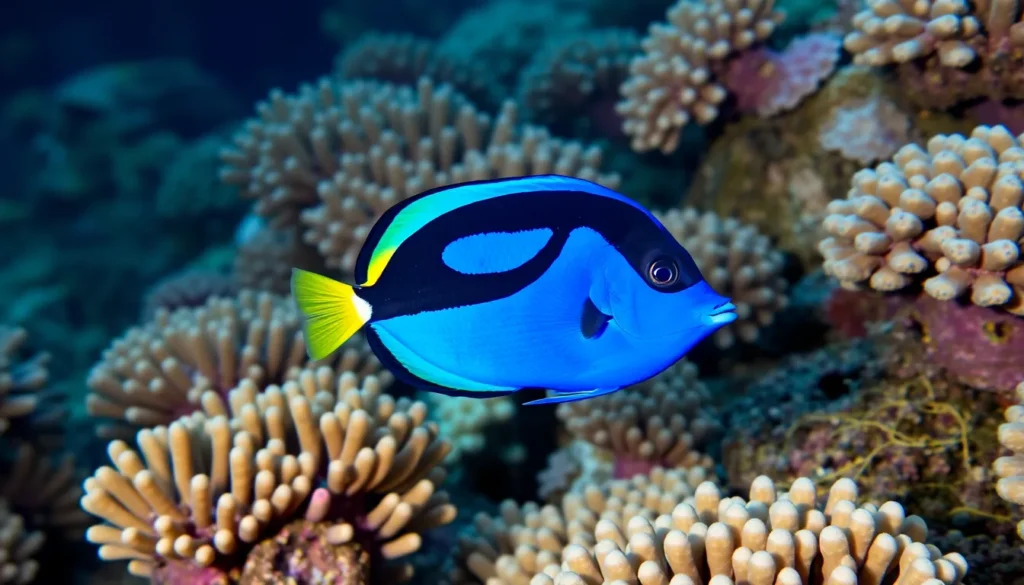
- Distinctive Coloration: It is easily recognized by its bright blue body with a yellow tail and a distinctive black ‘palette’ pattern on its sides.
- Common Names: Besides Blue Tang, it is also called Palette Surgeonfish, Hippo Tang, or Regal Tang.
- Geographical Range: Blue Tangs are native to the Indo-Pacific region, including the Great Barrier Reef, the Philippines, and Indonesia.
- Habitat: They primarily inhabit coral reefs and rocky lagoons at depths between 2 to 40 meters.
- Size: Adult Blue Tangs grow up to about 12 inches (30 cm) in length.
- Diet: They are primarily herbivores, feeding mainly on algae which helps maintain reef health.
- Behavior: Blue Tangs are diurnal, active during the day and resting at night within reef crevices.
- Social Structure: They are often seen schooling in large groups, which offers protection against predators.
- Defense Mechanism: Like other surgeonfish, Blue Tangs have sharp spines or ‘scalpels’ near their tails used for defense.
- Reproduction: Spawning occurs in pairs, releasing eggs and sperm into open water where fertilization is external.
- Larval Stage: After hatching, larvae drift with plankton before settling on reefs to mature.
- Lifespan: In the wild, Blue Tangs typically live up to 8-20 years depending on environmental conditions.
- Role in Aquariums: They are popular in marine aquariums due to their vibrant color but require specialized care.
- Popular Culture: The Blue Tang gained fame through the character “Dory” in the animated films “Finding Nemo” and “Finding Dory.”
- Ecological Importance: By grazing on algae, they prevent overgrowth that could otherwise smother coral reefs.
- Predators: Natural predators include larger fish such as groupers, sharks, and eels.
- Conservation Status: Currently listed as Least Concern by the IUCN, though habitat degradation poses risks.
- Adaptations: Their flat, oval-shaped bodies allow them to maneuver easily through coral reefs.
- Color Changes: Blue Tangs can change shades of blue to communicate or during stress.
- Unique Traits: Their spine “scalpels” can inflict painful wounds, a rare trait among reef fish.
Habitat and Behavior
The Blue Tang inhabits warm, tropical coral reefs primarily in the Indo-Pacific region. It prefers shallow waters where coral and algae are abundant. These fish are diurnal and exhibit schooling behavior, which provides safety in numbers from predators. Their diet consists mainly of algae, which they graze off rocks and corals, contributing to the health and balance of their reef ecosystems. They are territorial to some extent but often coexist peacefully within their schools. Their sharp tail spines serve as a defense mechanism against threats.
Why This Animal Matters
Ecologically, Blue Tangs play a crucial role in maintaining coral reef health by controlling algae populations, preventing algae from overgrowing and suffocating corals. Their presence supports biodiversity by helping to sustain the reef structure. Culturally, they have become iconic due to their portrayal in popular media, increasing public interest in marine life and coral reef conservation. From a conservation perspective, while currently not endangered, their reliance on coral reefs makes them vulnerable to habitat loss caused by climate change, pollution, and human activities.
Common Misconceptions
Misconception: Blue Tangs are aggressive and dangerous to humans.
Correction: While Blue Tangs possess sharp spines near their tails that can cause injury if handled improperly, they are generally non-aggressive and avoid human contact.
Misconception: Blue Tangs are easy to keep as pets.
Correction: Although popular in home aquariums, Blue Tangs require specific water quality, diet, and tank size to thrive, making them challenging for inexperienced aquarists.
Misconception: Blue Tangs are a single, unchanging shade of blue.
Correction: Blue Tangs can exhibit variations in color intensity and pattern, often changing shade depending on mood, age, or environmental factors.
FAQ
What does the Blue Tang eat?
Blue Tangs primarily feed on algae, which helps keep coral reefs healthy by preventing excessive algae growth.
Where do Blue Tangs live?
They are found in the Indo-Pacific region, inhabiting coral reefs and rocky lagoons at depths ranging from 2 to 40 meters.
Are Blue Tangs suitable for home aquariums?
While popular, Blue Tangs require specialized care including large tanks, stable water conditions, and a diet rich in algae, making them challenging for novice aquarium keepers.


Leave a Reply