
Short Answer
21 Facts About Quetzalcoatlus
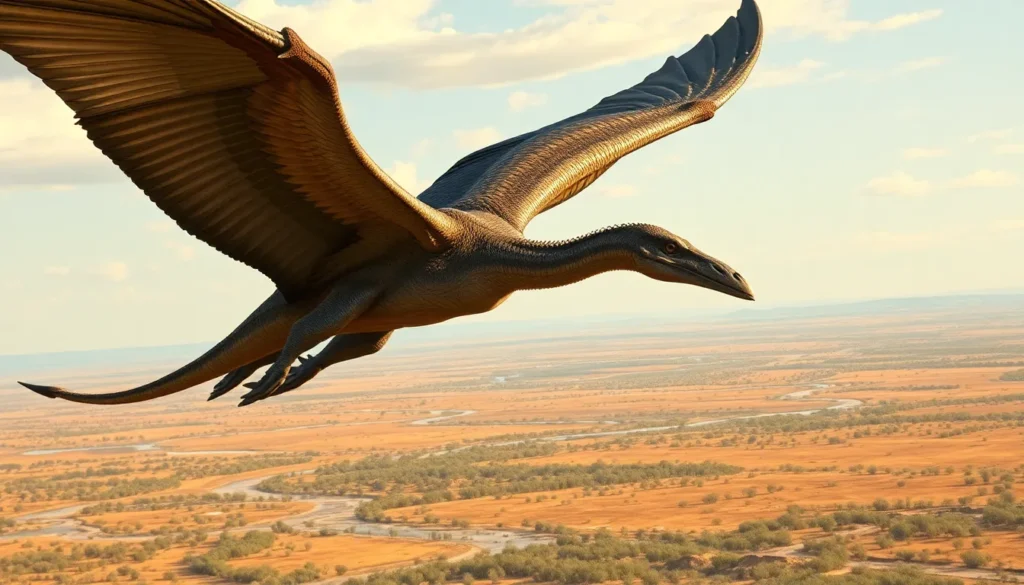
- Quetzalcoatlus was among the largest flying animals ever discovered. Estimates suggest a wingspan of up to 10–11 meters (33–36 feet), making it one of the largest known pterosaurs.
- It lived during the Late Cretaceous period, approximately 70 to 65 million years ago. This places it near the end of the age of dinosaurs, just before the mass extinction event.
- The genus name “Quetzalcoatlus” is derived from the Aztec feathered serpent god, Quetzalcoatl. This name reflects the creature’s impressive size and flying ability.
- Fossil remains were first discovered in Texas in the 1970s. These fossils were found in the Javelina Formation and provided crucial evidence of giant pterosaurs in North America.
- Unlike birds, Quetzalcoatlus had hollow bones to reduce weight for flight. This adaptation is common among pterosaurs and birds, facilitating powered flight.
- Its skull was long and toothless, featuring a pointed beak. This anatomy suggests a feeding style different from that of toothed pterosaurs.
- Quetzalcoatlus is part of the Azhdarchidae family, known for large, long-necked pterosaurs. Members of this family often had terrestrial stalking behaviors.
- Scientists debate whether Quetzalcoatlus hunted like a modern stork or scavenged carrion. Some models suggest it was a terrestrial predator that caught small animals on land.
- Its legs were long and robust, indicating it was capable of walking efficiently on the ground. This terrestrial ability distinguishes it from some other pterosaurs that were more aquatic.
- Flight mechanics of Quetzalcoatlus remain partially uncertain due to its immense size. However, it is believed to have been capable of both soaring and flapping flight.
- Some studies indicate it launched into flight using a quadrupedal takeoff. This means it used all four limbs to push off the ground, a unique behavior among flying animals.
- Quetzalcoatlus likely inhabited inland environments rather than coastal regions. Fossil evidence suggests it lived in terrestrial settings away from large bodies of water.
- Its diet probably included small vertebrates such as reptiles and mammals. Its beak and jaw structure support the hypothesis of hunting small terrestrial prey.
- The wings were supported by an elongated fourth finger, a characteristic of all pterosaurs. This finger extended the wing membrane, allowing for flight.
- Quetzalcoatlus fossils are rare, making it difficult to fully understand its biology. Much of what is known comes from fragmentary remains and comparisons with related species.
- It is named the largest known pterosaur, but some other species like Hatzegopteryx may rival its size. The debate over the largest pterosaur continues as new fossils emerge.
- The discovery of Quetzalcoatlus expanded understanding of pterosaur diversity in North America. Before its discovery, giant pterosaurs were primarily known from other continents.
- Its extinction coincided with the Cretaceous-Paleogene extinction event that ended the reign of dinosaurs. This event eliminated many large reptiles, including pterosaurs.
- Quetzalcoatlus has inspired scientific research on biomechanics and flight in giant vertebrates. Its unique size challenges conventional models of powered flight.
- It occupies an important place in popular culture and paleontology as an example of prehistoric gigantism. It often appears in documentaries and educational materials about the Mesozoic era.
- Quetzalcoatlus exemplifies the evolutionary success and diversity of pterosaurs during the Late Cretaceous. Its adaptations highlight the ecological roles flying reptiles played before their extinction.
Habitat and Behavior
Quetzalcoatlus inhabited terrestrial environments during the Late Cretaceous period, mainly in what is now North America. Fossil evidence indicates it lived in inland floodplains and other dry habitats rather than coastal or marine areas. Its long legs and robust body suggest it was well-adapted for walking on land, possibly stalking prey such as small vertebrates. The absence of teeth and large size imply it may have used a beak to snatch or scavenge food. Flight capabilities are understood to include soaring, allowing it to cover large distances efficiently, though it likely required a quadrupedal launch to become airborne due to its massive wingspan and weight.
Why This Animal Matters
Quetzalcoatlus holds ecological and scientific significance as one of the largest flying animals in Earth’s history. Its existence challenges understanding of the limits of vertebrate flight and biomechanics. Ecologically, it serves as an example of how pterosaurs diversified to fill different niches, including terrestrial predator roles. Culturally, it captures public imagination and contributes to education about prehistoric life. Scientifically, investigations into its anatomy and flight mechanics inform broader studies of evolution, extinction, and the Mesozoic ecosystems in which it lived.
Common Misconceptions
Misconception: Quetzalcoatlus was a dinosaur.
Correction: Quetzalcoatlus was a pterosaur, a distinct group of flying reptiles closely related to dinosaurs but not classified as dinosaurs themselves.
Misconception: It hunted fish by skimming water surfaces like some modern birds.
Correction: Evidence suggests Quetzalcoatlus primarily lived inland and likely hunted terrestrial prey rather than feeding on fish.
Misconception: Its enormous size made it impossible for Quetzalcoatlus to fly.
Correction: Despite its size, anatomical adaptations such as hollow bones and wing structure enabled it to fly, most likely using powerful quadrupedal launch techniques and soaring flight.
FAQ
How large was Quetzalcoatlus compared to modern birds?
Quetzalcoatlus had an estimated wingspan of up to 10–11 meters, far exceeding the wingspan of any modern bird such as the wandering albatross, which reaches about 3.5 meters.
Did Quetzalcoatlus live near the ocean?
Fossil evidence suggests Quetzalcoatlus primarily inhabited inland environments rather than coastal areas, unlike some other pterosaurs that lived near water bodies.
How did Quetzalcoatlus take off given its large size?
It is believed Quetzalcoatlus used a quadrupedal launch mechanism, pushing off with both its forelimbs and hindlimbs to achieve flight despite its large size.





Leave a Reply