
Short Answer
21 Facts About Gerbil Social Structure
- Gerbils Are Social Animals
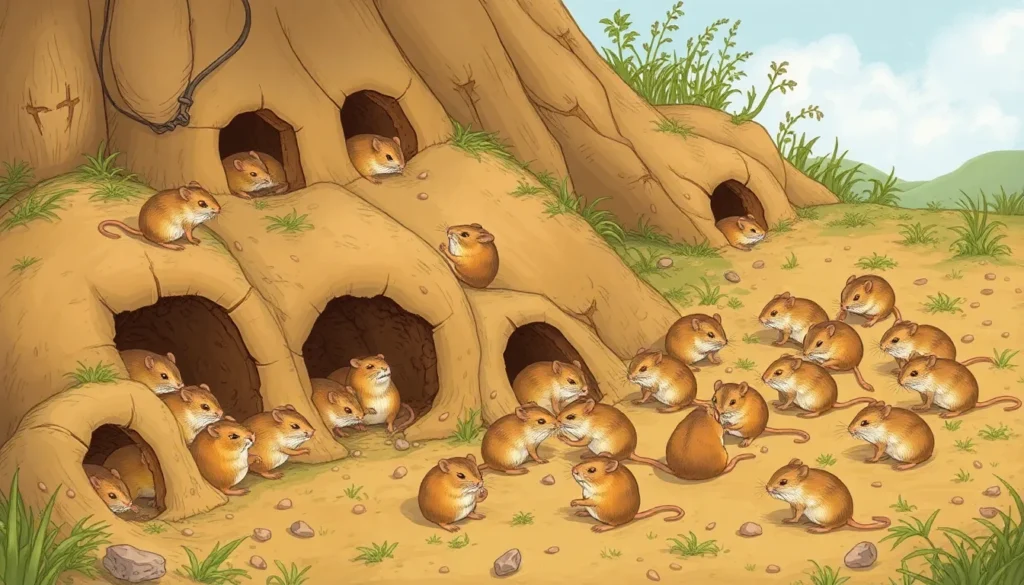
Gerbils are highly social creatures that thrive in groups. In the wild, they typically live in colonies, which provide safety from predators and enhance their social interactions. - Complex Hierarchies Exist
Within gerbil colonies, there is often a social hierarchy. Dominant individuals may have priority access to resources such as food and nesting sites. - Communication is Key
Gerbils communicate through various vocalizations and body language, which includes tail movements and scent marking to establish territory. - Cooperative Breeding
In some species, gerbils exhibit cooperative breeding, where non-breeding individuals assist in raising the young, enhancing the survival rate of offspring. - Burrowing Behavior
Gerbils dig extensive burrow systems that are shared within their colonies, which serves as a communal space for nesting and protection. - Territorial Disputes
While generally social, gerbils can engage in territorial disputes, particularly when introducing new individuals into an established colony. - Group Living Benefits
Living in groups allows gerbils to share resources and care for young, increasing their chances of survival in the wild. - Dietary Sharing
Gerbils often share food with colony mates, which is crucial during times when resources are scarce. - Play Behavior
Young gerbils engage in play, which is important for social development and learning social cues from adults. - Social Grooming
Grooming among gerbils serves to strengthen social bonds and maintain hygiene within the colony. - Adaptation to the Environment
Gerbils have adapted their social structure to cope with their arid environments, often living in areas where food and water are limited. - Predator Awareness
Social living enhances predator awareness and alarm calling, where one gerbil will alert the others to potential threats. - Breeding Seasons
Gerbils have specific breeding seasons, usually influenced by environmental conditions, which affects colony dynamics. - Mate Selection
In gerbil colonies, mate selection can be influenced by the social hierarchy, with dominant individuals often gaining access to preferred mates. - Distinct Vocalizations
Gerbils use specific vocalizations to communicate different messages, including distress calls or mating calls. - Age Structure
The age structure of a gerbil colony can influence its social dynamics, with younger gerbils often playing different roles compared to adults. - Role of Scent
Scent marking is a crucial aspect of gerbil social interaction, helping to establish territory and identify individuals. - Environmental Influence
The social structure of gerbils can vary based on environmental factors, such as food availability and habitat type. - Social Bonds
Strong social bonds can be observed in gerbil colonies, contributing to their overall well-being and reducing stress. - Impact of Isolation
Isolation from their colonies can lead to stress and behavioral changes in gerbils, highlighting the importance of their social structure. - Research Importance
Gerbil social structures have been studied in behavioral research, providing insights into social behaviors that may be applicable to other species.
Habitat and Behavior
Gerbils are primarily found in arid regions, including deserts and grasslands, where they construct intricate burrow systems to escape extreme temperatures and store food. Their social behavior is characterized by a high level of interaction within colonies, which aids in survival against predators and environmental challenges. They are diurnal, meaning they are active during the day, and display behaviors such as foraging, grooming, and playing, which are vital for their social development and group cohesion.
Why This Animal Matters
Gerbils play a significant role in their ecosystem as seed dispersers and prey for various predators. Their burrowing activities aerate the soil, promoting plant growth and contributing to the health of their environment. Additionally, gerbils are often used in scientific research due to their manageable size and social behaviors, providing insights into social dynamics and ecological adaptations that can inform conservation efforts.
Common Misconceptions
Gerbils Are Solitary Animals
Gerbils are social creatures that thrive in groups and rely on social interactions for survival and well-being.
All Gerbils Are the Same
There are different species of gerbils, each with unique social structures and behaviors that adapt to their specific environments.
FAQ
What is the typical social structure of gerbils?
Gerbils typically live in colonies with a hierarchical structure, where dominant individuals have priority access to resources.
How do gerbils communicate?
Gerbils communicate through vocalizations, body language, and scent marking, allowing them to establish territory and social bonds.
Why are gerbils important in research?
Gerbils are important in research due to their social behaviors and adaptability, providing insights applicable to other species and ecological studies.





Leave a Reply