
Short Answer
21 Facts About Giant Isopods
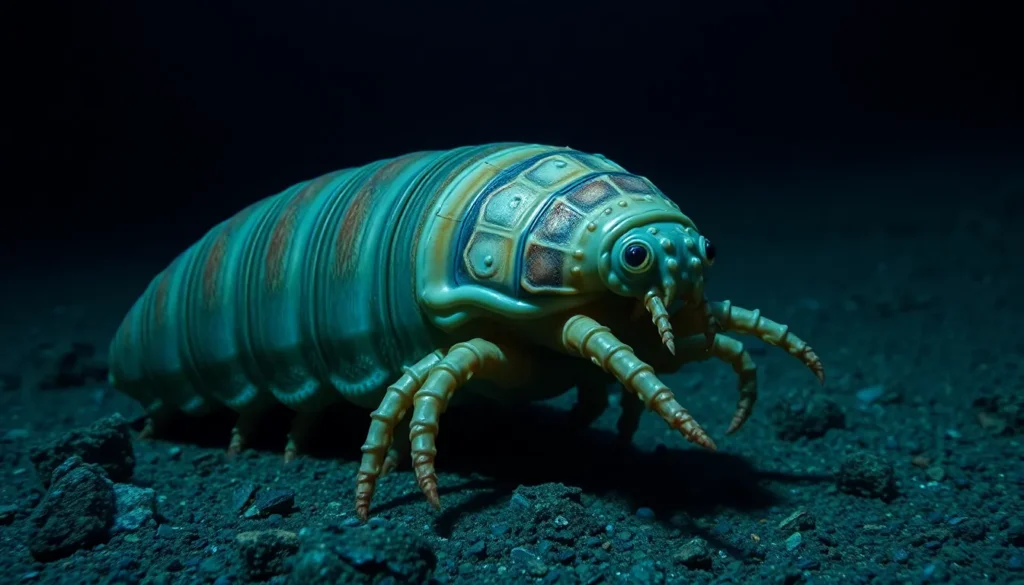
- Giant isopods belong to the genus Bathynomus. They are part of the family Cirolanidae and are one of the largest members of the isopod crustaceans.
- They can grow very large. Some species reach lengths of up to 30 centimeters (about 12 inches), much larger than typical isopods.
- They inhabit deep-sea environments. Giant isopods are found at depths ranging from 170 meters to over 2,000 meters below the ocean surface.
- They are scavengers. These animals feed primarily on dead animals that sink to the ocean floor, including fish, squid, and whales.
- Giant isopods have a hard, segmented exoskeleton. This provides protection against predators and harsh deep-sea conditions.
- They can survive long periods without food. Due to the scarcity of food in deep-sea habitats, giant isopods can endure months of starvation.
- Their body shape is somewhat flattened and oval. This shape helps them move efficiently along the seafloor.
- They have compound eyes adapted to low light. Their large, multi-faceted eyes enable them to detect faint light in the deep ocean.
- Giant isopods move slowly. Their slow movement conserves energy in an environment where food is limited.
- They can curl into a ball. Similar to terrestrial pill bugs, giant isopods can roll up to protect their soft underside.
- They reproduce sexually. Females carry fertilized eggs in a brood pouch until they hatch into juveniles.
- Giant isopods have multiple pairs of legs. These legs are used for walking, swimming, and handling food.
- They possess antennae to sense their environment. The antennae help detect chemical signals and movement in the water.
- They are primarily found in the Atlantic, Pacific, and Indian Oceans. Their distribution includes deep-sea regions near continental shelves and slopes.
- Giant isopods are considered benthic organisms. They live on or near the ocean floor rather than swimming freely in the water column.
- They play a role in nutrient recycling. By consuming carrion, they help break down organic matter and return nutrients to the ecosystem.
- Despite their size, they are not aggressive. Giant isopods are mainly scavengers and rarely attack live prey.
- They have been observed to feed on slow-moving or dead animals. This indicates opportunistic feeding habits adapted to food availability.
- They have a low metabolic rate. This adaptation helps them survive long periods with limited oxygen and food.
- Giant isopods have been featured in popular media. Their unusual appearance and size have made them subjects of documentaries and marine biology studies.
- They remain relatively understudied. Due to their deep-sea habitat, many aspects of their biology and ecology are still not well understood.
Habitat and Behavior
Giant isopods inhabit deep ocean waters, often residing along continental shelves and slopes at depths between 170 and 2,140 meters. These cold, dark environments have high pressures and limited food availability. To survive, giant isopods have developed slow metabolisms and the ability to endure long periods without nourishment. They are primarily benthic scavengers, moving along the seafloor in search of carrion. Their behavior is generally slow and deliberate, conserving energy. They use their antennae and large compound eyes to detect food and predators in the dim conditions. When threatened, they can curl into a defensive ball to protect their vulnerable undersides. Reproduction involves females carrying eggs in a brood pouch until the young hatch, after which juveniles resemble miniature adults.
Why This Animal Matters
Giant isopods contribute significantly to deep-sea ecosystems by aiding in the decomposition and recycling of organic material. By consuming dead animals, they help prevent the accumulation of carrion, facilitating nutrient cycling in otherwise nutrient-poor environments. Their presence indicates the health and biodiversity of deep-sea habitats. Additionally, their unique adaptations provide valuable insights for scientists studying life in extreme environments. Though not directly targeted by fisheries or threatened species lists, their ecological role underscores the importance of conserving deep-sea biodiversity.
Common Misconceptions
Misconception: Giant isopods are dangerous predators.
Correction: They primarily scavenge dead or slow-moving animals and are not known to be aggressive hunters.
Misconception: Giant isopods are closely related to terrestrial pill bugs.
Correction: While both are isopods, giant isopods are marine crustaceans adapted to deep-sea life, whereas pill bugs live on land.
Misconception: Giant isopods are frequently found near the ocean surface.
Correction: They live in deep ocean zones, rarely venturing into shallow waters.
Misconception: Their large size is due to pollution or environmental changes.
Correction: Their size is a natural adaptation to deep-sea conditions, not caused by human activity.
Misconception: Giant isopods can survive indefinitely without food.
Correction: Although they can endure long periods, they still require food to sustain life and reproduction.
FAQ
What do giant isopods eat?
Giant isopods are scavengers that primarily feed on dead animals such as fish, squid, and whales that fall to the ocean floor.
How do giant isopods survive in the deep sea?
They have adaptations including a low metabolic rate, the ability to endure long periods without food, large eyes for sensing in low light, and a protective exoskeleton.
Are giant isopods dangerous to humans?
No, giant isopods are not dangerous to humans. They are scavengers that avoid confrontation and pose no threat.


Leave a Reply