
Short Answer
21 Facts About Golden Silk Orb Weavers
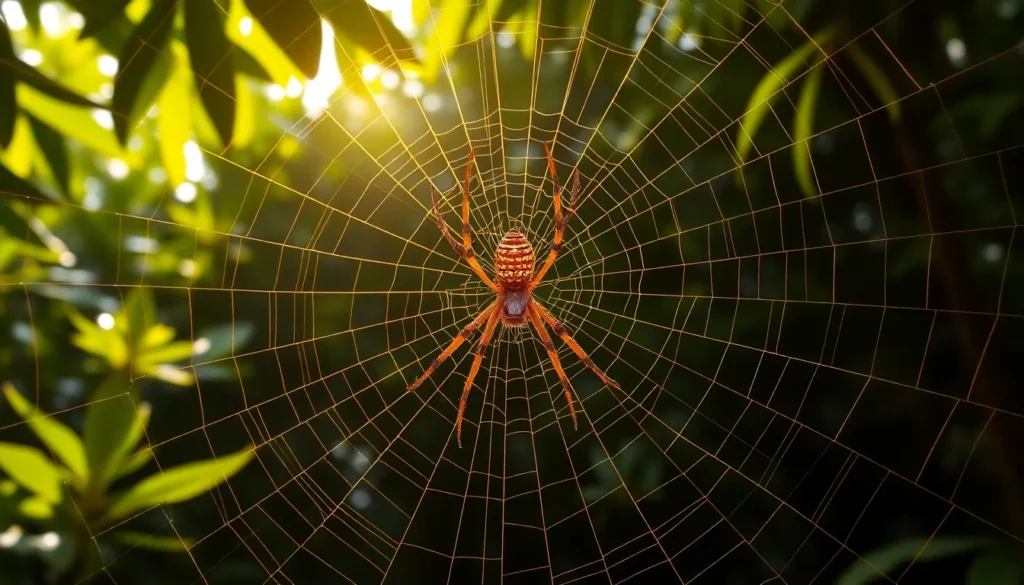
- Golden Silk Orb Weavers belong to the genus Nephila. These spiders are known for producing large orb-shaped webs with a distinctive golden hue due to the silk’s unique color.
- The golden color of their silk is caused by carotenoid pigments. This coloration may help camouflage the web or attract prey by reflecting sunlight.
- They are among the largest orb-weaving spiders in the world. Females can reach up to 5 centimeters in body length, while males are significantly smaller.
- Sexual dimorphism is pronounced in this species. Females are much larger than males, a trait common in orb-weaving spiders.
- Golden Silk Orb Weavers spin webs that can exceed 1 meter in diameter. These large webs help them capture a variety of flying insects.
- The web’s silk is exceptionally strong and elastic. Studies have shown that it rivals some synthetic fibers in tensile strength.
- They are primarily diurnal, actively maintaining their webs during the day. This behavior differentiates them from many other orb weavers that are nocturnal.
- The spiders repair their webs daily. They often consume damaged silk before spinning new threads to conserve resources.
- Golden Silk Orb Weavers have a global distribution in tropical and subtropical regions. They are commonly found in Asia, Australia, Africa, and the Americas.
- They prefer habitats with abundant vegetation. Forest edges, gardens, and shrublands are typical environments where their webs are constructed.
- Their diet mainly consists of flying insects such as flies, beetles, and moths. The web’s size and stickiness enable effective prey capture.
- These spiders use vibrations to detect prey caught in their webs. They remain near the center of the web or in a retreat connected by signal threads.
- Golden Silk Orb Weavers exhibit interesting mating behavior. Males often approach cautiously to avoid being mistaken for prey and sometimes sacrifice themselves during copulation.
- Their silk has attracted scientific interest for potential biomaterial applications. Its strength and flexibility inspire research in textiles and medical devices.
- Predators of Golden Silk Orb Weavers include birds, wasps, and parasitic insects. Despite their size and formidable webs, they are part of a complex food web.
- They play a crucial ecological role as natural pest controllers. By capturing large quantities of insects, they help maintain insect population balance.
- The golden silk is sometimes harvested by indigenous peoples for decorative purposes. However, this practice is limited due to the difficulty of collection.
- Golden Silk Orb Weavers are non-aggressive toward humans. Their venom is not considered harmful to people, typically causing mild localized reactions if bitten.
- The genus Nephila was first described in the early 19th century. It has since been the subject of extensive taxonomic and ecological studies.
- Some species within the genus have undergone reclassification based on genetic analysis. This highlights the complexity of spider taxonomy.
- Despite their impressive webs and size, Golden Silk Orb Weavers are relatively understudied compared to other spiders. Continued research is important to understand their biology and ecological impact.
Habitat and Behavior
Golden Silk Orb Weavers inhabit tropical and subtropical regions worldwide, favoring areas with dense vegetation such as forests, gardens, and shrublands. They construct large orb-shaped webs, typically suspended between trees or shrubs, that can reach over one meter in diameter. These webs are maintained and repaired daily, often involving consumption of old silk to recycle proteins.
Behaviorally, these spiders are primarily diurnal, actively managing their webs during daylight hours. Their golden-colored silk is thought to serve multiple functions, including camouflage and prey attraction. They detect prey through web vibrations and respond swiftly to immobilize captured insects. Mating behavior is complex, involving cautious approaches by smaller males to avoid predation by the larger females.
Why This Animal Matters
Golden Silk Orb Weavers are important ecological agents, serving as natural pest controllers by capturing large numbers of flying insects. Their presence helps maintain the balance of insect populations in their habitats. Additionally, the remarkable properties of their silk have attracted scientific interest for applications in materials science, including the development of strong, lightweight fibers.
Culturally, they have been recognized by indigenous peoples in some regions for their unique webs. From a conservation perspective, understanding their ecological roles and population dynamics is valuable for preserving biodiversity in tropical ecosystems.
Common Misconceptions
Misconception: Golden Silk Orb Weavers are dangerous to humans.
Correction: These spiders are generally non-aggressive and their venom is not harmful to humans beyond mild localized effects.
Misconception: Their golden webs are artificial or enhanced by humans.
Correction: The golden color is a natural characteristic of the silk, caused by pigments and structural properties of the fibers.
Misconception: Males are as large as females.
Correction: There is significant sexual dimorphism, with females much larger than males.
Misconception: These spiders only live in one continent.
Correction: Golden Silk Orb Weavers have a wide distribution across tropical and subtropical regions globally.
Misconception: The silk is commonly harvested commercially.
Correction: While the silk’s properties are notable, commercial harvesting is limited due to practical challenges.
FAQ
Are Golden Silk Orb Weavers dangerous to humans?
Golden Silk Orb Weavers are generally not dangerous to humans. Their venom is mild and typically causes only minor, localized reactions if a bite occurs.
Why is the silk of Golden Silk Orb Weavers golden?
The golden color of their silk results from carotenoid pigments and the structure of the silk fibers, which reflect sunlight to give the distinctive hue.
Where can Golden Silk Orb Weavers be found?
They inhabit tropical and subtropical regions worldwide, including parts of Asia, Australia, Africa, and the Americas.


Leave a Reply