
Short Answer
21 Facts About Upland Sandpipers
- Not a typical sandpiper: Despite its name, the upland sandpiper is more closely related to yellowlegs and is unique among sandpipers for its grassland habitat.
- Scientific name: Its scientific name is Bartramia longicauda, named after American naturalist William Bartram.
- Distinctive call: It produces a high-pitched, whistling call often described as a flute-like sound, which is unusual for shorebirds.
- Habitat preference: Unlike many shorebirds, upland sandpipers prefer open grasslands, prairies, and agricultural fields rather than wetlands or shorelines.
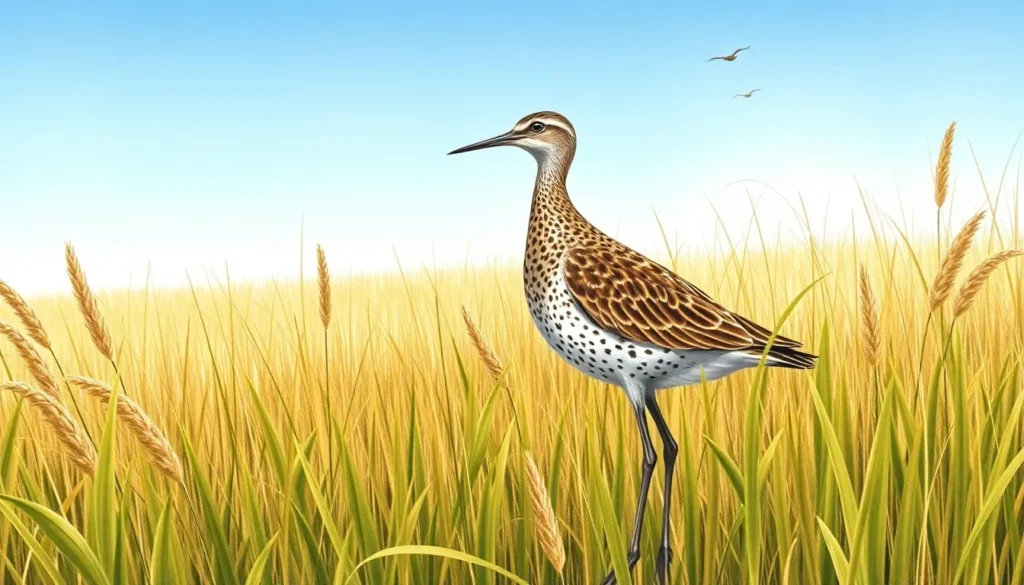
- Size and appearance: It is medium-sized, with a long neck and tail, a mottled brown back, and a pale belly, giving it a distinctive silhouette in flight.
- Long-distance migration: The species migrates annually from North American breeding grounds to wintering areas in South America, traveling thousands of miles.
- Breeding behavior: Upland sandpipers nest on the ground in grasslands, creating shallow scrapes lined with grasses and sometimes feathers.
- Diet: Their diet consists mainly of insects such as grasshoppers and beetles, supplemented by seeds and other plant material.
- Flight pattern: They have a buoyant, fluttering flight, often flying high above the ground during migration and display flights.
- Population status: While not globally endangered, upland sandpiper populations have declined in parts of their range due to habitat loss.
- Vocal during breeding season: Males are especially vocal during the breeding season to establish territories and attract mates.
- Non-colonial nesting: Unlike many shorebirds, upland sandpipers do not nest in colonies but rather disperse individually across suitable grasslands.
- Adaptation to agriculture: Some populations have adapted to nesting in hayfields and pastures, though this can expose nests to risk from mowing.
- Predators: Ground-nesting exposes eggs and chicks to predation from mammals and birds, making vigilant parental behavior crucial.
- Longevity: In the wild, upland sandpipers can live up to 10 years, although many face hazards during migration.
- Role in ecosystem: By consuming insects, they help control pest populations in grassland ecosystems.
- Flight call: Their high, clear whistle is often the only way to detect them when hidden in tall grasses.
- Conservation efforts: Preservation of native prairies and grasslands is essential for maintaining upland sandpiper populations.
- Seasonal movements: They arrive on breeding grounds in spring and depart for wintering areas in late summer or early fall.
- Social behavior: Outside the breeding season, upland sandpipers may gather in loose flocks, especially during migration.
- Unique among shorebirds: Their preference for upland habitats distinguishes them from most other members of the sandpiper family.
Habitat and Behavior
The upland sandpiper inhabits open grasslands, prairies, and agricultural fields across North America during the breeding season. It avoids traditional wetland habitats common to many shorebirds, instead favoring tall grasses where it can forage for insects and nest on the ground. This species is known for its discreet behavior, often remaining hidden in vegetation, making it more often heard than seen. Upland sandpipers are migratory, undertaking long journeys to winter in South American grasslands, particularly in Argentina. Their flight is characterized by a buoyant and fluttering style, and they are most vocal during the breeding season to establish territories and attract mates. Their diet mainly consists of insects, which they catch on the ground by sight, supplemented occasionally by seeds. Breeding involves creating simple nests in shallow ground scrapes lined with grasses. Given their ground-nesting habits, they rely on camouflage and vigilance to protect eggs and chicks from predators.
Why This Animal Matters
The upland sandpiper plays a significant ecological role by controlling insect populations in grassland ecosystems, contributing to the health and balance of these habitats. Their presence indicates the quality of native prairie and grassland environments, which have been declining due to agricultural expansion and development. Conserving upland sandpipers aids in protecting these important ecosystems and the biodiversity they support. Culturally, the species has been appreciated by birdwatchers and naturalists for its unique flight calls and unusual preference for upland habitats among shorebirds. Conservation efforts for the upland sandpiper often overlap with broader grassland preservation initiatives, making the species a valuable indicator for environmental health.
Common Misconceptions
Misconception: Upland sandpipers are shorebirds that live near water.
Correction: Unlike many shorebirds, upland sandpipers prefer grasslands and prairies and are rarely found near water bodies.
Misconception: They nest in colonies like other sandpipers.
Correction: Upland sandpipers nest solitarily, dispersing across open grasslands rather than in colonies.
FAQ
Where do upland sandpipers live?
Upland sandpipers breed in open grasslands and prairies across North America and migrate to South American grasslands for the winter.
What do upland sandpipers eat?
Their diet mainly consists of insects such as grasshoppers and beetles, supplemented by seeds and plant material.
Why are upland sandpipers important to ecosystems?
They help control insect populations in grassland ecosystems and serve as indicators of healthy prairie habitats.





Leave a Reply