
Short Answer
21 Facts About Tiger Beetles
- Tiger beetles are among the fastest insects on Earth. Some species can run at speeds up to 9 km/h (5.6 mph), which is extremely fast relative to their body size.
- They belong to the subfamily Cicindelinae. This group is part of the larger family Carabidae, commonly known as ground beetles.
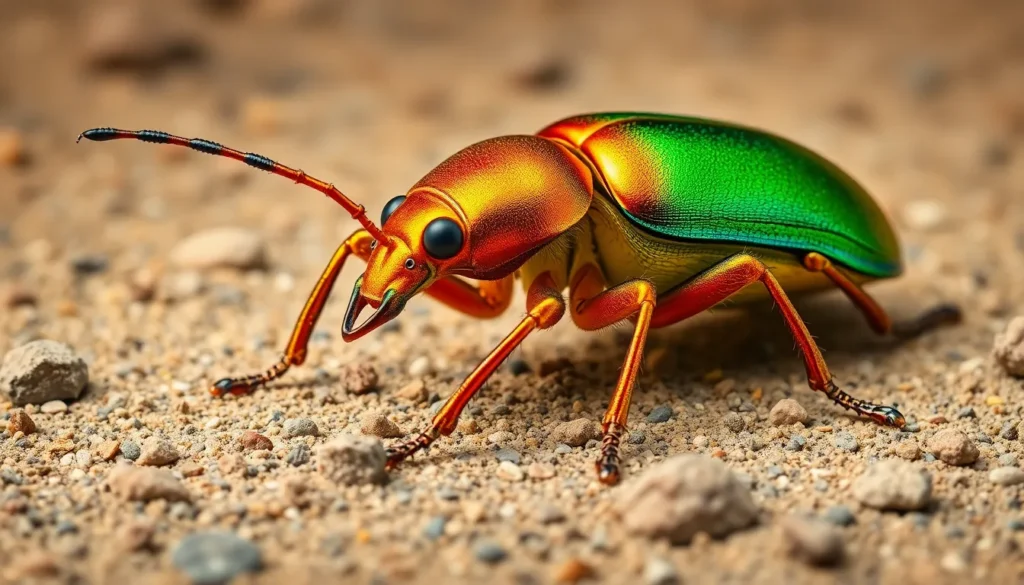
- Tiger beetles have large, prominent eyes. Their excellent vision helps them spot and hunt prey efficiently.
- These beetles are predatory. They actively hunt small arthropods and insects, using their strong mandibles to capture and kill prey.
- Their coloration is often bright and metallic. Many tiger beetles display iridescent greens, blues, and other striking colors that can serve as camouflage or warning signals.
- Tiger beetles exhibit impressive agility. Their long legs enable rapid acceleration and quick changes in direction during pursuit of prey.
- They are found on every continent except Antarctica. Their habitats range from sandy beaches and riverbanks to forests and grasslands.
- Larvae are also predatory. Tiger beetle larvae live in burrows and ambush passing prey from below the surface.
- Many species prefer open, sunny habitats. This is because they rely on their speed and vision, which are optimized in well-lit environments.
- Tiger beetles use chemical defenses. Some species can secrete noxious substances to deter predators.
- Some species display territorial behavior. Males often defend areas with abundant prey to attract females.
- Their mandibles are powerful and visible. These jaws are used both for hunting and defense.
- Tiger beetles have been studied for their biomechanics. Their speed and vision provide insights into insect locomotion and sensory processing.
- Adults typically have a short lifespan. Most live for only a few months, focusing on feeding and reproduction.
- Some species are indicators of habitat health. Because they require specific environmental conditions, tiger beetles can reflect ecosystem quality.
- They have a unique hunting style. They chase prey on foot rather than using webs or traps.
- Not all tiger beetles are brightly colored. Some species have more subdued patterns that blend with their environment.
- Tiger beetles are diurnal. They are most active during the day when visibility aids their hunting.
- Wing morphology varies among species. While most can fly, some have reduced wings and rely primarily on running.
- These beetles have a global diversity of about 2,600 species. They are especially diverse in tropical and subtropical regions.
- Tiger beetles have fascinated entomologists for centuries. Their speed and appearance have made them popular subjects of study since the 18th century.
Habitat and Behavior
Tiger beetles inhabit a wide range of environments, including sandy beaches, riverbanks, dry open fields, forest edges, and even mountainous regions. They favor sunny, open spaces where their vision and speed give them an advantage in capturing prey. These beetles are active hunters, relying on rapid running and keen eyesight to stalk and seize small arthropods. Larvae live in vertical burrows in the soil, waiting to ambush passing insects. Adults are typically diurnal predators, with many species exhibiting territoriality and complex mating behaviors. Flight capabilities vary, with some species capable of sustained flight, while others primarily use their legs for swift terrestrial movement.
Why This Animal Matters
Tiger beetles serve an important ecological role as insect predators, helping regulate populations of smaller arthropods. Their presence and abundance can serve as bioindicators of environmental health due to their habitat specificity and sensitivity to changes in land use and pollution. Additionally, their unique adaptations in speed and vision have made them valuable models for scientific research in biomechanics and sensory biology. While not typically of direct cultural significance, tiger beetles contribute to biodiversity and the balance of ecosystems worldwide. Conservation efforts for certain species are underway in regions where habitat loss threatens their populations.
Common Misconceptions
Misconception: Tiger beetles are harmful to humans.
Correction: Tiger beetles are not dangerous to humans. While they have strong mandibles for hunting prey, they do not pose any significant threat to people.
Misconception: All tiger beetles can fly long distances.
Correction: Not all tiger beetle species have fully developed wings for flight. Some rely primarily on running and have reduced flying ability.
Misconception: Tiger beetles only live in tropical areas.
Correction: Tiger beetles are found on almost all continents and inhabit diverse climates, including temperate and arid regions.
Misconception: Tiger beetles use webs to catch prey.
Correction: Unlike spiders, tiger beetles are active hunters that chase down prey rather than using webs or traps.
Misconception: Their bright colors are always warning signals.
Correction: While some bright colors can serve as warnings, in many tiger beetles, iridescent coloration helps camouflage them in their environment.
FAQ
How fast can tiger beetles run?
Tiger beetles can run at speeds of up to 9 kilometers per hour (about 5.6 miles per hour), making them one of the fastest insects relative to their size.
Are tiger beetles harmful to humans?
No, tiger beetles are not harmful to humans. They have strong mandibles used to catch prey but do not pose any significant danger to people.
Where are tiger beetles typically found?
Tiger beetles are found worldwide except Antarctica, inhabiting open, sunny areas such as sandy beaches, riverbanks, and grasslands.





Leave a Reply