
Short Answer
21 Facts About Killifish
- Killifish belong to the family Cyprinodontidae. They are small freshwater fish found primarily in freshwater and brackish environments.
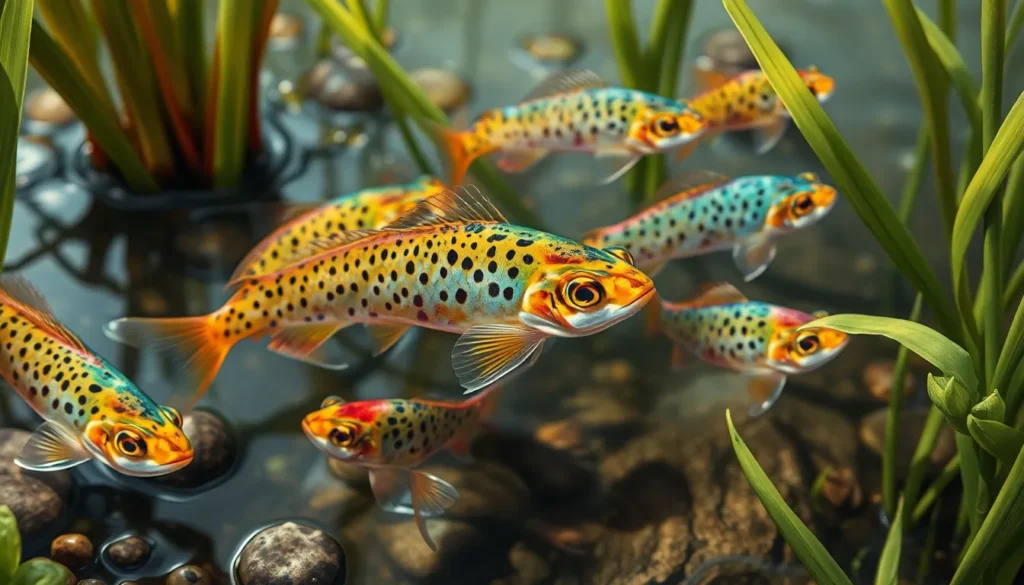
- They are known for their vivid coloration. Many species display bright colors, especially males during breeding season, which makes them popular in the aquarium trade.
- Killifish inhabit a wide range of environments. They can be found in temporary pools, streams, and swamps across Africa, the Americas, and parts of Asia and Europe.
- Some species are annual fish. These killifish live in ephemeral water bodies that dry up seasonally, surviving by laying drought-resistant eggs.
- Annual killifish eggs exhibit diapause. This is a state of suspended development allowing eggs to survive dry periods until water returns.
- Non-annual killifish live in more permanent waters. These species typically do not have diapause eggs and have different life history strategies.
- Killifish have a relatively short lifespan. Many species live only a few months to a couple of years, especially annual species adapted to temporary habitats.
- They are carnivorous. Their diet primarily consists of small invertebrates, larvae, and insect eggs.
- Killifish exhibit sexual dimorphism. Males are often more colorful and larger than females, which aids in mate attraction.
- Some killifish species show remarkable tolerance to harsh conditions. They can survive in low-oxygen water or tolerate fluctuations in salinity.
- Killifish are used in scientific research. Their fast life cycle and unique adaptations make them models in studies of aging, developmental biology, and evolutionary ecology.
- These fish demonstrate diverse reproductive strategies. Some species lay eggs on substrate, while others bury eggs in mud or plant material.
- Killifish eggs are often used in captive breeding programs. Their hardiness allows hobbyists and researchers to preserve and propagate threatened species.
- Many killifish species are endemic to specific regions. Some are found only in particular river basins or isolated pools.
- The name “killifish” likely derives from the Dutch word “kil,” meaning creek or small stream. This reflects their preference for small water bodies.
- Killifish can be territorial. Males often defend breeding sites aggressively.
- They communicate through visual signals. Color changes and fin displays are common during courtship and territorial disputes.
- Some killifish species are threatened due to habitat loss. Drainage of wetlands and pollution have impacted populations in various regions.
- Killifish play an important role in controlling mosquito populations. They consume mosquito larvae, helping reduce disease vectors.
- They are popular aquarium fish. Their bright colors and interesting behaviors attract hobbyists worldwide.
- Killifish diversity is high. There are over 130 known species, with ongoing discoveries and taxonomic revisions.
Habitat and Behavior
Killifish occupy a variety of freshwater and brackish habitats, often favoring small, shallow water bodies such as ponds, ephemeral pools, streams, and swamps. Many species are adapted to temporary waters that dry seasonally, especially annual killifish, which survive droughts by producing eggs that remain dormant in dry substrate until rains return. Non-annual killifish prefer more permanent aquatic environments. Behaviorally, killifish display territoriality, particularly among males during breeding, using vibrant coloration and fin displays to establish dominance and attract mates. They feed primarily on small invertebrates and insect larvae, contributing to the control of aquatic insect populations. Their life cycles vary with species, but many have relatively short lifespans aligned with the duration of their habitats.
Why This Animal Matters
Killifish play a significant ecological role as insect predators, helping regulate populations of pests such as mosquitoes. Their ability to survive in extreme and fluctuating environments makes them valuable indicators of ecosystem health and resilience. Scientifically, killifish are important model organisms for studying aging, developmental biology, and evolutionary adaptation due to their rapid life cycles and unique reproductive strategies. Conservation-wise, some killifish species are threatened by habitat degradation, highlighting the need for wetland preservation. Additionally, their bright colors and behaviors contribute to cultural and economic value in the aquarium trade, fostering awareness and interest in freshwater biodiversity.
Common Misconceptions
Misconception: Killifish are all annual fish that only live in temporary pools.
Correction: While many killifish are annual species adapted to ephemeral habitats, numerous species inhabit permanent waters and do not rely on drought-resistant eggs.
Misconception: Killifish are difficult to keep in captivity.
Correction: Many killifish species are popular and relatively easy to care for in aquariums, making them accessible to hobbyists with basic fishkeeping experience.
Misconception: Killifish are a single species.
Correction: Killifish refers to a diverse group with over 130 species exhibiting a wide range of behaviors, habitats, and appearances.
FAQ
What is the typical lifespan of a killifish?
The lifespan of killifish varies by species, with annual species living only a few months adapted to temporary habitats, and non-annual species living up to two years or more in permanent waters.
Why are killifish popular in aquariums?
Killifish are popular in aquariums due to their bright and diverse coloration, interesting mating behaviors, and relatively small size, making them attractive and manageable for hobbyists.
How do killifish survive dry seasons?
Annual killifish survive dry seasons by laying drought-resistant eggs that enter a state called diapause, allowing them to remain dormant in dry substrate until water returns.



Leave a Reply