
Short Answer
21 Facts About Moorish Idols
- Scientific Classification: Moorish Idols belong to the family Zanclidae, with the sole extant species being Zanclus cornutus.
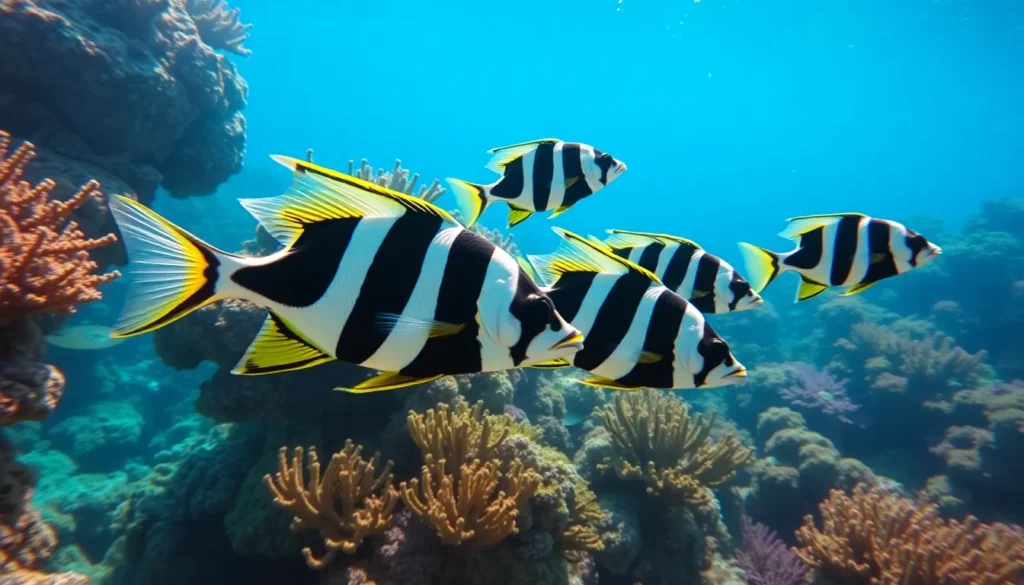
- Distinctive Appearance: They are easily recognized by their compressed, disk-shaped bodies with bold black, white, and yellow vertical bands.
- Long Dorsal Fin: One of their most notable features is an elongated dorsal fin filament that trails behind the body, often mistaken for a banner or flag.
- Wide Distribution: Moorish Idols inhabit tropical and subtropical waters across the Indo-Pacific region, including the Red Sea and Hawaii.
- Reef Dwellers: They are commonly found on coral reefs, lagoons, and rocky shorelines, usually at depths of 3 to 30 meters.
- Diet: Their diet primarily consists of sponges, tunicates, and other benthic invertebrates, supplemented by algae and small invertebrates.
- Feeding Behavior: They use their small, tubular mouths to pick food items from crevices on the reef.
- Social Structure: Moorish Idols often form pairs or small groups, though solitary individuals are also observed.
- Reproduction: They are oviparous, releasing eggs into the water column where fertilization occurs externally.
- Larval Stage: After hatching, larvae are planktonic and drift with ocean currents before settling on reefs.
- Longevity: In the wild, they can live up to 10 years, though exact lifespan data is limited.
- Challenging Aquarium Species: Moorish Idols are notoriously difficult to keep in captivity due to their specialized diet and sensitivity to environmental changes.
- Cultural Significance: The name “Moorish Idol” originates from the name given by early European sailors, though the exact reason for the name remains unclear.
- Symbolism: In some cultures, they are considered symbols of beauty and grace due to their striking appearance.
- Predators: Natural predators include larger reef fish and sharks, although their bright coloration may provide some camouflage among coral.
- Role in Ecosystem: By feeding on sponges and tunicates, they help maintain reef health and balance.
- Swimming Ability: Moorish Idols are strong swimmers, capable of short bursts of speed to evade predators.
- Color Variations: While the typical coloration is consistent, slight variations exist depending on geographic location.
- Conservation Status: They are currently listed as Least Concern, but habitat degradation poses potential risks.
- Research Interest: Their unique morphology and behaviors make them subjects of interest in marine biology studies.
- Misidentification: They are sometimes confused with angelfish but belong to a separate family.
Habitat and Behavior
Moorish Idols inhabit shallow coral reefs and lagoons throughout the Indo-Pacific, including areas like the Red Sea, Hawaii, and parts of the Indian and Pacific Oceans. They prefer environments with abundant coral growth, which provides both food sources and shelter. Typically, they are observed swimming gracefully in pairs or small groups during the day, feeding actively on sponges, tunicates, and algae. Their specialized mouthparts enable them to extract food from crevices. At night, they seek refuge within the reef structure to avoid predators. Their strong swimming abilities allow them to navigate complex reef environments efficiently. The species’ planktonic larvae drift with ocean currents before settling on suitable reef habitats to mature.
Why This Animal Matters
Moorish Idols play an important ecological role in coral reef ecosystems by controlling sponge and tunicate populations, which helps maintain coral health and biodiversity. Their feeding habits contribute to the balance of reef communities. Culturally, they are admired for their striking appearance and grace, often featured in marine-themed art and media. Despite being popular in the aquarium trade, their care requirements are challenging, highlighting the need for responsible fishkeeping practices. Conservation-wise, while not currently threatened, their dependence on healthy coral reefs makes them vulnerable to habitat degradation caused by pollution, climate change, and human activities.
Common Misconceptions
Misconception: Moorish Idols are closely related to angelfish.
Correction: Although similar in appearance, Moorish Idols belong to the family Zanclidae, while angelfish are part of the family Pomacanthidae.

Misconception: Moorish Idols are easy to keep in home aquariums.
Correction: Moorish Idols have specialized dietary and environmental needs, making them difficult to maintain in captivity and often resulting in poor survival rates.
Misconception: The name ‘Moorish Idol’ refers to a connection with the Moors.
Correction: The origin of the name is uncertain, but it is believed to be a misnomer from early European sailors with no direct link to the Moors or idol worship.
FAQ
What is the natural habitat of Moorish Idols?
Moorish Idols naturally inhabit tropical and subtropical coral reefs and lagoons throughout the Indo-Pacific region, including the Red Sea and Hawaiian waters.
Why are Moorish Idols difficult to keep in aquariums?
Their specialized diet, sensitivity to water quality, and complex social behaviors make them challenging to maintain in captivity, often leading to poor survival.
Are Moorish Idols endangered?
Currently, Moorish Idols are listed as Least Concern by conservation assessments, but habitat degradation threatens their populations indirectly.
Leave a Reply