
Short Answer
21 Facts About Animal Migration
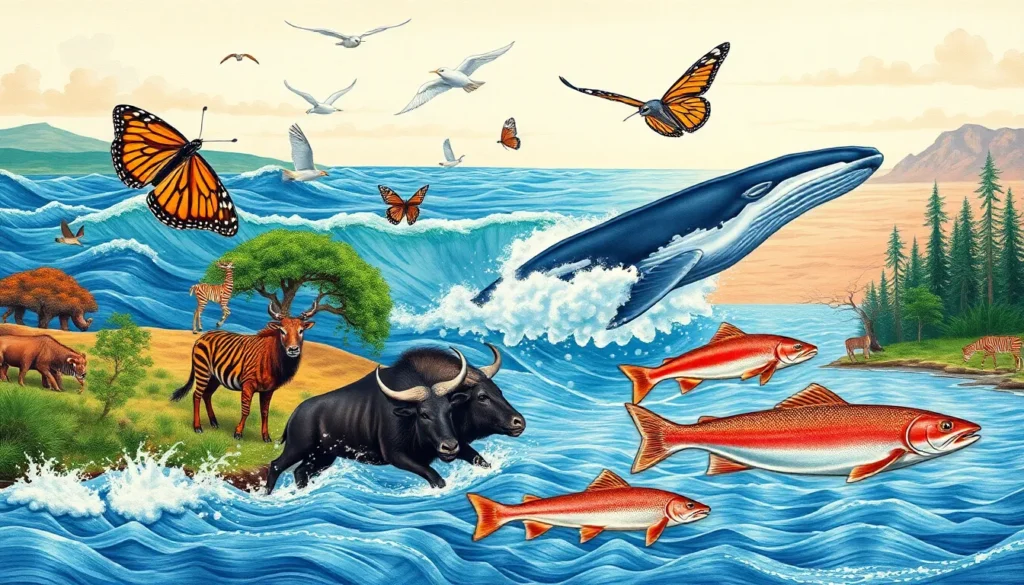
- Migration occurs across many species. From birds and mammals to fish and insects, migration is a widespread behavior used to find food, breed, or avoid harsh climates.
- The Arctic tern holds the longest migration record. This bird travels annually between the Arctic and Antarctic, covering about 70,000 kilometers (43,500 miles).
- Some animals navigate using the Earth’s magnetic field. Species such as sea turtles and salmon detect magnetic cues to orient themselves during migration.
- Monarch butterflies migrate thousands of miles. They travel from North America to central Mexico to overwinter, a journey spanning up to 4,800 kilometers (3,000 miles).
- Migration can be triggered by environmental cues. Changes in daylight, temperature, and food availability often initiate migratory behavior.
- Many species migrate to breed. For example, wildebeest undertake annual migrations in Africa to calve in safer and resource-rich areas.
- Some migrations are multi-generational. Monarch butterflies complete their migration over several generations, with no single butterfly making the entire round trip.
- Migration routes are often traditional and inherited. Animals tend to follow established pathways learned from previous generations.
- Salmon return to their birth rivers to spawn. Using olfactory cues, salmon navigate thousands of kilometers from the ocean to freshwater streams.
- Marine mammals like humpback whales migrate seasonally. They travel from feeding grounds in polar regions to warmer breeding areas near the tropics.
- Some desert animals migrate to find water. Species such as certain gazelles move seasonally to access scarce resources in arid environments.
- Migration can involve changes in physiology. Birds often build fat reserves before migration to sustain long flights.
- Migration helps maintain genetic diversity. By mixing populations during migration, species reduce inbreeding and enhance resilience.
- Many migratory animals face threats from habitat loss. Disruption of stopover sites and breeding grounds can severely impact migratory success.
- Migration timing is influenced by climate change. Shifts in temperature and seasonal patterns can alter migration schedules, sometimes with negative consequences.
- Some animals use celestial cues for navigation. Nocturnal migrants like songbirds can orient themselves by stars.
- Migration is energetically costly. Animals invest significant energy and risk predation during long-distance travel.
- Migration routes often include stopover sites. These locations provide essential rest and refueling opportunities for migratory species.
- Insects such as dragonflies also migrate. The globe skimmer dragonfly migrates across the Indian Ocean in one of the longest known insect migrations.
- Migration can influence ecosystem dynamics. Migratory animals contribute nutrients and affect food webs along their routes.
- Some species migrate vertically. Certain fish and marine animals move between different ocean depths seasonally instead of horizontally over long distances.
Habitat and Behavior
Animal migration occurs in a variety of habitats, from terrestrial landscapes and freshwater ecosystems to vast oceans and the skies. Migratory species can be found in forests, savannas, deserts, polar regions, and marine environments. Their behavior during migration includes long-distance travel often timed with seasonal changes to optimize survival and reproductive success. Animals may travel alone or in groups, sometimes forming large aggregations or flocks. Survival during migration depends on physiological adaptations such as fat storage, efficient flight or swimming techniques, and the ability to navigate using environmental cues like the sun, stars, or magnetic fields.
Why This Animal Matters
Animal migration plays a critical ecological role by connecting ecosystems across vast distances, facilitating nutrient cycling, and maintaining genetic diversity. Migratory species often act as pollinators, seed dispersers, or prey for other animals, supporting biodiversity. Culturally, migrations have inspired human traditions, folklore, and scientific study. Conservation of migratory animals is essential because their survival depends on multiple habitats along their routes, which are increasingly threatened by human activities such as habitat destruction, climate change, and pollution. Protecting migration corridors benefits entire ecosystems and helps preserve global biodiversity.
Common Misconceptions
Misconception: All migration involves animals moving south for the winter.
Correction: While many species migrate to warmer areas during winter, migrations can occur in various directions and are motivated by factors such as breeding, food availability, or water access, not solely temperature.

Misconception: Only birds migrate.
Correction: Migration occurs in many animal groups including mammals, fish, reptiles, amphibians, and insects, each with unique migration patterns and distances.
FAQ
What is animal migration?
Animal migration is the regular, often seasonal movement of animals from one region to another to find food, breed, or avoid adverse environmental conditions.
How do animals navigate during migration?
Animals use various navigation methods including the Earth's magnetic field, sun and star positions, landmarks, and olfactory cues to find their way during migration.
Why is animal migration important?
Migration plays a crucial role in maintaining ecological balance by connecting different ecosystems, supporting genetic diversity, and aiding in nutrient cycling.



Leave a Reply