
Short Answer
21 Facts About Houseflies
- Houseflies are among the most common insects worldwide. They belong to the species Musca domestica and can be found on nearly every continent except Antarctica.
- Houseflies have a short life cycle. Typically, they live for about 15 to 30 days, depending on environmental conditions.
- Adult houseflies can lay hundreds of eggs. A female can deposit up to 500 eggs in several batches during her lifetime, usually on decaying organic matter.
- Their larvae are called maggots. Maggots hatch from eggs and feed on decomposing material, playing a role in nutrient recycling.
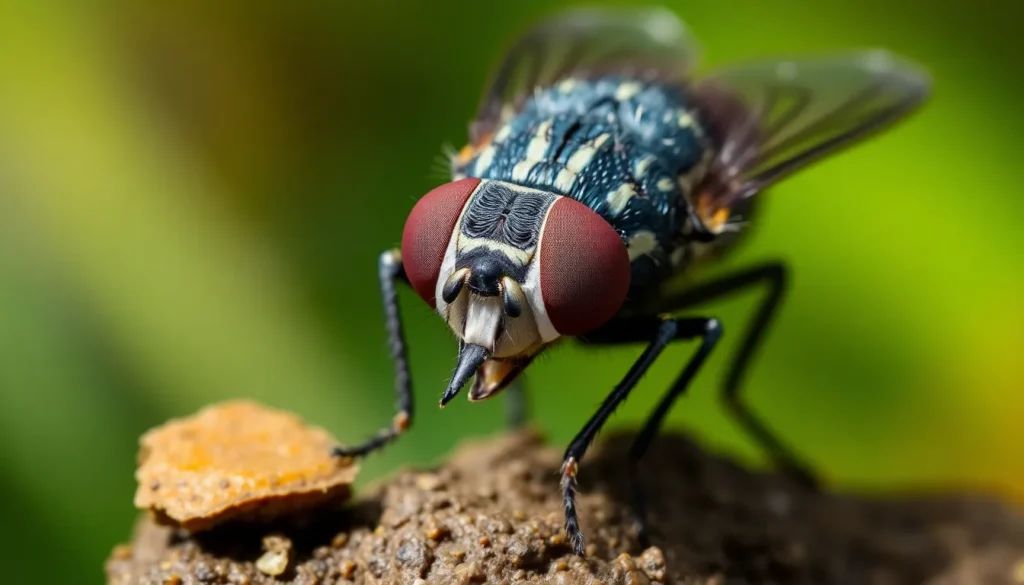
- Houseflies have compound eyes. Each eye contains thousands of lenses, allowing them a wide field of vision and sensitivity to movement.
- Houseflies taste with their feet. They have taste receptors on their feet which help them detect food upon landing.
- They are capable of flying at speeds up to 7 kilometers per hour (around 4.3 mph). Their rapid wing beats allow quick and agile flight.
- Houseflies do not have teeth. Instead, they secrete digestive enzymes onto solid food to liquefy it before ingestion.
- Houseflies can transmit diseases. They are known vectors for pathogens causing illnesses such as typhoid, cholera, and dysentery.
- Houseflies prefer warm environments. They are more active in temperatures between 25 and 30 °C (77-86 °F).
- Their antennae are sensitive to smell. This helps them locate food sources and mates.
- Houseflies have a pair of halteres. These small, club-shaped organs help stabilize flight by acting as gyroscopes.
- They exhibit grooming behavior. Houseflies often clean their eyes and wings to maintain sensory function.
- Houseflies can walk on smooth vertical surfaces. Their feet have tiny hairs with sticky pads that allow adhesion.
- Houseflies communicate through visual and chemical signals. Although simple, these signals aid in mating and locating food.
- They have been studied extensively in genetics and biology. Houseflies have served as model organisms in research on insect physiology and control methods.
- Houseflies are attracted to light. This phototactic behavior influences their movement in human environments.
- Houseflies help decompose organic waste. By consuming decaying material, they contribute to nutrient cycling in ecosystems.
- Houseflies’ larvae are used in forensic entomology. The development stages of maggots can help estimate time of death in investigations.
- Houseflies have been around for millions of years. Fossil evidence suggests their ancestors existed during the Cenozoic era.
- They are not harmful themselves but can carry pathogens mechanically. Disease transmission occurs via contamination on their body surfaces and feeding habits.
Habitat and Behavior
Houseflies thrive in close association with humans and animals. Their preferred habitats include areas with abundant organic waste such as garbage dumps, farms, and food markets. They reproduce rapidly in moist, decaying matter where their larvae develop. Adults are highly mobile and use their keen vision and olfactory senses to locate food sources, which include human food, animal feces, and decaying organic materials. Houseflies are primarily active during the day and exhibit grooming behaviors to maintain sensory effectiveness. Their ability to walk on various surfaces, including ceilings and walls, allows them to exploit diverse environments within human dwellings.
Why This Animal Matters
Houseflies play several ecological and practical roles. Ecologically, they assist in decomposition and nutrient recycling by breaking down organic waste. Medically, they are significant because of their capacity to mechanically transmit pathogens, impacting public health worldwide. They have also contributed to scientific understanding in genetics, insect physiology, and forensic science. Despite their nuisance status, houseflies are integral to many ecosystems as both decomposers and prey for various predators. Efforts to control housefly populations are important in reducing disease spread, especially in areas lacking proper sanitation.
Common Misconceptions
Misconception: Houseflies bite humans.
Correction: Houseflies do not bite; they feed by sponging up liquids. Biting flies belong to different families, such as horseflies or stable flies.
Misconception: Houseflies only spread disease through their bites.
Correction: Houseflies transmit diseases mechanically via contaminated body parts and feeding habits, not through biting.
Misconception: Houseflies live for several months.
Correction: The typical lifespan of a housefly is about 2 to 4 weeks, depending on environmental conditions.
Misconception: Houseflies are attracted only to garbage.
Correction: While attracted to decaying organic material, houseflies also seek out human food, animal waste, and other sources of nutrients.
Misconception: Houseflies have teeth for chewing food.
Correction: Houseflies lack teeth and digest food externally by secreting enzymes to liquefy solids.
FAQ
How long do houseflies live?
Houseflies typically live for about 15 to 30 days, depending on environmental factors such as temperature and availability of food.
Can houseflies bite humans?
No, houseflies do not bite humans. They feed by sponging up liquids and do not have biting mouthparts.
Why are houseflies considered disease vectors?
Houseflies can carry and mechanically transmit pathogens on their bodies and through their feeding habits, contaminating food and surfaces and contributing to the spread of diseases.



Leave a Reply