
Short Answer
21 Facts About Flamingo Flocks
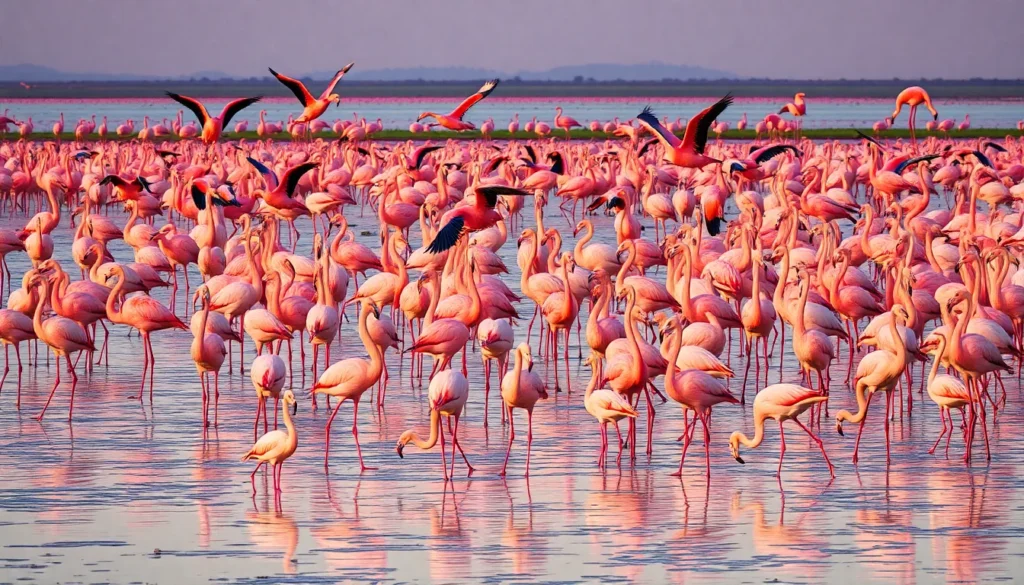
- Social Birds: Flamingos are highly social and live in large flocks that can number from a few hundred to tens of thousands, which provides protection from predators.
- Colonial Nesting: They nest in colonies, often with thousands of pairs, which helps synchronize breeding and increases chick survival rates.
- Coloration from Diet: The pink or reddish color of flamingos comes from carotenoid pigments in their diet, mainly from algae and crustaceans.
- Feeding Behavior: Flamingos feed by filtering water with their specialized beaks, often stirring up mud with their feet to access food.
- Long Legs and Neck: Their long legs and necks allow them to wade into deeper waters and reach food sources unavailable to many other birds.
- Head Inversion: When feeding, flamingos often hold their heads upside down to efficiently filter-feed.
- Flight Formation: Flamingos fly in large groups in a V-formation or straight line to conserve energy during long migrations.
- Communication: They use a variety of vocalizations, such as honks and grunts, to maintain group cohesion and signal alarm.
- Synchrony in Behavior: Flock members often perform synchronized movements and displays, which are important for mating and social bonding.
- Selective Breeding Sites: Flamingos choose nesting sites with specific mud consistency to build their cone-shaped nests.
- Chick Care: Both parents share incubation duties and feed chicks with a nutrient-rich secretion called “crop milk.”
- Adaptations to Saline Habitats: Many flamingo species thrive in alkaline or saline lakes where few predators or competitors exist.
- Molting Periods: Flamingos undergo molting, during which they lose and regrow feathers, and typically avoid flying during this vulnerable time.
- Longevity: In the wild, flamingos can live up to 30 years, with some reaching 50 years in captivity.
- Migration Patterns: Not all flamingo species migrate, but those that do travel considerable distances to find suitable breeding or feeding grounds.
- Thermoregulation: Flamingos often stand on one leg to conserve body heat and reduce muscle fatigue.
- Predator Avoidance: Large flock sizes and synchronized behaviors confuse predators and improve individual survival chances.
- Species Diversity: There are six recognized flamingo species, some of which form mixed-species flocks in overlapping ranges.
- Role in Ecosystems: Flamingos contribute to the health of wetland ecosystems by controlling algae and invertebrate populations.
- Cultural Significance: Flamingos have symbolic meanings in various cultures, often representing beauty, balance, and grace.
- Conservation Status: While some flamingo populations are stable, habitat loss and pollution threaten others, leading to conservation efforts worldwide.
Habitat and Behavior
Flamingos inhabit shallow lakes, lagoons, mangrove swamps, and sandy islands, often in tropical and subtropical regions. Their preference for saline or alkaline water bodies reduces competition and predation. Their social behavior is characterized by large, dense flocks that engage in communal nesting and feeding, which provides safety in numbers and enhances reproductive success. Feeding techniques include filter-feeding with specialized bills, and they rely heavily on their unique anatomical adaptations to thrive in challenging environments. Flamingos communicate using visual displays and vocalizations, maintaining flock cohesion and coordinating group activities. Migration is variable among species, with some populations moving seasonally to optimize resource availability.
Why This Animal Matters
Flamingos play an essential ecological role by controlling algae and small invertebrate populations, which helps maintain the balance of wetland ecosystems. Their presence indicates healthy aquatic environments, making them important bioindicators. Cultural significance is notable in many regions, where flamingos are symbols in art, folklore, and tourism. Conservation efforts for flamingos also benefit wetland preservation, which supports biodiversity and provides ecosystem services such as water purification and flood control. Protecting flamingo habitats aligns with broader environmental goals, highlighting their importance beyond their striking appearance.
Common Misconceptions
Misconception: Flamingos get their pink color from the water they live in.
Correction: Flamingos’ pink coloration derives from carotenoid pigments in their diet, not from the water itself.
Misconception: Flamingos stand on one leg to sleep only.
Correction: While flamingos often stand on one leg during rest, this behavior also helps conserve body heat and reduce muscle fatigue.
FAQ
Why do flamingos live in large flocks?
Flamingos live in large flocks primarily for protection against predators, to improve feeding efficiency, and to synchronize breeding activities, which enhances reproductive success.
How do flamingos get their pink color?
Flamingos obtain their pink or reddish coloration from carotenoid pigments found in their diet, mainly from algae and small crustaceans.
Do all flamingo species migrate?
Not all flamingo species migrate; migration varies depending on species and environmental conditions, with some populations remaining resident and others traveling to find optimal breeding or feeding sites.



Leave a Reply