
Short Answer
21 Facts About Giant Hornets
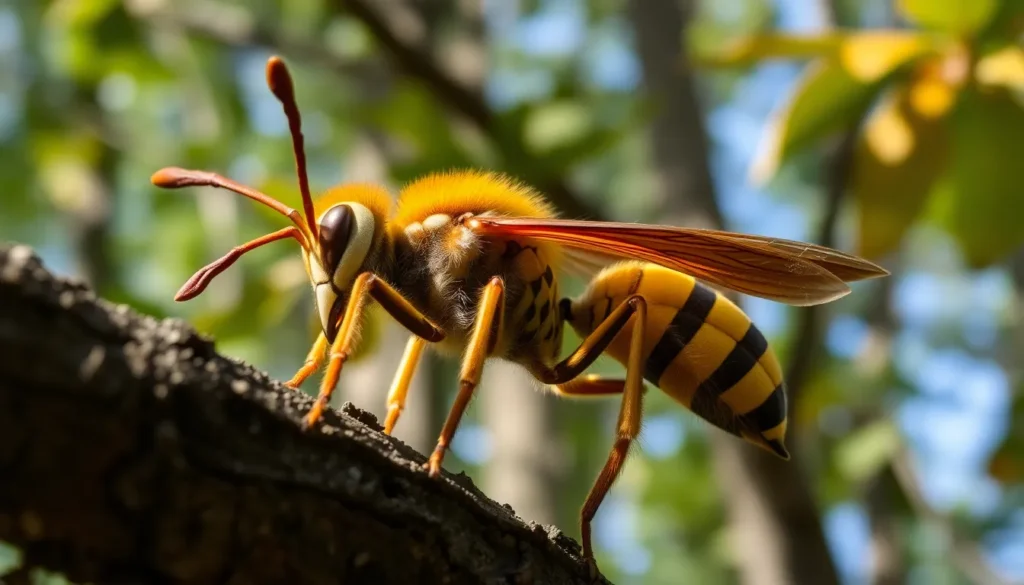
- Largest Hornet Species: Giant hornets, especially the Asian giant hornet (Vespa mandarinia), are the largest hornet species in the world, with queens reaching up to 5 centimeters (2 inches) in length.
- Distinctive Appearance: These hornets have a characteristic orange-yellow head with prominent eyes and a striped abdomen usually marked with black and yellow bands.
- Powerful Sting: The sting of a giant hornet is extremely painful and can inject a potent venom. Multiple stings can be dangerous to humans, especially those allergic to wasp venom.
- Predatory Behavior: Giant hornets are predators of other insects, notably honeybees, which they attack to feed their larvae.
- Specialized Hunting: They use coordinated group attacks to decimate honeybee hives, often decapitating bees to feed their young.
- Venom Composition: Their venom contains a neurotoxin called mandaratoxin, which contributes to its potency and pain.
- Colony Structure: Giant hornet colonies are eusocial, with a queen, workers, and drones, similar to other social wasps.
- Nest Building: They build large, paper-like nests usually hidden in tree hollows or underground cavities.
- Life Cycle: The colony cycle typically spans one year, with queens hibernating through winter and founding new colonies in spring.
- Flight Capability: Despite their large size, giant hornets are strong fliers capable of traveling several kilometers in search of prey or nesting sites.
- Geographic Range: Native to East and Southeast Asia, including Japan, China, Korea, and parts of Russia.
- Invasive Concerns: There have been reports of sightings outside their native range, such as in North America, raising concerns about ecological impacts.
- Diet Diversity: Besides honeybees, they feed on other insects, tree sap, and fruit juices, showing opportunistic feeding habits.
- Role in Ecosystem: As top insect predators, they help regulate populations of other insects, contributing to ecological balance.
- Defensive Behavior: Giant hornets can be aggressive if their nest is threatened and may attack in groups.
- Communication: They use pheromones to coordinate attacks and colony defense mechanisms.
- Human Interaction: While attacks on humans are rare, they can occur, especially when nests are disturbed.
- Cultural Significance: In some Asian cultures, giant hornets are featured in folklore and are sometimes used in traditional medicine.
- Conservation Status: They are not currently endangered but face threats from habitat loss and human eradication efforts.
- Research Interest: Scientists study giant hornet venom for potential medical applications and their behavior to better understand insect social structures.
- Misidentification: Giant hornets are sometimes confused with other large wasps or hornet species, which can lead to misinformation about their distribution and danger.
Habitat and Behavior
Giant hornets primarily inhabit temperate and subtropical forests across East and Southeast Asia. They prefer wooded areas where they can find suitable nesting sites such as tree hollows, underground cavities, or dense shrubbery. Their nests are constructed from chewed wood fibers mixed with saliva, creating a papery structure that can house hundreds of individuals. Behaviorally, giant hornets are solitary foragers but highly social within their colonies. They exhibit complex communication through pheromones to coordinate defense and hunting activities. Their predatory habits focus on other insects, particularly honeybees, which they attack en masse to provide protein for their larvae. Seasonal cycles influence their activity, with queens starting new colonies in spring and workers maintaining the nest through summer and fall. By late autumn, the colony declines, and only fertilized queens survive winter hibernation to repeat the cycle.
Why This Animal Matters
Giant hornets play a significant role as apex insect predators, helping control populations of other insects, including pests, thus contributing to ecological balance. Their predation on honeybees can impact local apiculture, leading to economic concerns in regions relying on bee pollination. Culturally, they appear in folklore and traditional practices in various Asian societies, reflecting their presence and influence on human life. Conservation-wise, while not endangered, giant hornets face habitat challenges from deforestation and urban expansion. Studying their venom and social behavior provides valuable insights for medical research and understanding social insect dynamics, making them important both ecologically and scientifically.
Common Misconceptions
Misconception: Giant hornets can kill a human with a single sting.
Correction: While their sting is painful and venom potent, a single sting is rarely fatal to a healthy adult. Multiple stings or allergic reactions pose greater risks.
Misconception: All giant hornets are aggressive toward humans.
Correction: They generally avoid humans and only become aggressive when their nest is threatened.
Misconception: Giant hornets are the same as “murder hornets” everywhere.
Correction: The term “murder hornet” specifically refers to the Asian giant hornet (Vespa mandarinia), but not all large hornets share this nickname or behavior.
Misconception: Giant hornets are widespread globally.
Correction: They are native primarily to Asia, with very limited and monitored occurrences elsewhere.
Misconception: Giant hornets only eat honeybees.
Correction: While honeybees are a favored prey, giant hornets have a varied diet including other insects, tree sap, and fruits.
FAQ
Are giant hornets deadly to humans?
While the sting of a giant hornet is very painful and its venom potent, fatalities are rare and usually result from multiple stings or allergic reactions. Prompt medical attention is recommended if stung multiple times.
How do giant hornets attack honeybee hives?
Giant hornets hunt honeybees by coordinating group attacks, often decapitating bees to feed their larvae. They use pheromones to recruit others during these assaults, which can destroy entire hives.
Can giant hornets survive outside Asia?
Giant hornets are native to Asia, but isolated sightings outside their range have been reported. These instances are monitored closely to prevent establishment, as they could impact local ecosystems.


Leave a Reply