
Short Answer
21 Facts About Penguin Colonies
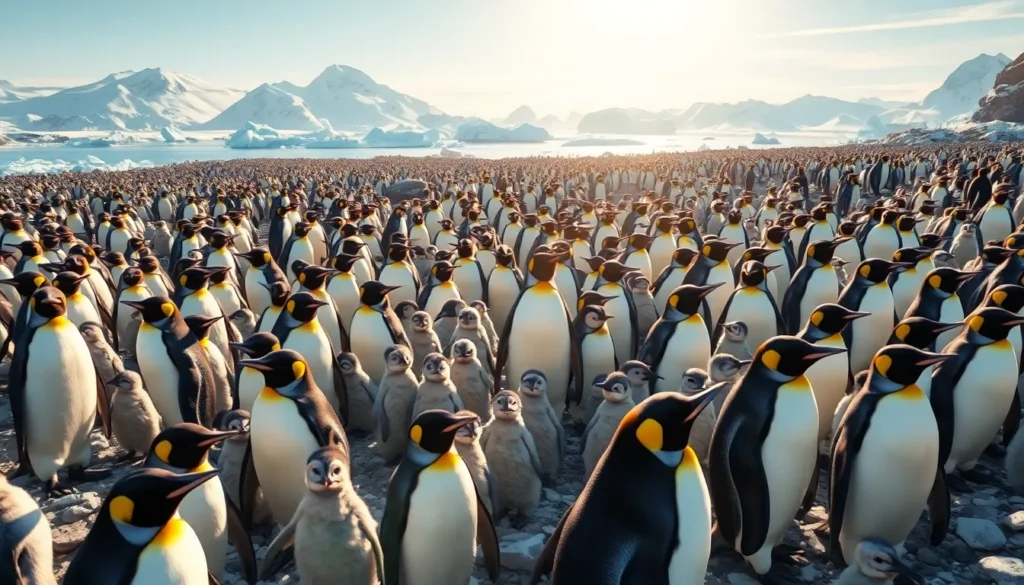
- Penguin colonies can range from a few hundred to over a million individuals. Some species form enormous breeding colonies, such as the Emperor penguin, which can have tens of thousands of birds congregating during the breeding season.
- Colonies provide protection from predators. By living in large groups, penguins reduce individual risk of predation from animals like skuas and seals.
- Penguin colonies are often located on ice-free coastal areas. These sites are chosen for easier access to the ocean for feeding and suitable nesting grounds.
- Many penguin species return to the same colony each year. This site fidelity helps maintain social structure and breeding success.
- Colony size fluctuates seasonally. During breeding seasons, colonies swell dramatically but can shrink outside of these periods.
- Penguin colonies are noisy environments. Vocal communication is essential for mate recognition and chick identification within dense groups.
- Some colonies include multiple penguin species. For example, Gentoo, Chinstrap, and Adélie penguins may nest in proximity without significant competition.
- Penguin nesting sites vary by species. While some build nests with stones, others just lay eggs on bare ground or ice.
- Colonies facilitate social bonding and cooperative behaviors. Penguins often engage in synchronized movements and social displays that reinforce group cohesion.
- In some species, males incubate eggs by balancing them on their feet. Emperor penguin colonies are known for this unique breeding behavior during harsh Antarctic winters.
- Penguin colonies are vulnerable to environmental changes. Climate change and human disturbance can impact colony locations and survival rates.
- Colony density affects breeding success. High-density areas may increase competition but also provide enhanced protection.
- Predation pressure influences colony structure. Colonies near predator hotspots may develop tighter groupings or use defensive behaviors.
- Penguin colonies are often studied to monitor ecosystem health. Scientists use colony size and breeding success as indicators of marine environment changes.
- Chick rearing is a communal activity in some colonies. While parents feed their own chicks, chicks often huddle together for warmth and protection.
- Colony locations can be thousands of kilometers from feeding grounds. Penguins travel large distances to feed in nutrient-rich waters before returning to colonies.
- Human activities, such as tourism and fishing, can disturb colonies. Efforts are ongoing to minimize impacts and protect sensitive breeding sites.
- Some colonies have existed for centuries. Archaeological evidence shows long-term use of certain colonies by penguin populations.
- Colony sites are often marked by guano deposits. These accumulations can alter local soil chemistry and vegetation.
- Each penguin’s unique call helps parents and chicks find each other. In crowded colonies, vocal recognition is crucial for family reunion.
- Penguin colonies contribute significantly to nutrient cycling in coastal ecosystems. Their guano enriches soils and supports other wildlife.
Habitat and Behavior
Penguin colonies are primarily found in the Southern Hemisphere, especially in Antarctica, sub-Antarctic islands, and coastal regions of South America, Africa, Australia, and New Zealand. These colonies form in locations that provide access to the ocean for feeding and safe nesting grounds, often on rocky shores, beaches, or ice-free areas. Behaviorally, penguins exhibit strong social traits within colonies, including vocal communication, synchronized movements, and cooperative chick rearing. Colony living provides advantages such as enhanced protection from predators, efficient thermoregulation through huddling, and increased breeding success. Penguins engage in seasonal migrations between feeding grounds and colonies, with some species enduring harsh conditions to breed during the Antarctic winter.
Why This Animal Matters
Penguin colonies play vital ecological roles in their environments. Their guano enriches nutrient-poor soils, supporting plant and microbial communities. As predators, penguins help regulate fish and krill populations, serving as indicators of marine ecosystem health. Ecologically, changes in colony size and breeding success can reveal impacts of climate change, overfishing, and pollution. Culturally, penguins are iconic species that inspire conservation awareness and scientific research. Protecting penguin colonies is important for preserving biodiversity and maintaining the balance of Southern Hemisphere coastal ecosystems.
Common Misconceptions
Misconception: All penguin colonies are found only in Antarctica.
Correction: While many penguin colonies are in Antarctica, several species nest in sub-Antarctic islands and temperate regions such as South Africa, Australia, and South America.
Misconception: Penguins live solitary lives outside of breeding.
Correction: Penguins are highly social birds that often live in colonies year-round or return to them regularly, even outside breeding seasons.
Misconception: Penguin colonies are always large and dense.
Correction: Colony size varies widely among species and locations; some colonies consist of just a few hundred individuals, while others number in the hundreds of thousands.
FAQ
Why do penguins live in colonies?
Penguins live in colonies primarily for protection against predators, social interaction, and increased breeding success. Large groups help reduce individual predation risk and enable cooperative behaviors like huddling for warmth.
How do penguins find their mates and chicks in large colonies?
Penguins use unique vocalizations and calls to identify their mates and chicks. Each bird’s call is distinctive, allowing family members to reunite even among thousands of individuals.
Are all penguin species colonial?
Most penguin species form colonies, especially during breeding seasons. However, the size and density of these colonies vary widely depending on species and habitat conditions.
Leave a Reply