
Short Answer
21 Facts About Ladybugs
- Ladybugs are beetles, not bugs. Despite their common name, ladybugs belong to the beetle family Coccinellidae and are true beetles, characterized by hardened forewings called elytra.
- There are over 5,000 species worldwide. Ladybird beetles are found globally, with a wide variety of species exhibiting different colors and patterns.
- Most ladybugs are beneficial predators. They primarily feed on aphids and other plant pests, helping control agricultural pests naturally.
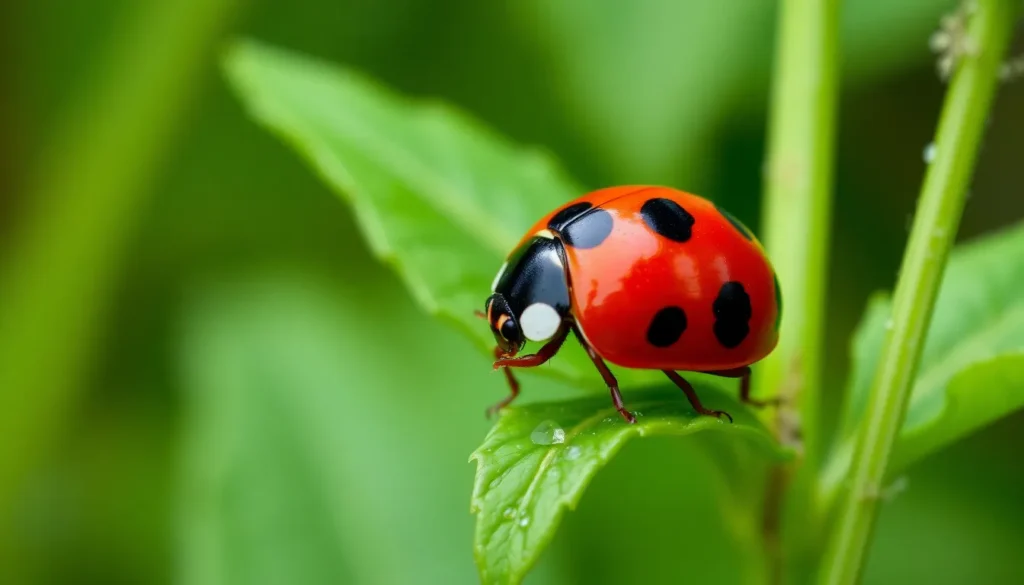
- Ladybugs can vary in color. While many are red with black spots, they can also be yellow, orange, black, or even pink with varying spot patterns.
- The number of spots does not indicate age. Contrary to popular belief, the spots on a ladybug’s back are species-specific and do not reflect its age.
- Ladybugs produce a chemical defense. When threatened, they secrete a yellow fluid from their leg joints that has a foul taste to deter predators.
- They can play dead. Ladybugs may feign death by tucking in their legs and remaining still to avoid predation.
- Ladybugs undergo complete metamorphosis. Their lifecycle includes egg, larva, pupa, and adult stages.
- Larvae look very different from adults. Ladybug larvae are elongated, often spiny, and do not have the rounded, colorful appearance of adults.
- Ladybugs can fly. They lift their elytra to expose and flap their membranous hind wings for flight.
- They hibernate during winter. Many species gather in large groups to overwinter in protected locations such as under bark or inside buildings.
- Some species are invasive pests. The Asian lady beetle (Harmonia axyridis) was introduced to control pests but has become invasive in some regions.
- Ladybugs are used as biological control agents. Farmers and gardeners often encourage or introduce ladybugs to reduce pest populations naturally.
- Ladybugs have been part of folklore and culture. They are often seen as symbols of good luck in various cultures worldwide.
- They communicate through chemical signals. Ladybugs use pheromones to find mates and aggregate during hibernation.
- Ladybugs can live up to one year. Their lifespan varies by species and environmental conditions but generally lasts from several months to a year.
- Some species are brightly colored for warning. Their aposematic coloration warns predators of their unpalatability due to chemical defenses.
- Ladybugs have chewing mouthparts. They use mandibles to consume prey such as aphids and scale insects.
- They contribute to biodiversity. As part of complex ecosystems, ladybugs help maintain balance between plant life and herbivorous insects.
- Ladybugs can be found on all continents except Antarctica. Their adaptability to various climates contributes to their wide distribution.
- Some ladybugs are herbivores or feed on mildew. While most are predatory, a few species feed on plant material or fungi instead.
Habitat and Behavior
Ladybugs inhabit a wide range of environments including forests, grasslands, gardens, and agricultural fields. They prefer areas where their prey, such as aphids and other soft-bodied insects, are abundant. During warmer months, ladybugs actively hunt and reproduce, laying eggs near prey colonies. When temperatures drop, many species enter a state of dormancy or hibernation, often aggregating in sheltered locations such as under leaves, bark, or inside buildings to survive the winter. Ladybugs are capable flyers, which allows them to disperse widely in search of food or suitable habitats. Their chemical defenses and aposematic coloration help reduce predation, while their lifecycle stages enable adaptation to seasonal changes.
Why This Animal Matters
Ladybugs play an important ecological role as natural pest controllers by consuming large quantities of aphids and other harmful insects, reducing the need for chemical pesticides in agriculture and gardening. Their presence helps maintain plant health and ecosystem balance. Moreover, ladybugs have cultural significance in many societies as symbols of good fortune and protection. From a conservation perspective, understanding their habitat requirements and the impact of invasive species is crucial for preserving native ladybug populations and the benefits they provide. Their role as bioindicators also offers insights into environmental health.
Common Misconceptions
Misconception: The number of spots on a ladybug indicates its age.
Correction: The number and pattern of spots are characteristic of the species and remain constant throughout the ladybug’s life, not related to age.
Misconception: All ladybugs are red with black spots.
Correction: Ladybugs come in a variety of colors and patterns, including yellow, orange, black, and even pink, with or without spots.
Misconception: Ladybugs are harmless and cannot bite.
Correction: While generally harmless to humans, ladybugs can bite if handled roughly, though their bites are usually minor and not harmful.
Misconception: Ladybugs only eat aphids.
Correction: While aphids are a primary food source, ladybugs also consume other soft-bodied insects, insect eggs, and in some cases, pollen or fungal spores.
Misconception: Ladybugs are native everywhere they are found.
Correction: Some ladybug species, like the Asian lady beetle, have been introduced to new areas and are considered invasive in certain regions.
FAQ
What do ladybugs eat?
Most ladybugs are predators that feed on aphids, scale insects, and other soft-bodied pests. Some species also consume pollen or mildew.
Are ladybugs harmful to humans?
Ladybugs are generally harmless to humans. They can bite if handled roughly, but their bites are minor and not dangerous.
How do ladybugs help in gardening?
Ladybugs consume many garden pests such as aphids, reducing the need for chemical pesticides and promoting healthier plants.



Leave a Reply